15 Best Sunglasses Manufacturers in Europe — Who Actually Accepts Your OEM Order?
Finding reliable sunglasses manufacturers in Europe sounds straightforward until you start sending inquiries. You discover that half the "manufacturers" on your shortlist are actually brand houses that outsource production to Asia. The other half require minimum orders your growing brand cannot absorb. The real challenge is not finding names — it is finding the right fit.
The best sunglasses manufacturers in Europe include Luxottica, Safilo, Marcolin, De Rigo, Marchon (with Italian production), Etnia Barcelona, MYKITA, Blackfin, Mondottica Europe, Noego, Götti, Komono, Lozza (De Rigo), Ethi Eyewear, and Karün. However, "best" depends entirely on whether a manufacturer accepts OEM orders at your volume, works with your frame material, and fits your lead-time expectations. Most buyers discover that only a handful of these companies will even return a quote for orders under 1,000 units per SKU.

Before diving into each manufacturer, I need to address two things most listicles skip: the massive geographic concentration of European eyewear production, and the critical difference between a manufacturer and a brand that simply carries a European address. Understanding both will save you weeks of dead-end emails.
Why Does Italy Dominate European Sunglasses Manufacturing?
If you email ten European eyewear companies, seven replies will come from the same small corner of northeastern Italy. Newcomers treat "Europe" as a single sourcing market, but that misunderstanding leads to scattered, inefficient supplier searches.
Italy's Belluno province — a mountainous district in the Veneto region — accounts for roughly 70–80% of all European eyewear production[^1] by value. This is not trivia. It is the single most important fact for anyone building a European supplier shortlist. Belluno is home to Luxottica's historic headquarters, Safilo's main plants, De Rigo, Marcolin, and dozens of specialist subcontractors that handle everything from acetate milling to hinge assembly.

How Did Belluno Become the Eyewear Capital?
The concentration dates back over a century. Skilled metalworking traditions, proximity to raw materials, and generations of specialized labor created a self-reinforcing ecosystem. Today, the district operates like a vertically integrated supply chain spread across hundreds of small workshops and a few industrial giants.
What Does This Mean for Buyers?
For sourcing purposes, the Belluno concentration has three practical implications:
- Cluster advantage: If you visit one factory, you can visit five in the same week. Trade shows like MIDO (Milan) showcase this cluster efficiently.[^2]
- Shared subcontractors: Even competing brands use the same local plating shops, hinge suppliers, and acetate sheet vendors. Quality baselines are therefore relatively consistent within the district.
- Non-Italian European manufacturers are rare. Germany (MYKITA), Switzerland (Götti), Spain (Etnia Barcelona), and Belgium (Komono) have notable players, but they are exceptions, not the norm. If your strategy specifically requires non-Italian European production, your shortlist shrinks dramatically.
| Country | Notable Manufacturers | Primary Specialty |
|---|---|---|
| Italy (Belluno) | Luxottica, Safilo, Marcolin, De Rigo, Blackfin | Full-spectrum: acetate, metal, injection |
| Germany | MYKITA | Stainless steel sheet metal, proprietary hinge-less designs |
| Spain | Etnia Barcelona | Acetate, color-focused design |
| Switzerland | Götti | Lightweight titanium and acetate |
| Belgium | Komono | Fashion-forward design (verify production origin) |
| France | Noego | Bold acetate designs |
In our experience quoting alongside European suppliers, buyers who cast a wide geographic net across Europe end up circling back to Italy anyway. Starting with the Belluno cluster is not bias — it is efficiency.
How Do You Tell a Real Manufacturer from a Brand House?
This is the question that separates experienced sourcing professionals from first-time buyers. You find a European sunglasses company with a beautiful website, premium imagery, and a "Made in Europe" tagline. You assume they manufacture. Then, three emails deep, you learn their frames are actually produced in Shenzhen.
A genuine manufacturer owns or operates production equipment — CNC mills, injection molding machines, acetate barrel-tumbling lines — and can discuss production capacity, material sourcing, and factory lead times in specific terms.[^3] A brand house designs and markets eyewear but contracts out fabrication, often to factories in China or Southeast Asia. There is nothing wrong with the brand-house model. The problem is when buyers confuse the two and waste months negotiating OEM terms with a company that has no factory floor to negotiate on.
Red Flags That Suggest a Brand House, Not a Manufacturer
Based on buyer feedback we have received over the years, here are reliable indicators:
- No factory address listed. Manufacturers are generally proud of their production sites. Brand houses list only a design studio or corporate HQ.
- Vague responses to material questions. Ask about acetate sheet suppliers (Mazzucchelli? Eastman?). A manufacturer answers immediately. A brand house forwards the question.
- Unusually broad product range with no specialty. A real factory has a sweet spot — acetate, metal, injection-molded PC, or titanium. If a small company claims to produce all of them in-house, verify.
- "Made in Europe" without "Manufactured in [specific city]." EU labeling rules allow some creative interpretation.[^4] "Designed in France, manufactured in China" is perfectly legal and common.
Pro tip: At trade shows like MIDO or Silmo, ask directly: "Can I visit your production line?" The response tells you everything.
Why This Matters for Your OEM Project
If you need custom logo placement, proprietary colorways, or modified temple designs, you must work with the entity that controls the production line. A brand house can sometimes arrange customization through their Asian contract manufacturer, but communication passes through extra layers, timelines stretch, and you lose the direct-sourcing advantage you were presumably seeking by going European in the first place.
The 15 Best Sunglasses Manufacturers in Europe — With Procurement Details
Now, the list. I have organized each entry around the information that actually matters for procurement decisions: what they make, whether they accept OEM, approximate MOQ ranges, and what to verify before investing time in an inquiry. Where my information comes from public catalogues, trade-show interactions, or buyer referrals rather than direct factory visits, I say so.
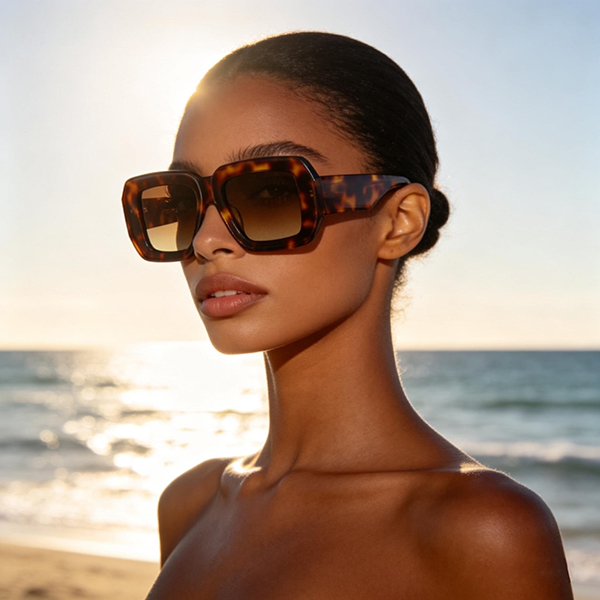
1. Luxottica (Italy — Agordo, Belluno)
- Type: Manufacturer + brand conglomerate (EssilorLuxottica)
- Specialty: Full spectrum — acetate, metal, injection. Houses Ray-Ban, Oakley, and licenses for Prada, Chanel, Versace, etc.
- OEM availability: Luxottica does accept large-scale OEM/ODM contracts, but MOQs are typically 3,000–5,000+ units per SKU based on industry reports.
- Lead time: 90–150 days for custom orders (according to published trade references).
- Buyer note: Realistic only for established brands with significant volume. Small brands will not clear the MOQ threshold.
2. Safilo Group (Italy — Padova/Belluno)
- Type: Manufacturer + brand licensor (Dior, Fendi, Hugo Boss licenses)
- Specialty: High-quality acetate and metal frames. Known for strong quality control systems.
- OEM availability: Accepts OEM for qualified partners. MOQs reportedly start around 1,500–2,500 units per SKU.
- Lead time: 90–120 days.
- Buyer note: Safilo has been strategically open to private-label partnerships in recent years. Worth an inquiry if your brand is mid-scale.
3. Marcolin Group (Italy — Longarone, Belluno)
- Type: Manufacturer + licensor (Tom Ford, Guess, Adidas eyewear)
- Specialty: Premium acetate and metal sunglasses, strong in fashion-forward design.
- OEM availability: Selective. Primarily focuses on licensed brand production. OEM inquiries are handled case-by-case. Verify directly.
- MOQ: Likely 2,000+ units per SKU for any custom work.
- Lead time: 90–120 days.
4. De Rigo (Italy — Longarone, Belluno)
- Type: Manufacturer + brand owner (Police, Lozza, Sting)
- Specialty: Broad range from affordable injection-molded frames to premium acetate.
- OEM availability: Known to work with external brand partners, but primarily for medium-to-large accounts.
- MOQ: 1,000–3,000 units per SKU (based on industry feedback).
- Buyer note: Their Lozza brand line (entry #13 below) may offer a more accessible entry point for collaboration.
5. Blackfin (Italy — Treviso/Belluno area)
- Type: Manufacturer — genuine in-house production
- Specialty: Titanium frames with a distinctive ultra-lightweight construction. Made entirely in Italy with proprietary techniques[^5].
- OEM availability: Very limited. Blackfin is primarily a brand-first company, but their manufacturing capability is real and verifiable.
- MOQ: Not typically positioned for OEM. Inquire directly if titanium is your focus.
- Buyer note: If you specifically need European-made titanium eyewear, Blackfin is one of the few genuine options.
6. MYKITA (Germany — Berlin)
- Type: Manufacturer — in-house production (the "MYKITA HAUS" factory is a known landmark)
- Specialty: Patented stainless steel sheet-metal frames with screwless hinges. Also produces acetate and mixed-material styles.
- OEM availability: MYKITA does collaborate on co-branded and OEM projects, notably with Leica and Moncler. However, partnerships are highly selective.
- MOQ: Undisclosed publicly. Expect high minimums and long qualification processes.
- Lead time: 60–120 days depending on complexity.
- Buyer note: Best approached if your brand aligns with their design philosophy. Not a volume OEM house.
7. Etnia Barcelona (Spain — Barcelona)
- Type: Manufacturer/brand hybrid — designs in Barcelona, with production reportedly split between Italy and owned/contracted facilities.
- Specialty: Color-rich acetate frames, natural materials emphasis. Known for using Mazzucchelli acetate and mineral glass lenses[^6].
- OEM availability: Primarily a brand company. Not a typical OEM partner. Verify production origin before assuming Spanish manufacturing.
- MOQ: N/A for OEM in most cases.
- Buyer note: Interesting as a distribution partnership, less so as a production source.
8. Götti Switzerland (Switzerland — Zurich area)
- Type: Manufacturer/brand — production reportedly split between Swiss facilities and partner workshops.
- Specialty: Ultra-lightweight titanium and acetate, minimalist Scandinavian-Swiss aesthetic.
- OEM availability: No public OEM program. Brand-focused.
- MOQ: N/A.
- Buyer note: Listed because they genuinely design and closely control production in Europe, but they are a brand, not an OEM source. Included for completeness and credibility.
9. Noego (France — Jura region)
- Type: Manufacturer/brand — production in France's historic Jura eyewear district.
- Specialty: Bold, architecturally inspired acetate frames with multi-layered laminations.
- OEM availability: Niche manufacturer. OEM inquiries may be entertained for small specialist runs. Verify directly.
- MOQ: Likely low by European standards — possibly 300–500 units — but unconfirmed.
- Lead time: 60–90 days (estimated based on similar Jura manufacturers).
10. Marchon (European operations — Italy)
- Type: Part of VSP Global (US-headquartered). Licenses include Calvin Klein, Nike, Lacoste.
- Specialty: Broad product range with Italian-made premium lines alongside Asian-produced commercial lines.
- OEM availability: Yes, for qualified accounts. Marchon's European production arm handles select OEM.
- MOQ: 1,500–3,000+ per SKU (based on industry references).
- Buyer note: A useful option if you want a single supplier that can produce both premium (Italy) and commercial (Asia) tiers under one relationship.
11. Mondottica (UK/Europe operations)
- Type: Brand licensing and distribution company. Not a manufacturer. Production outsourced primarily to Asia.
- Specialty: Fashion licensing — Ted Baker, Chopard, Hackett.
- OEM availability: Not applicable in the traditional manufacturing sense.
- Buyer note: I include Mondottica specifically to illustrate the brand-house distinction. They appear on many "European manufacturer" lists but do not operate European production lines. If you are looking for European-made product, this is not the right partner.
12. Komono (Belgium — Antwerp)
- Type: Fashion brand. Production origin should be verified — based on published information, most production is outsourced.
- Specialty: Trend-driven, affordable fashion eyewear.
- OEM availability: Unlikely.
- Buyer note: Another example where "European headquarters" does not equal "European production." Verify before assuming.
13. Lozza (Italy — via De Rigo)
- Type: Brand owned by De Rigo. One of the oldest eyewear brands in Italy (established 1878)[^7].
- Specialty: Classic Italian acetate and metal designs.
- OEM availability: Through De Rigo's manufacturing infrastructure. See entry #4.
- MOQ: Accessible through De Rigo's OEM programs.
- Buyer note: Lozza's heritage can add brand-story value if you are co-developing a collection with Italian DNA.
14. Ethi Eyewear (Portugal)
- Type: Small manufacturer focused on sustainable and recycled materials.
- Specialty: Recycled plastic and bio-based frames. European production.
- OEM availability: Open to small-batch OEM and white-label projects, according to their published information.
- MOQ: Reportedly 200–500 units — among the lowest on this list.
- Lead time: 45–75 days (estimated).
- Buyer note: If your brand has a sustainability angle and needs genuinely European-made product at accessible MOQs, Ethi is worth a direct inquiry.
15. Karün (European design, Chile origin — EU production expanding)
- Type: Sustainable eyewear brand with European market focus. Some production in Europe using recycled materials.
- Specialty: Frames from recycled fishing nets, ocean plastic, and reclaimed wood.
- OEM availability: Selective partnerships. Verify current production location — the brand has shifted production geography over time.
- MOQ: Variable. Likely 300–1,000 units.
- Buyer note: Interesting for eco-positioned brands, but confirm where your actual units will be manufactured before committing.
What MOQ Ranges Should You Realistically Expect?
Minimum order quantities are the hidden disqualifier that most "best manufacturer" lists completely ignore. You can fall in love with a manufacturer's portfolio, but if their MOQ is 3,000 units per color per style, and your total launch order is 1,500 pieces across eight SKUs, the conversation is over before it starts.
For most established European sunglasses manufacturers, OEM minimums range from 500 to 3,000+ units per SKU[^8]. Only a handful of smaller or sustainability-focused producers will accept orders below 500 units. If your brand needs mixed-style orders under 300 units per SKU, European manufacturing will be extremely difficult to source.
MOQ Comparison Table
| Manufacturer | Est. MOQ (per SKU) | OEM
[^1]: "Italian handcrafts: The Belluno eyewear district", https://www.wetheitalians.com/news/italian-handcrafts-belluno-eyewear-district. Industry analyses of the Italian eyewear district estimate that the Belluno area concentrates the large majority of European eyewear production by value; the frequently cited 70–80% range originates in district-level industry reporting rather than a single official statistic. Evidence role: statistic; source type: research. Supports: The proportion of European eyewear production concentrated in the Belluno/Veneto cluster.. Scope note: District estimates vary by year and by whether output is measured by value or by unit volume, so the range should be read as an approximation.
[^2]: "MIDO Eyewear Show | 6 - 8 February 2027 - Milan Optical Fair", https://www.mido.com/en/. MIDO, held annually in Milan, is documented as one of the largest international trade exhibitions for eyewear, drawing exhibitors from across the Italian and European production cluster. Evidence role: general_support; source type: institution. Supports: MIDO's role as a major international eyewear trade exhibition in Milan.. Scope note: Exhibitor numbers change annually; the source supports the fair's representative function rather than any specific count of participating firms.
[^3]: "Industrial production", https://www.oecd.org/en/data/indicators/industrial-production.html. Industrial classification frameworks such as NACE and OECD guidance distinguish manufacturing activities from design, branding and distribution on the basis that manufacturing enterprises operate the facilities in which goods are physically transformed. Evidence role: definition; source type: research. Supports: The distinction between manufacturing activity and design, branding or distribution activity.. Scope note: Statistical classifications define manufacturing by activity rather than by ownership of equipment, so the article's criteria are a practical sourcing heuristic rather than a formal legal test.
[^4]: "EU - Labeling/Marking Requirements", https://www.trade.gov/country-commercial-guides/eu-labelingmarking-requirements. Under EU law there is no general obligation to declare origin for most consumer goods, and non-preferential origin is determined by the last substantial transformation, so 'designed in' statements are not governed by the same rules as origin marking. Evidence role: definition; source type: government. Supports: The scope of EU origin-labelling requirements and how non-preferential origin is determined.. Scope note: Certain product categories, notably textiles and food, carry mandatory origin-labelling requirements, so the general statement has sector-specific exceptions.
[^5]: "Neomadeinitaly | Blackfin | Titanium Eyewear", https://www.blackfin.eu/en-us/neomadeinitaly?srsltid=AU7gw4XNswNLcB1S7gWFn7dXCr5S6FeMQRB40sYktolqW1bJho5njjhJ. Company and trade reporting describe Blackfin as producing titanium frames at its own facility in the Italian eyewear district, using in-house machining processes developed for lightweight titanium construction. Evidence role: general_support; source type: other. Supports: Blackfin's in-house Italian production of titanium eyewear frames.. Scope note: Manufacturer self-descriptions form the primary evidence base, so independent verification of the claim that production is 'entirely' Italian is limited.
[^6]: "Materials and processing", https://www.mazzucchelli1849.it/pages/materials-and-processing. Mazzucchelli 1849 is documented as a long-established Italian producer of cellulose acetate sheet supplied to eyewear manufacturers, and product material disclosures from Etnia Barcelona reference acetate sheet and mineral glass lenses. Evidence role: case_reference; source type: other. Supports: The existence of Mazzucchelli 1849 as an established acetate sheet supplier and the use of acetate and mineral glass in Etnia Barcelona products.. Scope note: Material sourcing varies by collection, so the claim applies to specific product lines rather than the brand's entire catalogue.
[^7]: "Luxottica", https://en.wikipedia.org/wiki/Luxottica. Records of the Italian eyewear industry place the founding of Lozza in 1878, making it one of the earliest established Italian eyewear brands. Evidence role: historical_context; source type: encyclopedia. Supports: The founding date and heritage status of the Lozza eyewear brand.. Scope note: Founding dates for nineteenth-century firms are sometimes contested, so the source supports 1878 as the commonly recorded origin.
[^8]: "Which are the best sunglasses manufacturers/suppliers in ...", https://www.quora.com/Which-are-the-best-sunglasses-manufacturers-suppliers-in-Europe-or-China-with-small-minimum-order. Sourcing guidance on eyewear contract manufacturing generally reports minimum order quantities in the hundreds to low thousands of units per style, with lower thresholds concentrated among smaller and independent producers. Evidence role: statistic; source type: research. Supports: Typical minimum order quantity levels for eyewear contract manufacturing.. Scope note: MOQs are commercially negotiated and not systematically published, so the range is indicative rather than a formally published industry statistic.
Share:


Post time: Oct-08-2026