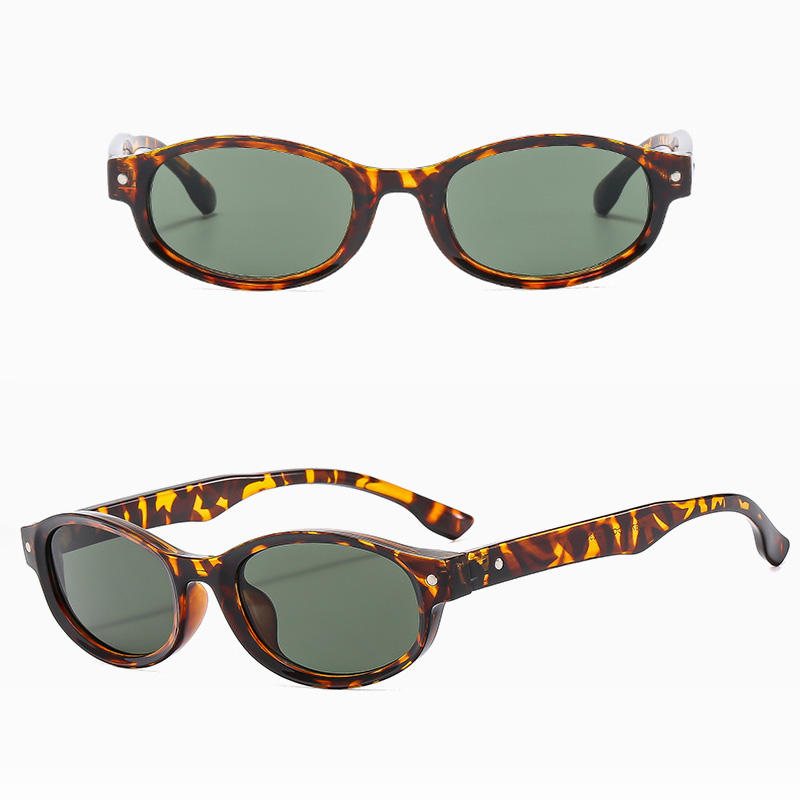
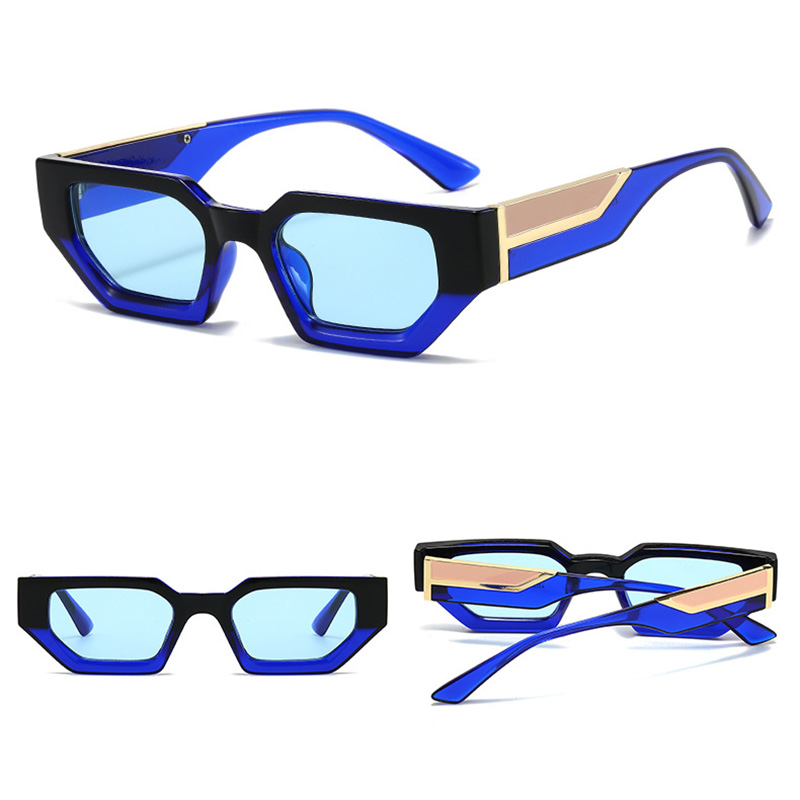
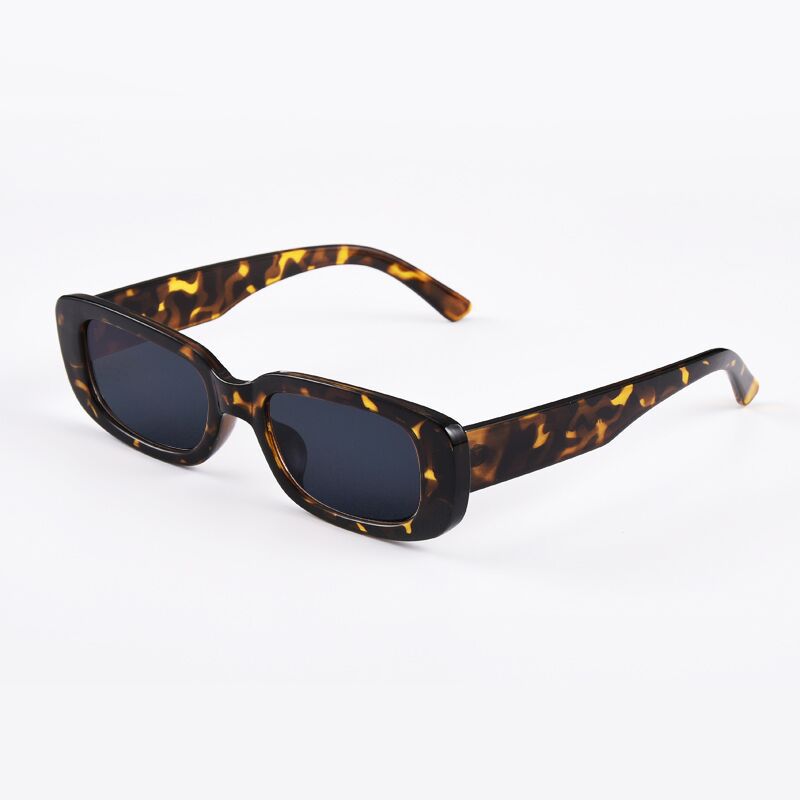
5 Key Steps to Wholesale Sunglasses from China
Finding suppliers who wholesale sunglasses from China is the easy part. The hard part is knowing what you're actually buying before you commit money. Wrong material choices, unclear MOQ terms, and skipped sample testing quietly lock first-time buyers into deals they regret — not because the supplier was dishonest, but because the buyer didn't have the right decision framework upfront.
To wholesale sunglasses from China successfully, follow five weighted steps: (1) understand the material-to-price-to-market fit before requesting quotes, (2) choose the right supplier type for your order size, (3) clarify the two tracks of logo customization, (4) use samples as your primary quality gate, and (5) verify certifications against your target market's actual requirements. Skipping any of these steps increases financial risk significantly.
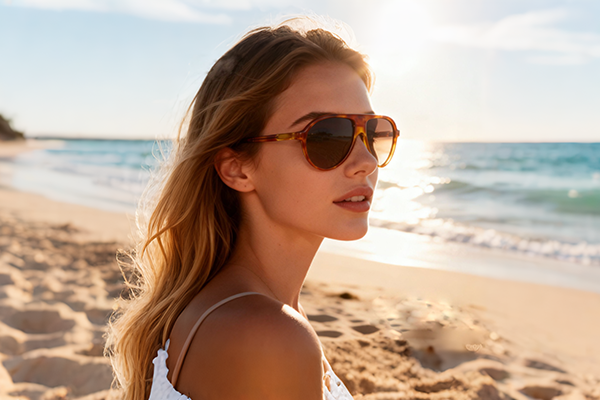
These five steps are not equally weighted. Material selection, supplier-type fit, and sample testing carry the most decision weight — they determine whether your first order becomes a profitable foundation or an expensive lesson. I'll walk through each step with the specific numbers, trade-offs, and frameworks I use daily when fielding buyer inquiries. Let's start with the decision that shapes everything else: understanding what you're actually paying for.
Step 1: Why Does Material Selection Determine Your Price and Market Fit?
Most first-time buyers start by requesting quotes from multiple suppliers — then compare unit prices side by side. This feels logical, but it's the fastest way to make a bad decision. A $0.80 PC frame and a $3.50 acetate frame are not competing products. They serve different retail tiers, different consumers, and different brand positions.
The price gap between PC, TR90, acetate, and metal sunglasses frames reflects real, measurable differences in durability, weight, feel, and perceived value.[^1] Before you request a single quote, you need to map the material to the market you're selling into. This self-selection step prevents you from chasing the wrong price point entirely.
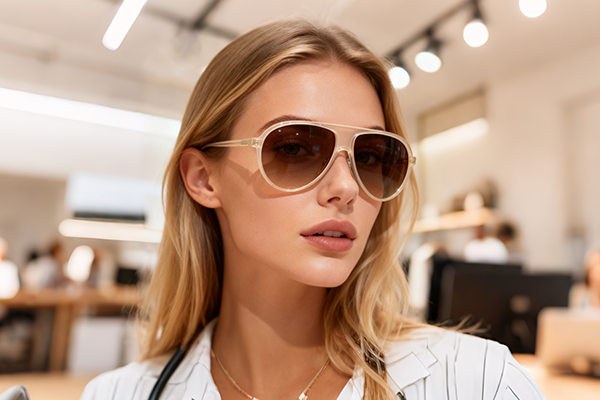
The Material → Price → Market Fit Map
Here's the framework I walk buyers through almost every week. A common question we get from first-time buyers is, "What's your best price?" My answer is always a counter-question: "Who's your end customer?"
| Material | Typical FOB Price Range | Weight & Feel | Durability | Best Market Fit |
|---|---|---|---|---|
| PC (Polycarbonate) | $0.50–$1.50 | Lightweight, basic | Moderate; can feel brittle at low quality | Promotional items, budget retail, event giveaways |
| TR90 (Nylon-based) | $1.00–$3.00 | Very lightweight, flexible | High; bends without breaking | Mid-range retail, sport/outdoor lines, DTC brands |
| Acetate | $2.50–$6.00+ | Heavier, premium feel | High; rich color depth, hand-polished options | Fashion-forward brands, optical-grade positioning |
| Metal | $2.00–$5.00+ | Variable; depends on alloy | Good; hinge quality is key differentiator | Classic/luxury positioning, unisex collections |
What These Price Tiers Actually Mean for You
The price ranges above are FOB (Free on Board) estimates — your landed cost will be higher after shipping, duties, and any customization. But the relative gaps hold steady, and they tell you something important: choosing the wrong material for your market is more costly than overpaying slightly per unit on the right material.
I've seen buyers order 2,000 pieces of the cheapest PC sunglasses, then struggle to sell them above $3 retail because the frames felt flimsy. Meanwhile, a TR90 frame at twice the unit cost supports a $12–$18 retail price with much healthier margins and far fewer customer complaints.
How to Self-Select Before Quoting
Ask yourself three questions before reaching out to any supplier:
- What is my target retail price? Work backward. If you're targeting $15–$25 retail, TR90 or entry-level acetate gives you room. If you're in the $5-and-under promotional space, PC is your material.
- Who is my end consumer? Fashion-conscious buyers expect acetate's color richness and weight. Active-lifestyle consumers prefer TR90's flex and lightness[^2].
- What's my brand positioning? A premium logo on a PC frame creates a credibility gap your customer will feel instantly — even if they can't name the material.
Key takeaway: Never compare quotes across different materials. Compare quotes for the same material and specification from different suppliers. That's an apples-to-apples comparison.
Step 2: Should You Source from a Factory, a Trader, or a Stock-Ready Supplier?
The advice "go direct to the factory" is everywhere in sourcing guides. It sounds logical — cut out the middleman, save money. But in the sunglasses industry, the real picture is more nuanced. Many buyers who insist on "factory direct" end up paying more in total cost-of-entry because pure factories often require high MOQs, offer limited style variety, and move slowly on small orders.
The right supplier type depends on your order size and how much flexibility you need. For first-time buyers or brands testing new markets, a stock-ready supplier with factory backing often delivers lower total risk and faster time-to-market than a pure manufacturing facility.
Three Supplier Models Explained
Understanding these three models helps you ask better questions during vetting — and avoid mismatched expectations.
1. Pure Factory
- Manufactures frames from raw material on-site
- Typically requires 500–3,000 pieces per style/color for production runs
- Best for: established brands with proven SKUs and predictable volume
- Watch out for: long lead times (60–90 days), limited willingness to mix styles, and sometimes weaker English-language sales teams
2. Trading Company
- Sources from multiple factories; acts as intermediary
- Flexible on styles and sourcing, but adds a margin layer
- Best for: buyers who need a wide range of product categories (not just sunglasses)
- Watch out for: less visibility into actual production quality, potential inconsistency between orders
3. Factory-Backed Stock-Ready Supplier
- Maintains ready inventory produced through their own factory partnerships
- Allows mix-and-match across styles and colors with MOQs as low as 12 pieces per color[^3]
- Best for: first-time buyers, brand launchers, and wholesalers who need variety without committing to thousands of units
When Each Model Wins
In our experience fulfilling mixed-style orders, most first-time buyers from North America and Europe start with the stock-ready model. They'll order 20–30 styles at 12–36 pieces each, test sell-through rates, then reorder the winners in higher volume — sometimes transitioning to a custom production order later.
This approach works because it separates the testing phase from the commitment phase. You learn which styles, colors, and materials your market responds to before you invest in a 1,000-piece custom run.
| Decision Factor | Pure Factory | Trading Company | Stock-Ready Supplier |
|---|---|---|---|
| Unit price (same material) | Lowest at high volume | Highest | Competitive at low-to-mid volume |
| MOQ flexibility | Low | Medium | High (12 pcs/color) |
| Style variety per order | Limited | High | High (from existing catalog) |
| Customization depth | Full (molds, colors, design) | Depends on factory | Logo customization on stock; full custom at higher MOQ |
| Lead time for first order | 45–90 days | 30–60 days | 3–7 days (stock); 30–90 days (custom) |
| Quality consistency control | Direct but requires your own QC | Variable | Consistent if supplier manages own stock QC |
As a supplier, here's what we see: Buyers who start with 500+ piece factory orders on untested styles take on significantly more risk than those who start with a mixed stock order, validate market demand, then scale. The "cheapest per-unit" path is not always the cheapest path to profitability.
Step 3: What Are the Two Tracks of Logo Customization for Wholesale Sunglasses?
Most first-time buyers assume that putting their logo on sunglasses requires thousands of units per style. This misconception stops many small brands from even starting. In reality, there are two distinct customization tracks — and understanding the difference is the single most useful framework for deciding how to enter the market.
Track 1 is logo customization on existing stock frames — low MOQ, fast turnaround. Track 2 is fully custom design — new shapes, colors, temples, or packaging from scratch, with higher minimums and longer lead times. Most first-time buyers should start with Track 1, then graduate to Track 2 once they've proven demand.
Track 1: Logo on Stock Frames
This is where most of our first-time buyers begin. You choose from existing frame styles in our catalog, and we add your branding. Here's what's typically possible:
- Logo on temples: Laser engraving, silk-screen printing, or metal plate application
- Logo on lenses: Pad printing (common for promotional sunglasses)
- Custom packaging: Branded microfiber pouches, cases, or boxes
- MOQ: Often as low as 50–300 pieces per style for logo addition, depending on the branding method
- Lead time: 7–15 days after artwork approval, since the base frames already exist
This track lets you test your brand in-market with minimal inventory risk. The frames are production-proven — you're not betting on an untested design.
Track 2: Fully Custom Design
This is for buyers who have a specific design vision: unique frame shapes, proprietary color combinations, custom temple patterns, or specialized lens treatments. Here's what to expect:
- MOQ: Typically 300–1,000 pieces per style/color, depending on material and complexity
- Sampling: 5–30 days for prototype creation (this varies based on whether new molds are needed)
- Production: 30–90 days after sample approval
- Costs: Sample fees ($50–$150 per style, often refundable against production orders) plus potential mold fees for entirely new shapes
How to Decide Between Track 1 and Track 2
Ask yourself:
- Have I validated this style with my customers? If not, Track 1 is safer.
- Do I need a frame shape that doesn't exist in any supplier's catalog? Only then is Track 2 necessary from day one.
- Can my cash flow handle 300–1,000 units of an unproven style? If the answer makes you hesitate, start with Track 1.
A common pattern we see: a buyer starts with Track 1, orders 200 pieces of a stock aviator frame with their logo, sells through in 6 weeks, then comes back for Track 2 with a custom frame design based on what they learned about their customers' preferences. That's a smart, low-risk scaling path.
Step 4: How Should You Use Samples as Your Primary Quality Gate?
Catalog photos look great. Spec sheets list the right numbers. But neither tells you how a frame actually feels in your hand — the weight distribution, the hinge tension, the lens clarity when you hold them up to light. Sampling is not a formality in wholesale sunglasses from China sourcing. It is the highest-ROI risk-reduction move in the entire process.
Order ready-stock samples before committing to any production run. Evaluate material feel, hinge quality, lens optical clarity, and surface finish across multiple suppliers. Budget 5–30 days for sample delivery, and treat this step as your non-negotiable quality gate — it costs very little compared to the cost of a bad bulk order.
What to Inspect in Your Samples
I recommend buyers evaluate samples against a structured checklist rather than just a gut feeling. Here's the framework we share with our buyers:
Frame Quality
- Flex test: Gently open and close the temples 20+ times. Do the hinges feel smooth? Any looseness or grinding?
- Stress test: For TR90 frames, carefully flex the temples outward. They should bend and return without permanent deformation.
- Surface finish: Run your fingers along the frame front and temples. Feel for rough spots, uneven texture, or visible mold lines.
- Color consistency: Compare 3–5 units of the same style/color. Are there noticeable shade differences?
Lens Quality
- Optical clarity: Hold the lens at arm's length and look through it at a straight line (like a door frame). Move the lens slowly. If the line distorts or waves, the optical quality is poor.
- UV protection: This requires a UV meter to verify properly — more on certification in Step 5.
- Lens seating: Are the lenses firmly seated in the frame? Try gentle pressure. Loose lenses signal poor assembly.
Branding Quality (If Applicable)
- Logo placement: Is it centered? Consistent across units?
- Print durability: Rub the logo area with a slightly damp cloth 10 times. A good print won't smudge or fade from this.
- Engraving depth: For laser-engraved logos, check that the depth is uniform.
The Strategic Approach to Sampling
Don't order one sample from one supplier. Order samples from 2–3 shortlisted suppliers for the same or comparable styles. This gives you:
- A direct comparison of material quality at similar price points
- A feel for each supplier's communication speed and professionalism during the sampling process
- Leverage when negotiating your first bulk order — you'll understand the quality spectrum
In our experience, the buyers who invest $100–$300 in a thorough multi-supplier sample round almost always make better bulk decisions — and they rarely face quality surprises on delivery.
Step 5: How Do You Navigate Sunglasses Certifications Without False Confidence?
Certifications are where both overconfidence and unnecessary fear live. Some buyers see "UV400" on a listing and assume everything is handled. Others hear "FDA registered" and panic about regulatory complexity. The truth is more manageable, but it requires knowing what each standard actually means — and what it doesn't.
Common certifications for wholesale sunglasses include UV400 (blocks UVA/UVB up to 400nm)[^4], CE marking (European conformity), and FDA registration (US market requirement for sunglasses as medical devices)[^5]. A reliable supplier should proactively provide test reports for these standards. However, buyers should independently verify compliance against their target market's specific requirements — do not rely solely on supplier-provided certificates.
What Each Certification Actually Covers
| Certification | What It Means | What It Doesn't Mean | Your Action |
|---|---|---|---|
| UV400 | Lenses block ultraviolet light up to 400nm wavelength | Not a third-party certification standard by itself; it's a specification | Ask for a third-party lab test report confirming UV transmittance levels |
| CE Marking | Product meets EU safety, health, and environmental requirements (EN ISO 12312-1 for sunglasses) | Not a quality guarantee; it's a self-declaration in many cases | Request the EU Declaration of Conformity and supporting test reports |
| FDA Registration | Facility and product are registered with the US FDA (sunglasses classified as medical devices) | Not an FDA "approval" — the FDA does not approve sunglasses | Verify registration on FDA's device database; confirm impact-resistance testing (21 CFR 801.410) |
| ANSI Z80.3 | Meets American National Standards Institute optical and UV requirements[^6] | Voluntary standard; not legally mandated but widely expected by US retailers | Useful to request if selling into US retail chains |
What a Reliable Supplier Should Provide
Based on the inquiries I handle daily, here's what you should expect a professional sunglasses supplier to offer without you having to chase it:
- Third-party UV test reports from an accredited lab (not just "UV400" printed on the product)
- Material safety data (especially for frames marketed to children or sport use)
- CE documentation if they regularly export to Europe
- FDA registration number if they serve the US market
- Drop-ball test reports for impact resistance (relevant for US FDA compliance)
What You Should Do on Your End
This is important: no supplier's certificate replaces your own due diligence. Here's what I recommend:
- Verify test reports independently. Check that the lab named on the report is accredited (look for CNAS, ILAC, or ISO 17025 accreditation).
- Cross-check FDA registration on the FDA's official database at accessdata.fda.gov.
- Consult your market's regulatory body for the most current requirements. Standards update periodically, and a certificate from 2019 may not reflect 2024 requirements.
- Consider commissioning your own third-party test on samples before a large first order. This costs $200–$500 but provides complete peace of mind.
A note on our position: I can share what certifications we provide and what testing our products undergo, but I am not a regulatory consultant. For market-specific compliance questions — especially around labeling, import declarations, and retail-level requirements — please consult a qualified compliance professional or your customs broker.
Frequently Asked Questions
What is the minimum order quantity (MOQ) to wholesale sunglasses from China?
MOQs vary by supplier type and customization level. For stock-ready suppliers, you can often order as few as 12 pieces per color for existing styles. Logo customization on stock frames typically starts at 50–300 pieces. Fully custom designs usually require 300–1,000 pieces per style/color. Always confirm MOQ before sampling.
How long does it take to receive a wholesale sunglasses order from China?
For in-stock orders, expect 3–7 days for preparation plus shipping time. Logo customization on stock adds 7–15 days after artwork approval. Fully custom orders take 30–90 days for production after sample approval, plus 5–30 days for sampling itself. Shipping by sea adds 15–35 days; air freight takes 5–10 days.
Can I mix different sunglasses styles in one wholesale order?
Yes — this is one of the key advantages of working with a stock-ready supplier. You can mix styles, colors, and even materials within a single order, provided you meet the per-style or per-color minimum (often as low as 12 pieces). This is ideal for testing which styles perform best in your market.
How do I verify that wholesale sunglasses from China have real UV protection?
Request a third-party UV transmittance test report from an accredited laboratory. Do not rely solely on "UV400" printed on the product or in a listing. You can also purchase a UV meter (around $30–$80) for basic spot-checking, or commission your own lab test on samples for roughly $200–$500.
Is it safe to order wholesale sunglasses from China for the first time?
Yes, provided you follow a structured approach: understand material-price trade-offs, verify supplier legitimacy through samples, request and verify certifications, and start with a smaller mixed order before committing to large volumes. The risk isn't in sourcing from China — it's in making uninformed decisions without testing first.
Conclusion
The five key steps to wholesale sunglasses from China are not a flat checklist — they're a risk-weighted decision framework. Understanding the material-to-market fit prevents you from chasing the wrong price point. Choosing the right supplier type matches your order size to realistic MOQs. Knowing the two tracks of customization lets you enter the market without overcommitting. Strategic sampling protects your capital better than any catalog photo. And proper certification verification keeps you compliant without creating false confidence.
Every step comes down to one principle: reduce risk by making informed decisions before committing money. Whether you're a brand owner testing your first collection or a wholesaler switching suppliers, this framework helps you structure that first order intelligently.
If you're evaluating suppliers for wholesale sunglasses from China and want to start with a mixed-style sample order — or need help mapping your retail price point to the right frame material — feel free to reach out. I'm happy to walk you through our available stock, customization options, and the specific certifications we provide for your target market.
[^1]: "Analysis of Surface Roughness and Strain Durability of ... - PMC", https://pmc.ncbi.nlm.nih.gov/articles/PMC11966310/. Materials and eyewear-design literature indicates that polycarbonate, TR90, cellulose acetate, and metal frames differ in density, flexibility, durability, and surface finish, which can affect perceived quality; however, perceived value also depends on branding, retail context, and consumer expectations rather than material alone. Evidence role: general_support; source type: research. Supports: evidence that eyewear frame materials differ in physical and perceptual properties. Scope note: The cited research may establish material-property differences but not direct consumer willingness-to-pay effects.
[^2]: "What Is TR-90 Frame Material? Definition ...", https://www.lens.com/what-is/what-is-tr-90-frame-material/?srsltid=AYCX9vIgRKkqkAZ3escRlzqJ1LYIsy_WUvK_xS5CPnHdS1DloiUAOD7p. Polymer and eyewear material studies describe TR90 as a thermoplastic polyamide with low density and high flexibility, properties that support lightweight, impact-resistant frame construction; these material characteristics do not by themselves prove that consumers prefer TR90 over other materials. Evidence role: mechanism; source type: research. Supports: material properties of TR90 (thermoplastic polyamide) relevant to lightweight and flexible eyewear frames. Scope note: Material datasheets and laboratory tests support physical properties, not market preference.
[^3]: "12-Piece MISC Group with Colorful Numerical Prints ...", https://fashionwholesaler.com/Eye_Wear_Sunglasses_Cases_Pouches/SUNGLASS_GL-1324?srsltid=AYCX9vLKHSpnyxMkv4yLl2yf5hixHW5bdxIMk0OFoh5Lh8xC_wpOQ0Ds. Trade listings and wholesale market documentation show that some Chinese stock-ready eyewear suppliers allow mixed-style orders with per-color minimums as low as a dozen units, because they draw from existing inventory rather than initiating production; this is a supplier-specific model, not a universal MOQ for Chinese sunglasses manufacturing. Evidence role: statistic; source type: other. Supports: existence of low-MOQ, stock-ready wholesale sunglasses supply for mixed orders. Scope note: The source describes a subset of stock-ready suppliers and may not generalize to all suppliers or styles.
[^4]: "UVA/UVB vs UV 400 Protection. What's the difference?", https://www.stngredge.com/blogs/news/uva-uvb-vs-uv-400-protection-whats-the-difference?srsltid=AYCX9vIso7NGRvlgLFrL8WgXyd-65JW8iody3U3t_jkSDaRQsZivLTv2. Optical and eyewear standards define UV400 as blocking ultraviolet radiation with wavelengths up to 400 nm, which covers the UVA and UVB ranges; the label alone does not verify actual transmittance performance without laboratory testing. Evidence role: definition; source type: institution. Supports: standard definition of UV400 lens protection. Scope note: The definition does not prove that a specific product meets UV400 unless test data are provided.
[^5]: "Sunglasses, Spectacle Frames, Spectacle Lens and ...", https://www.fda.gov/medical-devices/guidance-documents-medical-devices-and-radiation-emitting-products/sunglasses-spectacle-frames-spectacle-lens-and-magnifying-spectacles. US FDA regulations classify nonprescription sunglasses as Class I medical devices and require establishment registration and device listing, along with impact-resistance testing under 21 CFR 801.410; FDA registration is not an approval of product quality or safety claims. Evidence role: definition; source type: government. Supports: FDA classification and registration requirements for nonprescription sunglasses. Scope note: Regulatory requirements may change and product-specific compliance should be verified with FDA guidance.
[^6]: "Guidance Document For Nonprescription Sunglasses", https://www.fda.gov/regulatory-information/search-fda-guidance-documents/guidance-document-nonprescription-sunglasses-guidance-industry. ANSI Z80.3 is a voluntary American National Standard specifying optical, transmittance, and impact-resistance requirements for nonprescription sunglasses and fashion eyewear; it is widely referenced by US retailers, but compliance is not mandated by federal law in the same way as FDA device requirements. Evidence role: definition; source type: institution. Supports: scope and voluntary status of ANSI Z80.3 for nonprescription sunglasses. Scope note: The standard is revised periodically, and the current edition should be consulted for specific requirements.
Share:


Post time: Oct-23-2026