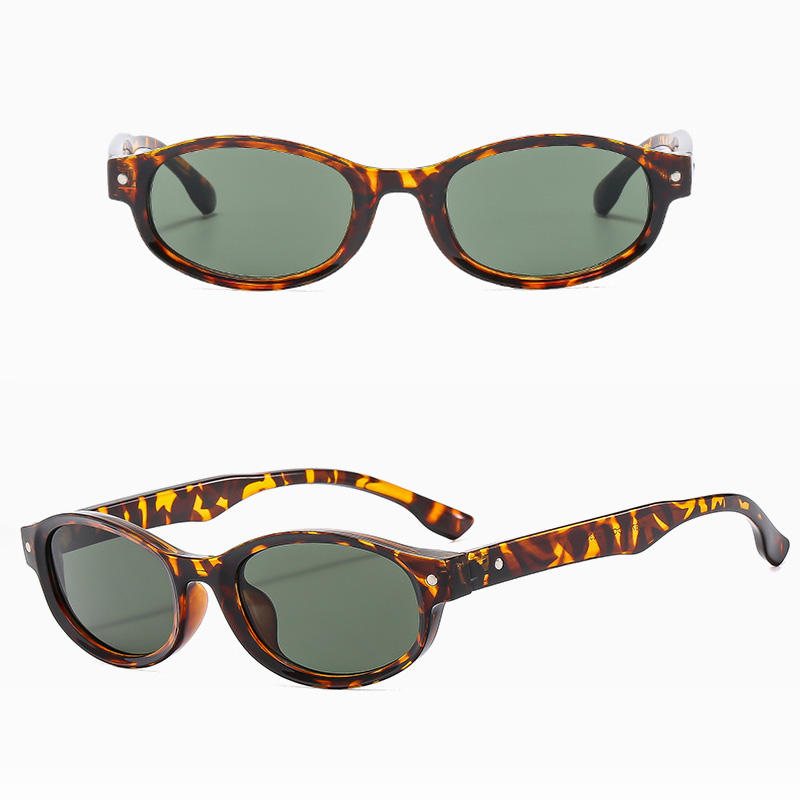
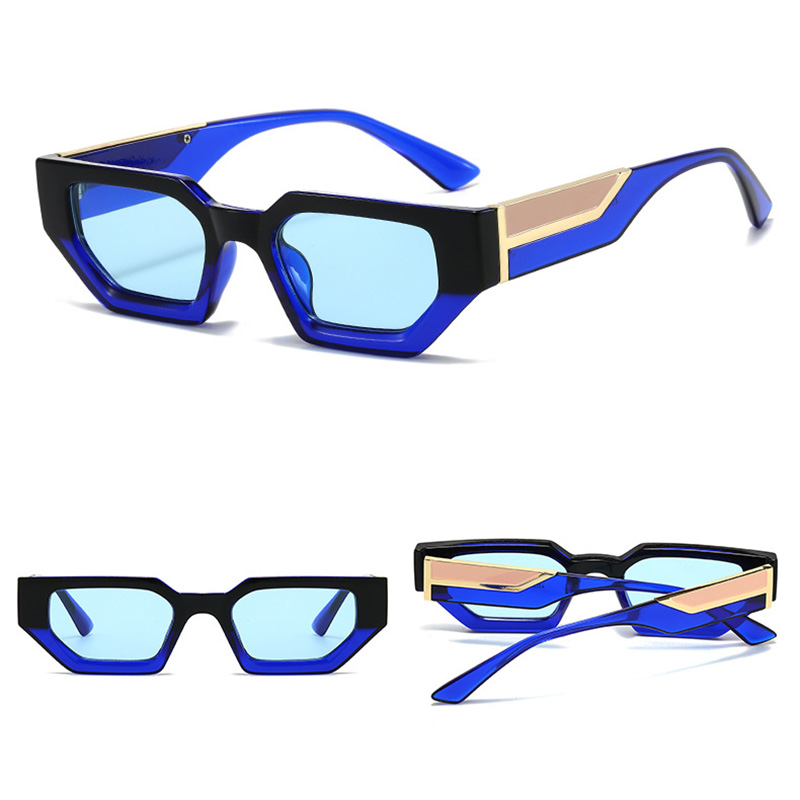
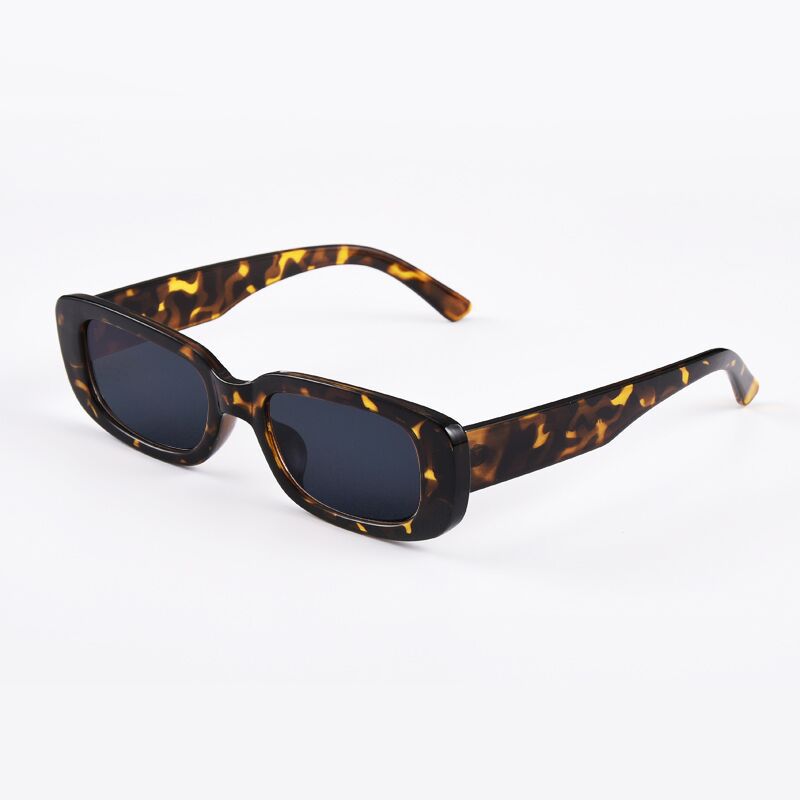
Acetate from China Manufacturers
Sourcing acetate from China manufacturers sounds straightforward—until you realize the gap between finding a factory and building a reliable supply chain can sink an emerging brand. High minimums lock up cash, slow communication kills launch timelines, and the wrong supplier fit wastes months of momentum. The right approach starts with understanding how the acetate supply ecosystem actually works.
Acetate from China manufacturers spans a wide spectrum—from massive OEM plants producing hundreds of thousands of frames annually to agile hybrid suppliers offering low-MOQ ready-stock fulfillment with logo customization. For startup brands and small-to-midsize wholesalers, the best sourcing partner is rarely the biggest factory; it is the one whose order flexibility, communication responsiveness, and collaboration model match your current business stage.
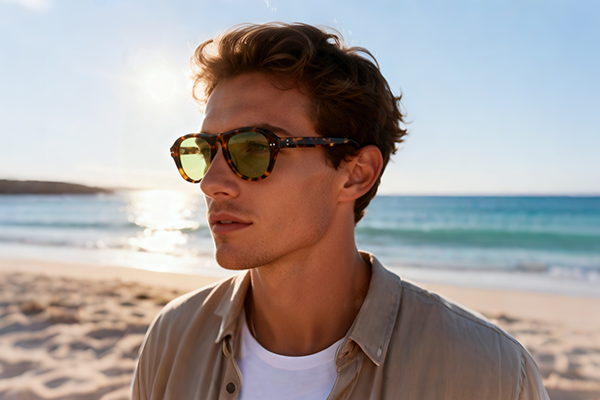
But how do you tell these supplier types apart? And how do you avoid the costly mistakes I see buyers repeat every quarter? Below, I break down the production realities, supplier tiers, total cost considerations, and a practical evaluation framework so you can make a sourcing decision that supports long-term brand growth—not just a single purchase order.
Why Is Acetate So Popular for Eyewear Frames?
If you're evaluating frame materials for your product line, you've probably noticed that acetate dominates the mid-to-premium segment. But understanding why helps you communicate value to your own customers and negotiate smarter with suppliers.
Acetate is a plant-derived cellulose plastic prized for its rich color depth, hypoallergenic properties, lightweight comfort, and ability to be hand-polished to a luxurious finish.[^1] Unlike injection-molded PC or TR90 frames, acetate frames are typically cut from layered sheets, giving each piece subtle pattern uniqueness[^2]—a selling point many boutique brands leverage.

How Acetate Frames Differ from Other Materials
I often walk buyers through a quick comparison so they understand the trade-offs before committing to a material strategy:
| Feature | Acetate | TR90 | PC (Polycarbonate) | Metal |
|---|---|---|---|---|
| Production Method | CNC-cut from cast sheets | Injection molded | Injection molded | Stamped / bent |
| Color Richness | Excellent — layered patterns possible | Good — solid colors | Moderate | Limited (plating finishes) |
| Weight | Medium | Very light | Light | Varies |
| Adjustability | Heat-adjustable by opticians | Limited | Limited | High |
| MOQ Sensitivity | Higher — sheet casting minimums | Lower — mold-based | Lower — mold-based | Moderate |
| Perceived Value | Mid-to-premium | Mid | Budget-to-mid | Mid-to-premium |
| Typical Price Range (FOB) | $3.50–$12+ | $1.50–$5 | $0.80–$3 | $2.50–$8+ |
Key takeaway: Acetate's production process inherently carries higher material and labor costs, which directly influence MOQ structures and lead times. This is not a flaw—it's the economics of the material. Buyers who understand this negotiate more realistically.
The Production Reality Behind Acetate Sheets
Here's something many first-time buyers don't realize: custom-cast acetate sheets—the raw material—require their own minimums and curing times. Italian Mazzucchelli and Chinese domestic sheet producers alike typically need orders of 50–100 kg minimum per color pattern, and sheets can take 4–8 weeks to cure before they are even ready for cutting.
This means that if you want a completely unique color or tortoiseshell pattern, you're adding significant lead time and cost before frame production begins. The savvy approach for emerging brands? Work with suppliers who maintain a library of ready-stock acetate slab colors—popular tortoise, black, crystal, and gradient patterns—so you can skip the sheet-casting queue entirely. I've seen this single decision shave 3–5 weeks off a buyer's first production run.
What Is the "Direct-to-Mega-Factory" Trap?
Every founder I speak with has the same instinct: go straight to the source. Cut out middlemen. Get the best price. In theory, it makes sense. In practice, this approach frequently backfires for orders under a few thousand pieces.
The direct-to-mega-factory trap occurs when small or emerging brands approach large-scale acetate manufacturers expecting the same attention, flexibility, and pricing that major retail chains receive. These factories are optimized for volume—300 to 500+ pieces per SKU per color is a common minimum—and their business model depends on long, uninterrupted production runs[^3].

Why Big Factories Deprioritize Small Orders
I've had conversations with buyers who waited 8–12 weeks for sample revisions from tier-1 OEM factories, only to be quoted MOQs they couldn't justify for a first market test. This isn't because these factories are bad—it's because their operational economics don't align with startup-stage needs.
Here's what typically happens:
- Your order enters a low-priority queue. Large factories schedule production around their anchor clients (often global brands placing tens of thousands of units). A 200-piece order gets slotted into gaps, meaning unpredictable timelines.
- Communication becomes transactional. Sales reps at large plants often manage dozens of accounts simultaneously. Response times of 24–72 hours are common. Detailed back-and-forth on hinge specs, temple printing placement, or acetate pattern matching gets compressed.
- Sample iteration slows dramatically. Custom sampling may require dedicating a CNC machine and a polishing technician for a one-off piece. Factories absorb this cost reluctantly for small prospects.
- Cash flow gets locked up. Rigid MOQs force you to order more SKUs or more units per color than your sell-through data supports. I've seen brands sit on 60% of their initial order as dead stock because they over-committed to meet factory minimums.
The real cost isn't the unit price—it's the capital trapped in unsold inventory and the opportunity cost of a delayed launch.
When Direct Factory Sourcing Does Make Sense
To be fair, direct factory relationships become highly valuable as your brand scales. Once you're consistently ordering 1,000+ pieces per style and have established sell-through data, the economics shift decisively in favor of direct manufacturing partnerships. The key is recognizing where you are today, not where you hope to be in two years.
How Do Agile Suppliers and Hybrid Partners Add Value?
This is where I need to challenge a persistent misconception: the idea that any entity between you and a factory is a "middleman" adding cost without value. In the acetate eyewear supply chain, flexible sourcing partners and hybrid suppliers frequently deliver superior total value for brands operating below the mega-factory MOQ threshold.
Agile suppliers—whether they operate their own finishing facilities, maintain deep ready-stock inventories, or coordinate across multiple specialized workshops—provide services that large factories structurally cannot offer to small accounts: mixed-style fulfillment, low-MOQ logo customization, consolidated cross-category shipping, and responsive communication across time zones.

The Service Layer That Matters
Let me break down the specific functions an agile acetate supplier handles that you'd otherwise manage yourself:
- Ready-stock distribution: Access to hundreds of acetate frame styles already produced and warehoused, available for immediate shipment in mixed quantities. This eliminates production lead time entirely for market testing.
- Low-MOQ logo customization: Laser engraving, pad printing, or embossing your brand name on temples—often with minimums as low as 12–50 pieces per style, compared to 300+ at a standard factory.
- Mixed-style, mixed-color ordering: Instead of committing to 500 units of a single SKU, you order 20–30 pieces across 15–20 styles.[^4] This is how smart wholesalers and emerging brands test market response before scaling.
- Cross-category coordination: Need acetate optical frames, TR90 sunglasses, and metal readers in the same shipment? An agile supplier consolidates across material categories, saving you the complexity of managing three separate factory relationships.
- Dedicated communication: Smaller, service-oriented suppliers often assign a single point of contact who understands your brand positioning, responds within hours, and proactively flags issues.
Comparing Supplier Types for Acetate Frames from China
| Evaluation Criteria | Large OEM Factory | Agile / Hybrid Supplier |
|---|---|---|
| Typical MOQ | 300–500+ per SKU/color | 12–50 per style (ready-stock); negotiable for custom |
| Lead Time (Ready Stock) | N/A — production only | 3–7 days |
| Lead Time (Custom) | 30–60 days | 20–40 days |
| Sample Turnaround | 7–21 days | 3–10 days |
| Communication Speed | 24–72 hours | 2–12 hours |
| Logo Customization | Included at high MOQs | Available at low MOQs |
| Mixed-Style Orders | Rarely accommodated | Core offering |
| Unit Price | Lower at volume | Slightly higher, offset by flexibility |
| Inventory Risk | High (large commitments) | Low (test-and-scale) |
My honest assessment: The "slightly higher" unit price from an agile supplier is almost always offset by lower inventory risk, faster time-to-market, and reduced communication overhead. Total Cost of Ownership favors flexibility at the startup and growth stages.
What Should You Evaluate Beyond Unit Price?
If unit price were the only variable, every buyer would source identically. But I've watched enough procurement cycles go sideways to know that Total Cost of Ownership (TCO) is what separates successful sourcing strategies from expensive lessons.
Beyond the FOB price per frame, acetate eyewear procurement involves hidden costs that compound quickly: inventory holding, defect handling, communication labor, shipping inefficiencies, and the opportunity cost of slow market response. Evaluating acetate from China manufacturers requires a holistic lens.

The Five Pillars of Total Cost of Ownership
1. Inventory Holding Risk
Every unit sitting in your warehouse costs money—storage, insurance, capital tied up, and potential markdowns. If a factory's MOQ forces you to order 500 black tortoise frames when your data supports selling 150 in the first quarter, those 350 excess units are a drag on your working capital.
Practical guideline: Calculate your projected 90-day sell-through per SKU. If a supplier's MOQ exceeds that number, you're over-ordering.
2. Communication Overhead
Time zones between North America/Europe and China create inherent friction. The question is whether your supplier absorbs that friction or passes it to you. I track how long it takes a supplier to answer a detailed question with a substantive response—not just an acknowledgment. Good partners respond within 4–8 working hours with actionable information.
3. Defect Handling and QC Transparency
Acetate frames are susceptible to specific quality issues: uneven polish, color inconsistency between batches, hinge misalignment, and surface bubbles from the sheet itself. Ask prospective suppliers:
- What is your AQL (Acceptable Quality Level) standard?
- Do you provide pre-shipment inspection photos or video?
- What is your policy for defective units—replacement, credit, or refund?
Verify certifications independently. If a supplier claims ISO compliance or specific material certifications, request documentation and cross-check. I always recommend buyers arrange a qualified third-party inspection for first orders.
4. Shipping and Consolidation Efficiency
Ordering acetate frames from one factory, metal frames from another, and accessories from a third means three separate export declarations, three shipping invoices, and three potential delay points. Suppliers who consolidate cross-category orders into a single shipment save you $200–$800+ per order cycle in freight and handling—not to mention administrative time.
5. Sample Iteration Speed
Your ability to finalize designs quickly depends on how fast your supplier produces and ships samples. In my experience, sample turnaround time is the single best predictor of overall supplier responsiveness[^5]. If a supplier takes three weeks to send a single sample, expect that pace to persist through production.
How Do You Build a Supplier Evaluation Framework?
Knowing what to evaluate is one thing. Having a structured process is another. I recommend a simple scoring framework I've refined through years of matching brands with acetate suppliers in China.
A practical supplier evaluation framework for acetate from China manufacturers should weight flexibility, communication, and quality infrastructure equally with—or above—unit price. This prevents the common mistake of optimizing for cost while accepting unacceptable risk in every other dimension.

A Weighted Scorecard Approach
Score each criterion on a 1–5 scale, then multiply by the weight. Compare total scores across 3–5 shortlisted suppliers.
| Criterion | Weight | What to Assess |
|---|---|---|
| MOQ Flexibility | 20% | Minimum per style/color; willingness to negotiate for first orders |
| Communication Quality | 20% | Response time, English proficiency, proactive problem-solving |
| Sample Speed & Accuracy | 15% | Days to deliver; fidelity to approved specs |
| QC Standards & Transparency | 15% | AQL level, inspection documentation, defect policy |
| Unit Price Competitiveness | 15% | FOB price benchmarked against 3+ quotes |
| Ready-Stock Availability | 10% | Breadth and depth of in-stock acetate styles |
| Consolidation Capability | 5% | Ability to combine material categories in one shipment |
How to Use This in Practice
- Request quotes from 3–5 suppliers for the same set of 5–8 acetate styles. Include both ready-stock and one custom design request.
- Track response times meticulously. Set a stopwatch from email sent to substantive reply received.
- Order samples from your top 2–3 candidates. Evaluate not just the frame quality but the packaging, labeling accuracy, and shipping speed.
- Place a small test order (50–100 mixed pieces) before committing to a larger production run. This is your real-world QC test.
- Score and compare using the weighted scorecard above.
Personal note: I've walked dozens of buyers through this process. The supplier who scores highest on this framework is almost never the cheapest per unit—but they are consistently the one that buyers reorder from. Long-term partnerships are built on reliability, not rock-bottom pricing.
Frequently Asked Questions
What is the typical MOQ for acetate frames from China?
Large OEM factories typically require 300–500+ pieces per SKU per color. However, agile and hybrid suppliers offer ready-stock acetate frames with MOQs as low as 12–50 pieces per style, making them far more accessible for emerging brands and small wholesalers testing new markets.
How long does it take to produce custom acetate frames in China?
Custom acetate frame production generally takes 30–60 days at large factories, including sheet preparation, CNC cutting, hand-polishing, and assembly. Flexible suppliers with ready-stock acetate sheets and existing molds can reduce this to 20–40 days. Ready-stock frames ship in 3–7 days.
Is it always cheaper to source directly from a Chinese acetate factory?
Not necessarily. While unit prices may be lower at large factories, the Total Cost of Ownership—including higher MOQs, longer lead times, inventory holding risk, and communication overhead—often makes agile suppliers more cost-effective for orders under 1,000–2,000 pieces. Evaluate total cost, not just per-frame price.
How can I verify the quality of acetate frames before placing a bulk order?
Request physical samples, ask for pre-shipment inspection photos and AQL documentation, and consider hiring a qualified third-party inspection service for your first order. Key quality checks include polish consistency, hinge tension, color accuracy against approved samples, and temple alignment.
Can I customize acetate frames with my own brand logo at low quantities?
Yes. Many agile suppliers offer logo customization through laser engraving, pad printing, or embossing at quantities as low as 12–50 pieces per style. This is ideal for market testing, boutique retail, and limited-edition capsule collections.
Conclusion
Sourcing acetate from China manufacturers is not a one-size-fits-all decision. The right supplier depends on your order volume, growth stage, and how much operational complexity you can absorb. Large OEM factories serve brands at scale; agile hybrid suppliers serve brands building momentum. Understanding the production economics of acetate—from sheet casting minimums to polishing labor—helps you negotiate from a position of knowledge rather than guesswork.
Focus on Total Cost of Ownership, not just unit price. Use a weighted evaluation framework. Test with small orders before committing capital. And prioritize suppliers who communicate transparently and demonstrate genuine willingness to grow alongside your business.
If you're sourcing acetate eyewear frames—or exploring mixed-material assortments across PC, TR90, metal, and acetate—I'd welcome a conversation about matching your current needs to the right fulfillment approach. Reach out to discuss ready-stock options, low-MOQ logo customization, or a sample order to evaluate our quality firsthand.
[^1]: "Bioplastics—a better option for the environment? - Ask IFAS", https://ask.ifas.ufl.edu/publication/FR418. Cellulose acetate is a plant-derived thermoplastic formed from cellulose and acetic acid; reference works and materials studies note its use in eyewear for color, lightweight feel, and polishability, though hypoallergenic claims depend on formulation and additives. Evidence role: definition; source type: encyclopedia. Supports: The material origin and physical properties of cellulose acetate used in eyewear.. Scope note: Hypoallergenic performance is formulation-dependent and not established for all acetate products.
[^2]: "Acetate Forming Equipment for Eyewear", https://smallbatchtools.com/eyewear-manufacturing/forming/. Industry and materials research describes cellulose acetate eyewear production as involving block or sheet cutting, polishing, and assembly, while TR90 and polycarbonate frames are commonly injection molded; the layered sheet method can produce pattern variation between frames. Evidence role: mechanism; source type: research. Supports: The sheet-cutting production method for acetate eyewear and its distinction from injection-molded thermoplastics.. Scope note: Pattern uniqueness is a qualitative outcome and varies by sheet type and cutting layout.
[^3]: "Economies of scale", https://en.wikipedia.org/wiki/Economies_of_scale. Operations management literature explains that capital-intensive manufacturing uses long production runs to amortize setup, tooling, and changeover costs; this economic logic can make small, frequent orders less attractive to large factories. Evidence role: mechanism; source type: education. Supports: Why volume manufacturing favors long production runs and high minimum order quantities.. Scope note: The general mechanism does not specify the behavior of any particular eyewear factory.
[^4]: "Acetate Glasses Frames for Men and Women", https://mykita.com/en/prescription-glasses/acetate?srsltid=AU7gw4VkXNNPAYGRZTFAVzFIq88oBgZ9kQ3p08s05QajDrsgRMQ5hHf8. Wholesale eyewear catalogs and sourcing guides describe ready-stock programs that permit mixed styles and colors in small quantities; the exact order composition is set by each supplier's inventory and customization policy. Evidence role: general_support; source type: other. Supports: The availability of mixed-style and mixed-color ordering among low-MOQ eyewear suppliers.. Scope note: The 20–30 piece across 15–20 styles example is illustrative and not guaranteed by all suppliers.
[^5]: "The role of supplier performance evaluations in mitigating risk", https://digitalcommons.bryant.edu/cgi/viewcontent.cgi?article=1117&context=mark_jou. Supply-chain research treats lead time, responsiveness, and communication as key supplier performance dimensions, and early sample turnaround can signal operational responsiveness; however, no single metric is universally the best predictor across all sourcing contexts. Evidence role: expert_consensus; source type: research. Supports: The role of lead-time and sample responsiveness in supplier evaluation.. Scope note: The claim is overstated as a universal predictor; it reflects practical experience rather than a validated single-factor model.
Share:


Post time: Oct-20-2026