Custom Acetate Sunglasses In China
Sourcing custom acetate sunglasses in China sounds straightforward—until you realize you're navigating material confusion, vague customization promises, and timelines you can't verify. These aren't minor inconveniences. They're the root causes of wasted deposits, rejected shipments, and months of lost momentum for your brand launch.
Most overseas buyers searching for custom acetate sunglasses in China don't actually have a material-selection problem—they have a risk-management problem. They can't reliably distinguish real acetate from injection-molded plastic, don't know what "custom" realistically means at their order size, and can't evaluate whether a factory's quoted timeline is credible. This article reframes the sourcing journey around the four most expensive mistakes buyers make—and how to avoid each one.
I've spent years fielding buyer inquiries at our eyewear factory, and I've noticed a pattern. The conversations that go sideways almost always trace back to the same four misunderstandings. Let me walk you through each one so you can source with clarity instead of anxiety.
Is Material Confusion the Most Expensive Mistake When Sourcing Acetate Sunglasses?
Buyers frequently use "acetate" and "plastic frame" as if they're synonyms. They're not—and the confusion doesn't just affect product quality. It affects your pricing, your brand positioning, and sometimes whether your shipment clears customs under the correct material declaration.
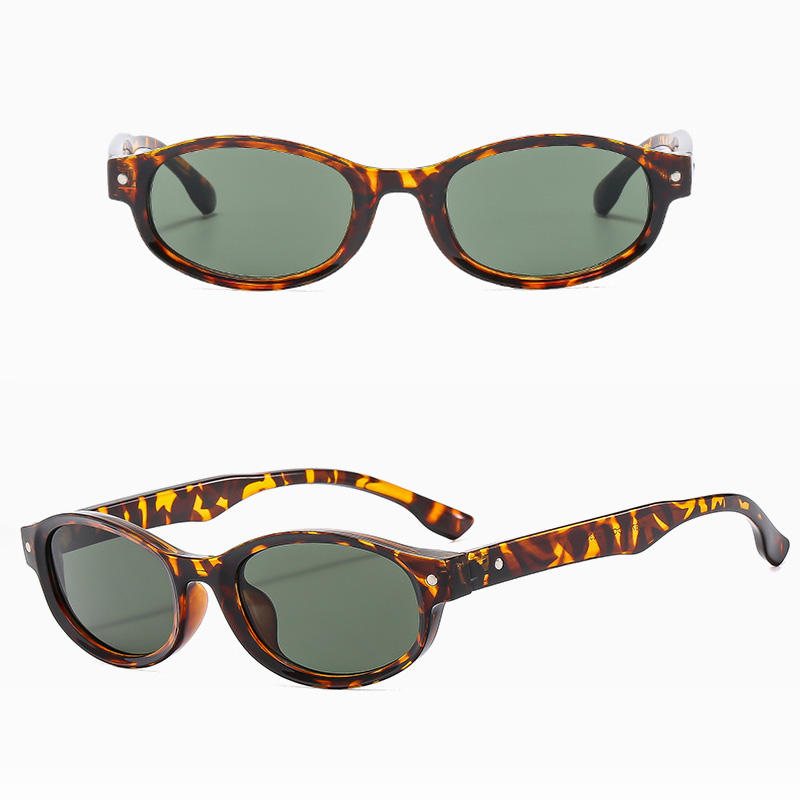
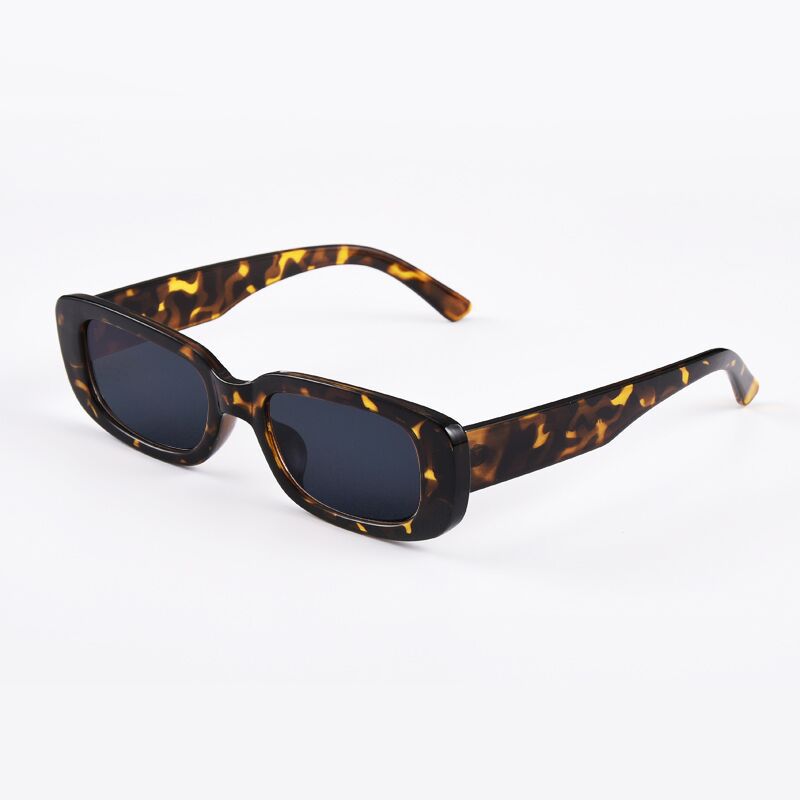
Acetate is a plant-based cellulose material with distinct visual depth, hand-polished finish potential, and a slightly heavier, warmer feel compared to injection-molded plastics like PC or TR90.[^1] If you can't tell them apart by touch and appearance, you risk paying acetate prices for plastic frames—or ordering acetate when a less expensive material actually serves your market better.
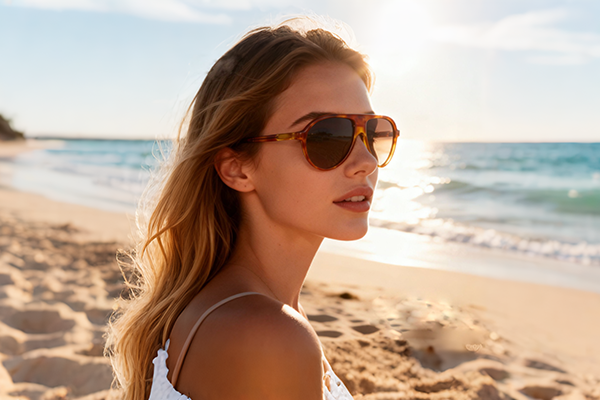
How to Spot Real Acetate Without a Lab
You don't need a chemistry degree. You need to know what to look for during sample evaluation. Here are the observable differences we point out to buyers every week:
| Feature | Acetate | TR90 (Nylon) | PC (Polycarbonate) |
|---|---|---|---|
| Surface feel | Warm, slightly heavy, smooth with depth | Lightweight, slightly flexible, matte | Lightweight, rigid, glossy |
| Color depth | Multi-layered, translucent patterns possible | Solid or simple dual-tone colors | Solid, flat colors |
| Finish | Can be hand-polished to a gloss | Usually matte or lightly polished | Injection-mold gloss |
| Aging behavior | Develops character; can be re-polished | Retains shape well; color stable | Can yellow or become brittle |
| Hinge area | Often barrel hinges, metal-embedded | Flexible integrated hinges common | Spring or standard pin hinges |
| Scent when lightly sanded | Vinegar-like (cellulose acetate trait) | Faint plastic smell | Sharper chemical smell |
Buyer tip: When you receive samples, hold an acetate frame and a TR90 frame in separate hands. The weight difference and surface warmth are immediately noticeable. If your "acetate" sample feels featherlight and has flat, single-tone color, ask questions.
When Acetate Is the Right Call—and When It Isn't
Here's where I sometimes talk buyers out of acetate. Not because I don't want the order, but because the wrong material choice leads to returns, margin erosion, and unhappy end customers.
Choose acetate when:
- Your brand targets fashion-forward retail at $80+ retail price points
- Color depth, layered tortoiseshell patterns, or translucent effects are central to your design identity
- Your customer values a premium, weighty feel—think boutique eyewear stores, optical shops, lifestyle brands
- You can absorb slightly higher per-unit costs because your margin structure supports it
Consider TR90 or PC instead when:
- You're building a sport, outdoor, or kids' line where breakage-related returns eat your margin
- Your retail price sits below $40 and per-unit cost sensitivity is high
- Lightweight, all-day comfort is a core selling point for your audience
- You need faster production turnaround with simpler finishing steps
In our experience working with brand clients, roughly a third of buyers who initially request acetate end up choosing TR90 or a mixed-material approach once they understand the cost and positioning implications[^2]. That's not a failure—that's a smarter sourcing decision.
A common conversation starts with a buyer asking for 200 units of fully custom acetate frames for a sport-focused brand selling at $35 retail. When we run through the math—acetate per-unit cost, the hand-polishing labor, the heavier weight that doesn't suit active use—the conversation naturally shifts. The buyer ends up with a better product for their market and better margins. Everyone wins.
Does "Custom" Actually Mean What You Think It Means?
This is where expectations collide with reality most often. When buyers say "custom acetate sunglasses," some mean full ground-up design with proprietary molds. Others mean "can you put my logo on something that already exists?" Both are valid—but they live in completely different cost and timeline universes.
"Custom" in Chinese eyewear manufacturing exists on a spectrum with at least four distinct tiers: stock selection, logo customization on existing molds, color and finish modifications, and full OEM/ODM development. Understanding which tier matches your budget and order size is the single most important decision you'll make before contacting any factory.
The Four Tiers of Customization
Let me break these down with realistic expectations for each:
Tier 1: Stock Selection (Mix & Match)
You browse a factory's existing catalog, select styles and colors, and order as-is. No logo, no modifications. This is the fastest, lowest-risk entry point.
- Typical MOQ: As low as 12–20 pieces per style/color from factories with ready inventory
- Lead time: Days to 1–2 weeks (inventory dependent)
- Best for: Wholesalers testing new markets, small retailers, first-time importers evaluating supplier quality
Tier 2: Logo on Existing Molds
You choose from existing frame shapes and add your brand logo—laser engraving on the temple, printed logos, or custom packaging.
- Typical MOQ: 50–150 pieces per style (varies by logo method)
- Lead time: 2–3 weeks after design approval
- Best for: Emerging brands that want branded product without mold investment, Kickstarter-stage companies
Tier 3: Color, Finish & Material Modifications
You start with an existing mold shape but customize the acetate color, pattern, finish (matte vs. gloss), temple material, or hinge hardware.
- Typical MOQ: 300–500 pieces per SKU (color-matching and material batch minimums drive this)
- Lead time: 4–6 weeks including sampling
- Best for: Growing brands with established sales channels who want differentiation without full design overhead
Tier 4: Full OEM/ODM (New Mold Development)
Proprietary frame design, new molds, custom engineering. This is true product development.
- Typical MOQ: 500–1,000+ pieces per SKU
- Mold cost: Can range from $300–$1,500+ depending on complexity
- Lead time: 8–16 weeks including design iteration, sampling, and production
- Best for: Established brands with proven sell-through data and committed retail distribution
Why This Spectrum Matters for Your First Order
Most small-to-mid brands should start at Tier 2 or Tier 3—not Tier 4. I've seen buyers burn through months and thousands of dollars developing a fully custom mold for their first-ever order of 200 units, only to discover their market prefers a slightly different shape. Starting with an existing mold that's proven in the market, branded with your logo and in your signature colorway, gets product into your customers' hands faster. You can iterate into Tier 4 once you have real sales data telling you which direction to go.
A useful question to ask yourself: "Am I investing in custom molds because my customers demand a truly unique shape, or because I assume custom means premium?" In many cases, a well-chosen acetate color combination on an existing bestselling frame shape delivers more perceived brand value than a unique silhouette in a generic color.
Why Do Factories Quote the MOQs They Do for Custom Acetate Sunglasses?
MOQ frustration is universal. Every buyer wants lower minimums. Every factory has a number below which they lose money. The disconnect isn't stubbornness on either side—it's a lack of transparency about what drives those numbers.
Factory MOQs for custom acetate sunglasses reflect three real production costs: raw material batch minimums (acetate sheets are produced in standard batch sizes), production line changeover time (switching colors or finishes requires cleaning, re-calibrating, and re-setting), and color-matching runs (achieving a specific acetate pattern may require multiple trial sheets before the batch is approved). When MOQ goes up, you're not paying for greed—you're paying for precision.
Breaking Down What You're Really Paying For
Let me demystify this with some operational context:
Raw material batches: Acetate sheets from major suppliers like Mazzucchelli or domestic Chinese sheet manufacturers are produced in batch runs.[^3] A single-color batch might yield enough material for 300–500 frames.[^4] If you order 50 pieces in a custom color, the factory either absorbs the cost of unused material or charges you a premium per-unit to offset the waste. That's why the per-unit price at 50 pieces looks dramatically different from the price at 500.
Changeover costs: Switching an acetate CNC cutting machine and polishing line from one color batch to another isn't instantaneous. Cleaning residue, re-calibrating settings, and running test pieces takes 2–4 hours depending on the factory's equipment.[^5] That downtime has a real dollar value. Spreading it across 500 frames makes it negligible per unit. Spreading it across 30 frames makes each pair significantly more expensive.
Color-matching runs: If you've sent a Pantone reference or a physical color swatch and want an exact match in acetate, the sheet manufacturer may need 1–3 trial runs before the pattern and color depth are approved[^6]. Each trial run has material and labor costs. The more specific your color requirement, the higher the front-end investment.
MOQ Negotiation Strategies That Actually Work
Rather than simply asking "can you lower the MOQ?"—which puts the factory in a defensive position—try these approaches:
-
Bundle SKUs. If you want 5 colors at 60 pieces each, that's 300 total units. Many factories can accommodate lower per-color minimums when the total order volume justifies the production run.
-
Accept stock colors for your first order. Choosing from the factory's existing acetate color library eliminates color-matching costs entirely, often dropping MOQ to the Tier 2 range.
-
Phase your order. Place an initial order at the factory's comfortable MOQ for your hero SKU, then add colors in subsequent orders as your sell-through data justifies it.
-
Ask what the price looks like at different quantities. Instead of negotiating MOQ down, understand the cost curve. Sometimes ordering 300 instead of 200 drops the per-unit cost enough to improve your margin even after accounting for the extra inventory.
| Negotiation Approach | Factory Receptiveness | Buyer Benefit |
|---|---|---|
| "Lower your MOQ" (no context) | Low | None—often leads to inflated pricing |
| Bundle multiple SKUs into one PO | High | Lower per-color MOQ, volume pricing |
| Use stock acetate colors | High | Lower MOQ, faster delivery |
| Phased ordering commitment | Medium-High | Lower risk, builds supplier relationship |
| Request price tiers at different volumes | High | Informed decision-making, better margin planning |
Can You Actually Trust a Chinese Factory's Timeline for Custom Acetate Sunglasses?
Let me be direct: timeline anxiety is rational. If you've been burned by late shipments—or heard enough horror stories from other buyers—your skepticism is well-earned. The solution isn't finding a factory that makes bigger promises. It's understanding the process well enough to spot unrealistic promises before you place an order.
A realistic timeline for custom acetate sunglasses from a China-based factory follows five milestones: design confirmation (1–3 days), sampling (7–15 days), bulk production (15–30 days depending on volume), quality control (2–5 days), and shipping (varies by method). The total window for a Tier 2 or Tier 3 order typically lands between 4 and 8 weeks. Any factory quoting significantly below that range for custom work deserves scrutiny.
Mapping the Real Milestones
Here's what each phase involves and where delays actually hide:
1. Design Confirmation (1–3 days)
You approve frame style, color, logo placement, lens type, and packaging. Delay risk: Low—unless the buyer takes weeks to respond to proofs. In our experience, the single biggest timeline killer across all orders is buyer-side approval lag. Every day you sit on a proof is a day the production schedule shifts.
2. Sampling (7–15 days)
The factory produces 1–3 physical samples for your review. For logo customization on existing molds, this is fast. For color-matched acetate, it includes sheet ordering and trial cutting. Delay risk: Medium. Re-sampling loops—where the buyer requests adjustments after seeing the first sample—add 5–10 days per round. Set clear expectations upfront about what "acceptable" looks like.
3. Bulk Production (15–30 days)
Cutting, shaping, tumbling, polishing, assembly, and lens fitting. Acetate frames require more hand-finishing than injection-molded frames, which is why this phase is longer than PC or TR90 production.[^7] Delay risk: Medium-High during peak season (typically September–November and pre-Chinese New Year). Factories running at full capacity may queue your order behind larger clients.
4. Quality Control (2–5 days)
In-line and final inspection: checking alignment, hinge tension, color consistency, logo accuracy, lens optical clarity, and packaging integrity. Delay risk: Low if specs were clear from the start. If QC reveals batch issues (e.g., color inconsistency in the acetate pattern), rework can add 5–10 days.
5. Shipping (7–40 days)
Air freight: 7–10 days. Sea freight: 25–40 days. Express courier for small orders: 3–5 days. Delay risk: External. Port congestion, customs holds, and carrier schedule changes are outside anyone's control. Build a buffer.
Red Flags in Timeline Promises
Watch for these warning signs:
- "We can ship fully custom acetate frames in 2 weeks." Unless it's logo-only on stock frames with inventory on hand, this is physically unlikely. Acetate polishing alone requires multiple stages.
- No mention of sampling phase. If a factory jumps straight to bulk production without offering sample approval, your risk of receiving something you didn't expect skyrockets.
- Guaranteed delivery dates with no milestone checkpoints. A credible factory offers progress updates—photos of samples, pre-production approvals, in-line QC reports. If the only communication is "it'll be done on [date]," you're flying blind.
How to Protect Yourself
- Request a milestone schedule in writing before placing your order. Each phase should have an estimated date range and a clear approval gate.
- Ask about holiday shutdowns. Chinese New Year (late January/early February) effectively shuts down manufacturing for 2–4 weeks.[^8] National Day (early October) adds another 1-week gap. Plan around these or risk a month-long delay.
- Pay for pre-shipment inspection. Whether you use a third-party QC firm or rely on the factory's own inspection reports with photographic evidence, don't let a shipment leave without documented quality sign-off.
Frequently Asked Questions
How can I verify that my sunglasses are real acetate and not plastic?
Request a physical sample before committing to bulk. Check for weight (acetate is heavier than PC/TR90), multi-layered color depth, and a warm surface feel. Lightly sanding a hidden area should produce a faint vinegar scent—a hallmark of cellulose acetate. When in doubt, ask your supplier for material certification from the sheet manufacturer.
What's the minimum order for custom acetate sunglasses with my logo?
For logo customization on existing acetate frame molds, most factories can work with 50–150 pieces per style. If you need custom colors or patterns, expect minimums of 300–500 per SKU due to acetate sheet batch sizes and production changeover costs. Full OEM orders with new molds typically start at 500–1,000+ pieces.
How long does it take to receive custom acetate sunglasses from China?
For logo-on-existing-mold orders, expect 3–5 weeks including sampling and shipping. For color-customized or full OEM orders, 6–12 weeks is realistic. The biggest variables are sampling approval rounds, production queue position, and your chosen shipping method.
Are Chinese acetate sunglasses good enough quality for premium brands?
Many globally recognized eyewear brands source acetate frames from Chinese factories using Italian-origin acetate sheets (such as Mazzucchelli).[^9] The quality of the finished product depends on the factory's equipment, finishing process, and QC standards—not the country of origin alone. Request samples, review QC protocols, and verify material sources before judging.
Should I choose acetate or TR90 for my new sunglasses brand?
It depends on your brand positioning and target customer. Acetate suits fashion-oriented brands with retail prices above $80 where color depth and premium feel drive purchase decisions. TR90 suits sport, outdoor, or value-focused lines where lightweight durability and low return rates matter more than material prestige. Many brands carry both materials across different product lines.
Conclusion
Sourcing custom acetate sunglasses in China is less about finding the cheapest quote and more about managing the risks that actually cost you money: material misidentification, mismatched customization expectations, MOQ sticker shock, and timeline uncertainty. When you understand what drives each of these factors—from acetate sheet batch sizes to production changeover costs to re-sampling loops—you transform from a reactive buyer into a strategic partner that factories want to work with.
Start by clarifying your real customization tier. Get a physical sample before committing to volume. Ask the questions that reveal whether a factory's promises are grounded in process or just optimism. And remember that the right material choice isn't always the most expensive one—it's the one that fits your brand positioning, your customer's expectations, and your margin structure.
If you're evaluating suppliers for acetate, TR90, or mixed-material sunglasses and want to see what's available from our ready-stock catalog or discuss logo customization at manageable quantities, reach out to our team for samples and a detailed quote. We'd rather help you make the right sourcing decision—even if that means recommending a different material than the one you originally had in mind.
[^1]: "Bioplastics—a better option for the environment? - Ask IFAS", https://ask.ifas.ufl.edu/publication/FR418. Cellulose acetate is a bio-based thermoplastic derived from cellulose; material science references describe its use in eyewear frames and its distinct processing and tactile properties compared with petrochemical injection-molded plastics. Evidence role: definition; source type: encyclopedia. Supports: Defines cellulose acetate as a plant-derived thermoplastic and describes general properties relevant to eyewear frames.. Scope note: General material references do not prove that every commercially labeled acetate frame has the stated tactile or visual properties; formulation and finishing vary.
[^2]: "Sunglasses", https://en.wikipedia.org/wiki/Sunglasses. Industry surveys of eyewear sourcing and material selection can contextualize shifts from acetate to TR90 or mixed-material constructions, but they do not verify a specific factory's one-third conversion rate. Evidence role: statistic; source type: research. Supports: Would indicate whether material switching from acetate to TR90 or mixed materials is a documented industry pattern.. Scope note: Public surveys may not match this factory's buyer base or order sizes.
[^3]: "Materials and processing", https://www.mazzucchelli1849.it/pages/materials-and-processing. Industry profiles identify Mazzucchelli as a long-established Italian supplier of cellulose acetate sheets for eyewear, and acetate sheet production is commonly organized in batch runs because of color and formulation changes. Evidence role: case_reference; source type: other. Supports: Confirms Mazzucchelli as a known acetate sheet supplier and describes acetate sheet manufacturing as batch-based.. Scope note: Specific batch yields and current production practices are proprietary and may differ by supplier.
[^4]: "Cellulose Acetate Sheets & Blocks UK", https://rothkoandfrost.com/collections/cellulose-acetate?srsltid=AYCX9vLAkHp_7f-swPIVqkdnYfYyub_XlRLrkHqBzhL7qvi8Muh3zVPC. Manufacturing references on cellulose acetate eyewear describe material yield as dependent on frame size, sheet thickness, nesting efficiency, and color batch size; published figures rarely support a universal 300–500 frame yield. Evidence role: statistic; source type: research. Supports: Provides context on material yield or sheet-to-frame ratios in acetate eyewear manufacturing.. Scope note: Exact yield varies by frame design and cutting efficiency, so the range is illustrative rather than fixed.
[^5]: "Changeover Time - Strategies for Manufacturing Efficiency", https://www.6sigma.us/manufacturing/reduce-changeover-time/. Manufacturing operations research documents that changeover times depend on equipment, process complexity, and cleaning requirements; color and material changes can add non-productive setup time, though exact durations are plant-specific. Evidence role: statistic; source type: research. Supports: Provides general manufacturing evidence on changeover and setup time, including factors that affect duration.. Scope note: No generic study can confirm the exact 2–4 hour range for acetate eyewear lines.
[^6]: "Pantone Color Systems | Universal Language of Color", https://www.pantone.com/na/en-us/color-systems/pantone-color-systems-explained?srsltid=AYCX9vJa8vM9jTzaZNINoICSvdgnPM-SZ5ZFlFkiJnx0g_i25WMtmMdC. Color matching in polymer and sheet manufacturing commonly involves iterative trial batches to achieve target spectral and depth characteristics, especially for translucent or patterned materials. Evidence role: mechanism; source type: research. Supports: Explains why color matching in plastics or acetate may require iterative trial batches.. Scope note: The number of trials depends on target color, substrate, and supplier capability; 1–3 runs is an estimate.
[^7]: "Eyewear Insider Guide: Handcrafted Acetate vs. Injection", https://www.reddit.com/r/EyewearEnthusiasts/comments/1uv9tok/eyewear_insider_guide_handcrafted_acetate_vs/. Technical descriptions of cellulose acetate eyewear production note multiple cutting, tumbling, and polishing stages, whereas injection-molded PC or TR90 frames generally require fewer finishing operations. Evidence role: mechanism; source type: research. Supports: Describes acetate frame manufacturing as involving tumbling, polishing, and hand-finishing steps not required for injection-molded plastics.. Scope note: Automation and factory practices can reduce the practical difference.
[^8]: "Chinese New Year and its Impact on Global Supply Chain", https://ctl.mit.edu/news/chinese-new-year-and-its-impact-global-supply-chain. Government and trade sources on Chinese manufacturing calendars note that Chinese New Year causes widespread factory closures and reduced output, with shutdown duration varying by region, industry, and year. Evidence role: historical_context; source type: government. Supports: Documents the timing and typical operational impact of Chinese New Year on manufacturing and supply chains.. Scope note: The 2–4 week duration is a general estimate and may not apply to every factory.
[^9]: "Home page", https://www.mazzucchelli1849.it/pages/frontpage. Supply-chain reporting on the eyewear industry documents the use of Italian acetate sheet suppliers such as Mazzucchelli alongside Chinese frame manufacturing for international brands. Evidence role: case_reference; source type: research. Supports: Supports the existence of a supply chain in which Chinese eyewear factories use Italian acetate sheets for global brands.. Scope note: Specific brand-supplier relationships are often confidential, so the claim is supported as an industry pattern rather than a universal practice.
Share:


Post time: Oct-26-2026