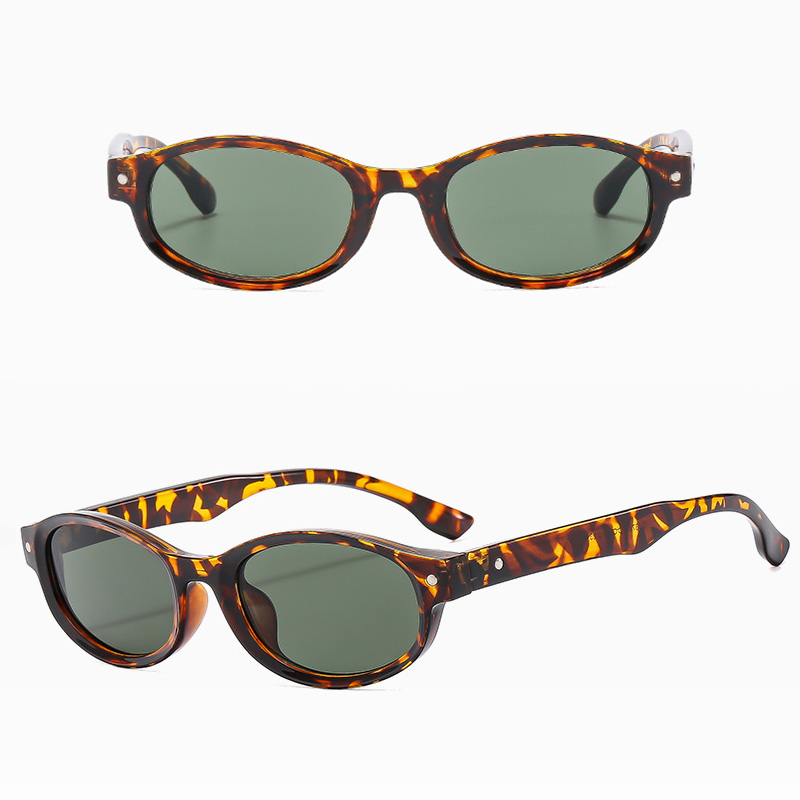
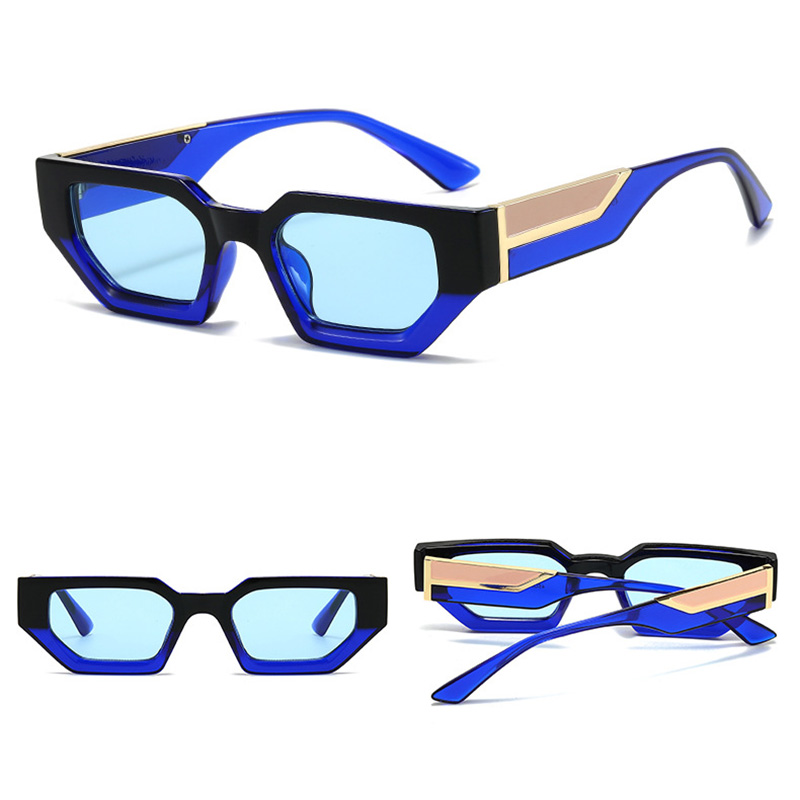
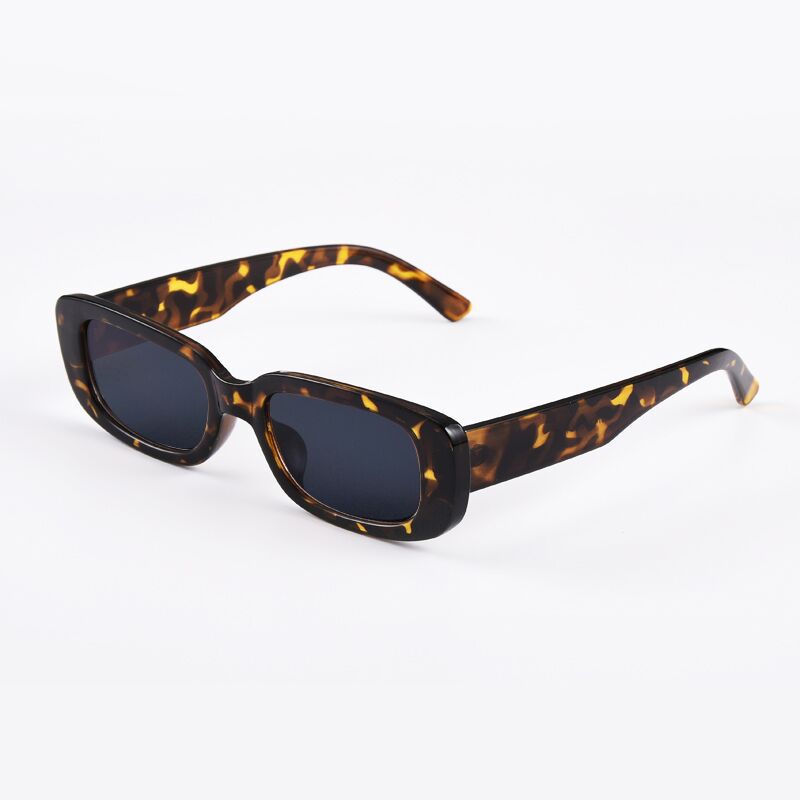
How Do Chinese Manufacturers Produce High-Quality Eyewear?
Finding high-quality eyewear from Chinese manufacturers frustrates many buyers — not because good products don't exist, but because "quality" means something different for every brand and every budget. The mismatch between buyer expectations and supplier capability causes more failed orders than any factory deficiency.[^1] The solution is learning to define quality on your own terms and then finding the right supplier match.
Chinese manufacturers produce high-quality eyewear by aligning material selection, production processes, and quality control to a buyer's specific cost structure and brand positioning.[^2] A $3 FOB PC sunglass and a $14 FOB acetate frame can both represent high quality — the key is maximizing value within your budget tier and choosing a supplier whose production strengths match your actual needs.[^3]
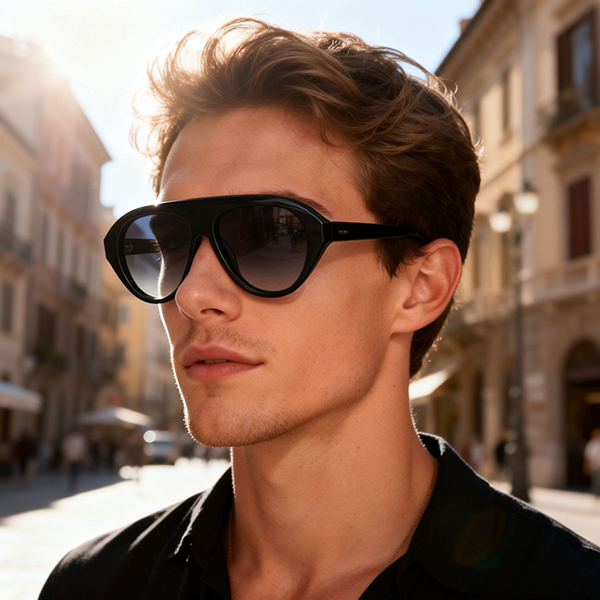
The rest of this article breaks down how this matching process works in practice. I'll walk through how material choice connects to brand positioning, where cost-quality tradeoffs actually happen, and how to evaluate a supplier's real capabilities — based on patterns I see repeatedly across buyer conversations in North America, Europe, and Oceania.
What Does "High Quality" Actually Mean in Chinese Eyewear Manufacturing?
Most buyers start their search with a vague goal: "I want high-quality eyewear from China." But this statement is incomplete without context. The real frustration comes when buyers apply one definition of quality to a completely different price tier.
In our experience working with brand clients across multiple markets, "high quality" is not an absolute standard — it is a cost-value equation.[^4] A product is high quality when it delivers maximum value within its specific cost structure. The Chinese concept of 物超所值 (getting more than you paid for) captures this perfectly.[^5]

Quality at Different Price Points
Consider two real scenarios I encounter regularly:
-
A promotional sunglass buyer ordering 5,000 units of PC frames at $2–3 FOB needs clean molding, consistent color, functional hinges, and UV400 lenses. At this price point, high quality means zero visible defects, reliable lens protection, and packaging that survives shipping. Expecting hand-polished acetate finish at this tier is a mismatch.
-
A boutique brand buyer ordering 300 units of acetate optical frames at $12–15 FOB expects rich color depth, smooth barrel hinges, precise temple curvature, and premium texture. High quality here means the frame feels indistinguishable from European-designed product at retail. Expecting this at a promo-frame price creates the exact mismatch that leads to disappointed buyers.
| Quality Dimension | $2–4 FOB Tier (Promo/Volume) | $8–15 FOB Tier (Brand/Premium) |
|---|---|---|
| Frame finish | Clean, no flash marks | Hand-polished, smooth edges |
| Hinge type | Standard 3-barrel or spring | 5-barrel, flex, or custom |
| Lens standard | UV400, basic coating | Polarized, multi-layer AR |
| Color consistency | Batch-level match | Pantone-level match |
| Packaging | Poly bag or basic case | Custom branded hard case |
The failure mode I see most often is not poor Chinese manufacturing. It is buyers who define quality at a $12 level but send purchase orders at a $3 budget. Or the reverse — buyers who overpay for specs their end consumer doesn't notice or value.
How to Define Your Quality Standard Before You Source
Before reaching out to any supplier, I recommend buyers answer three questions:
- What does my end consumer expect at my retail price point? A $15 retail sunglass sold at a beach resort has different quality requirements than a $120 optical frame sold in an optician's office.
- What are my non-negotiable specs? Usually these include lens protection standards (UV400, impact resistance), hinge durability, and any regulatory requirements for your market.
- Where am I willing to be flexible? Common flex areas include exact Pantone matching, packaging materials, lens coating layers, and temple tip finishing.
In our business, when a buyer clearly communicates these three things, the sourcing process becomes dramatically smoother. We can recommend the right frame material, the right hinge configuration, and realistic MOQs — because we understand what "quality" means to them.
Does Frame Material Determine Eyewear Quality?
Many buyers assume that material choice follows a quality hierarchy — that acetate is "better" than TR90, which is "better" than PC. This assumption leads to poor sourcing decisions. Material is a positioning tool, not a quality ladder.[^6]
Each frame material — PC, TR90, acetate, and metal — serves a different brand identity and end-consumer expectation. The right material is the one that matches your market positioning, not the one that sounds most expensive.
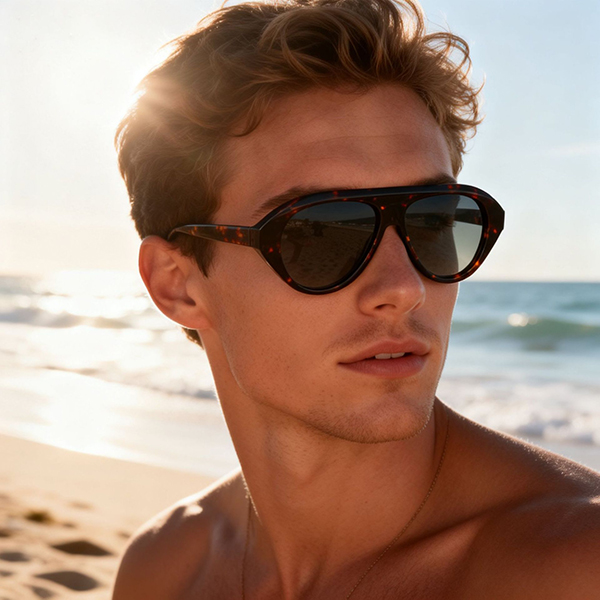
Material Profiles: Positioning, Not Ranking
PC (Polycarbonate) Frames
PC is injection-molded, which means low tooling cost and high production speed.[^7] It's the dominant material for promotional sunglasses, mass-market retail, and sport-oriented designs. PC frames are lightweight, impact-resistant, and available in virtually any color. Some of our clients in the U.S. market order PC sunglasses in dozens of colorways precisely because the mold flexibility allows them to test trends quickly without large minimum orders per SKU.
- Best for: Promotional products, high-volume retail, sport and outdoor, trend-testing
- Buyer profile: Wholesalers, promotional goods distributors, fast-fashion brands
TR90 Frames
TR90 is a thermoplastic that offers exceptional flexibility and memory — frames bend and return to shape.[^8] It's lighter than most materials and hypoallergenic, which makes it popular in optical frames and active-lifestyle sunglasses. Many of our European and Australian buyers choose TR90 specifically because their end consumers prioritize comfort and durability over luxury aesthetics.
- Best for: Optical frames, sport-lifestyle brands, comfort-focused consumers
- Buyer profile: Optical chains, DTC eyewear brands, sport accessory brands
Acetate Frames
Acetate is a plant-derived plastic that can be layered, laminated, and hand-polished to create rich colors and unique patterns.[^9] It has a heavier, more substantial feel that many consumers associate with premium quality. Acetate requires more handwork in production, which raises cost but also raises perceived value. Several of our brand clients in the UK and North American markets choose acetate because their retail positioning is $80–$200, and their customers expect a weighty, luxurious feel.
- Best for: Premium brands, fashion-forward labels, optical boutiques
- Buyer profile: Independent eyewear brands, boutique retailers, designer collaborations
Metal Frames
Metal (stainless steel, titanium, monel, or alloys) offers thin profiles and classic styling. Metal frames suit professional, minimalist, and vintage aesthetics. Quality in metal frames depends heavily on plating durability, nose pad construction, and hinge engineering.[^10]
- Best for: Professional/business eyewear, minimalist brands, vintage aesthetics
- Buyer profile: Optical brands, fashion brands targeting professional consumers
| Material | Weight | Flexibility | Aesthetic Range | Typical FOB Range | Production Speed |
|---|---|---|---|---|---|
| PC | Light | Low | Wide (solid colors) | $1.50–$4 | Fast |
| TR90 | Very light | Very high | Moderate | $2.50–$6 | Moderate |
| Acetate | Medium-heavy | Low-moderate | Very wide (patterns, layers) | $6–$18 | Slower |
| Metal | Varies | Low | Classic/minimal | $3–$15 | Moderate |
The question I ask buyers is: "What does your customer pick up and try on? What do they feel? What do they expect for the price they're paying?" That conversation, not a material spec sheet, determines the right frame material.
Why Is Supplier-Buyer Mismatch the Biggest Risk in Eyewear Sourcing?
Buyers often blame "Chinese quality" when an order goes wrong. But in my experience, the root cause is almost always a mismatch between the buyer's needs and the supplier's production sweet spot. This mismatch is the single biggest risk in eyewear procurement — bigger than material defects, bigger than shipping delays.
A factory optimized for high-volume PC promotional sunglasses operates with a completely different workflow, QC tolerance, and cost structure than a factory specializing in small-batch hand-polished acetate frames. Asking the wrong factory to do the wrong job almost guarantees disappointment.
How Mismatch Happens
Here are the most common mismatch patterns I see:
-
Volume mismatch. A buyer wants 200 units of a custom design, but the supplier's break-even point is 3,000 units per style. The factory either refuses the order, quotes an unreasonable price, or — worst case — accepts the order but deprioritizes it in production scheduling, leading to quality slip.
-
Material mismatch. A buyer asks a PC-focused factory to produce acetate frames. The factory may technically have acetate capability, but their core team, tooling, and QC processes are built around injection molding, not sheet cutting and hand polishing. The result is an acetate frame that doesn't feel or look right.
-
Price-tier mismatch. A buyer with a $3 FOB budget selects a supplier whose minimum product tier starts at $8. The supplier either declines or produces a stripped-down product that satisfies neither party.
-
Market-standard mismatch. A European buyer requires CE marking, specific nickel-release testing, or particular hinge durability standards. A supplier primarily serving domestic or Southeast Asian markets may not routinely test to those standards.
How to Evaluate Supplier Fit
Rather than running through a generic checklist, I recommend buyers evaluate suppliers on three dimensions of fit:
- Production strength alignment. Does the supplier's core production capability — their most-produced material, their typical order size, their standard quality tier — match what you're ordering? Ask what percentage of their output is in your target material. Ask for their most common order size.
- QC process alignment. Does the supplier's standard QC catch the defects you care about? If you're selling premium acetate, ask about their surface inspection process. If you're selling sport sunglasses, ask about hinge-cycle testing and impact testing.
- Communication alignment. Does the supplier understand your market? Can they discuss your requirements in terms of your standards (ANSI, EN, AS/NZS), not just in terms of their own production terminology?
In our business, we've found that the most productive buyer relationships start when the buyer is transparent about their budget range, target material, and order volume — and we can honestly confirm whether those needs sit within our operational sweet spot. When they do, quality outcomes are consistently strong. When they don't, the honest answer is to redirect.
Where Do Cost-Quality Tradeoffs Actually Happen in Eyewear Production?
Budget-conscious buyers know they can't have everything. But many don't know where to compromise and where to hold firm. Experienced buyers negotiate cost and quality together — they know which specs to prioritize and which to relax within their budget.
The real cost-quality tradeoffs in eyewear production happen in five specific areas: hinge type, lens coating, color-matching tolerance, surface finishing, and packaging. Understanding these tradeoff points lets you make informed compromises instead of either overpaying or getting burned.
The Five Key Tradeoff Points
1. Hinge Type
Hinges are one of the first places cost shows up — or hides. A basic 3-barrel hinge costs significantly less than a 5-barrel spring hinge. For a promo sunglass that's worn casually, a well-made 3-barrel hinge is perfectly adequate. For an optical frame worn daily, a spring hinge dramatically improves comfort and longevity. Know what your consumer does with the product, and allocate hinge budget accordingly.
| Hinge Type | Relative Cost | Durability | Best Application |
|---|---|---|---|
| 3-barrel rivet | Low | Moderate | Promo, fashion sunglasses |
| 5-barrel | Medium | Good | Mid-range sunglasses, optical |
| Spring (flex) | Higher | Very good | Premium optical, daily wear |
| Custom/hidden | Highest | Varies | Designer brands |
2. Lens Coating
Basic UV400 protection is non-negotiable — every reputable supplier includes it.[^11] Beyond that, you can add anti-reflective (AR) coating, hydrophobic coating, mirror coating, and polarization. Each layer adds cost. Polarized lenses can add $1–3 FOB depending on quality. Multi-layer AR coating adds less but improves perceived value. The tradeoff: if your retail price supports it, multi-layer coatings distinguish your product. If not, a solid single-layer coating with UV400 keeps your margin healthy.
3. Color-Matching Tolerance
Exact Pantone matching on frames and temples requires tighter process control and sometimes custom colorant batches. If your brand has strict color standards (common for brands with strong visual identity), you need to budget for it and communicate the acceptable tolerance range. If your brand allows for slight batch variation — which many wholesale sunglasses buyers do — you can save cost by accepting a wider tolerance band.
4. Surface Finishing
For acetate frames, hand polishing is time-intensive and directly affects the frame's tactile quality. Multiple polishing passes create a smoother, glossier surface but add labor cost. For PC frames, the mold quality determines surface finish — a well-maintained mold produces clean surfaces without post-processing. The tradeoff here is between perceived premium quality and production cost per unit.
5. Packaging
Packaging is often the easiest place to adjust cost. A custom-printed microfiber cloth, branded hard case, and retail box can add $1–3 per unit. A generic poly bag and basic pouch might add $0.10–0.30. I've seen buyers save significant per-unit cost by using simpler packaging from the supplier and then adding branded elements in their domestic market. This is especially common among our North American and Australian clients who want to control the unboxing experience themselves.
The smartest buyers I work with don't ask "how do I get the cheapest price?" They ask "at my target FOB, what's the best combination of hinge, lens, finish, and packaging I can get?" That's a fundamentally different conversation — and it leads to fundamentally better products.
How Should Buyers Evaluate a Chinese Eyewear Supplier's Real Capabilities?
Certifications and factory photos can be helpful starting points, but they don't tell you whether a supplier will deliver the right product for your specific needs. The real evaluation happens through targeted questions, sample orders, and structured communication.
Evaluating a Chinese eyewear supplier's real capabilities means testing their alignment with your budget, material preference, order volume, and market requirements — through direct conversation and physical samples, not just documentation.
A Practical Evaluation Framework
Step 1: Pre-Qualification Conversation
Before requesting samples, have a direct conversation (email, video call, or messaging) that covers:
- Your target FOB price range
- Your primary material preference
- Your typical order quantity per style
- Your target market and any regulatory requirements (FDA impact resistance, CE marking, EN ISO 12312-1, AS/NZS 1067[^12])
- Your timeline expectations
A capable supplier will respond with specific feedback: "At that FOB, we can offer X hinge with Y lens coating" or "For that quantity, we recommend stocking from our existing catalog and customizing with your logo." Vague or overly agreeable responses — "yes, we can do everything" — are a red flag.
Step 2: Sample Evaluation
Order samples before committing to production. Evaluate them against your own quality definition — not against some abstract ideal. Check:
- Fit and comfort on face models or fit testers
- Hinge action — smooth open/close, appropriate tension
- Lens clarity — no distortion, no visible inclusions
- Surface finish — consistent with what you expect at your price point
- Color accuracy — relative to your specifications
- Weight and balance — does it feel right for your target consumer?
Step 3: Small Initial Order
Whenever possible, start with a smaller
[^1]: "Purchase Order Terms & Conditions - Santa Monica College", https://admin.smc.edu/administration/business-services/procurement-contracts-and-logistics/purchase-order-terms-conditions.php. Research on global sourcing and buyer-supplier alignment supports the view that expectation and capability mismatches contribute to order failure; however, the literature is cross-sector and does not rank mismatch above all factory deficiencies. Evidence role: general_support; source type: research. Supports: that buyer-supplier expectation and capability misalignment is a recurring cause of sourcing and order failure.. Scope note: The evidence is not specific to eyewear orders or to the frequency comparison made in the article.
[^2]: "Industrial Policy and the Rise of China's Domestic Value Added", https://sccei.fsi.stanford.edu/china-briefs/made-china-made-china-industrial-policy-and-rise-chinas-domestic-value-added. Studies of China's manufacturing upgrading and export quality indicate that Chinese suppliers can achieve varied quality tiers through process control and buyer alignment; country-level evidence cannot validate every eyewear factory. Evidence role: general_support; source type: research. Supports: that Chinese manufacturing can meet different quality tiers when production processes and quality controls are aligned with buyer requirements.. Scope note: The support is aggregate and does not establish the performance of any individual manufacturer.
[^3]: "Value Equation", https://uofuhealth.utah.edu/value/value-equation. Quality-management literature distinguishes absolute performance from value-for-money definitions, supporting the idea that different price tiers can each deliver high quality within their cost structures; this is conceptual rather than eyewear-specific. Evidence role: definition; source type: research. Supports: a value-based definition of quality in which products at different price points can both be considered high quality within their cost structures.. Scope note: The source would not prove that a particular $3 or $14 frame is high quality.
[^4]: "Value Equation", https://uofuhealth.utah.edu/value/value-equation. Marketing and quality research supports defining quality in relation to price and customer value, though the definition varies by market, segment, and product category. Evidence role: definition; source type: research. Supports: that quality is commonly defined relative to price and perceived customer value rather than as an absolute standard.. Scope note: The support is conceptual and does not resolve specific sourcing tolerances.
[^5]: "Wu Chao", https://www.encyclopedia.com/history/encyclopedias-almanacs-transcripts-and-maps/wu-chao. Chinese language dictionaries and cultural references define 物超所值 as getting more value than the price paid, supporting its use as a value-for-money concept; this does not validate its application to eyewear manufacturing. Evidence role: definition; source type: encyclopedia. Supports: the meaning of 物超所值 as receiving more value than the price paid.. Scope note: A dictionary definition supports the phrase's meaning, not its operational use in sourcing.
[^6]: "A Primer on Eyeglass Frame Materials", https://perceptioneyecare.net/2021/05/13/a-primer-on-eyeglass-frame-materials/. Industry and academic analyses of eyewear materials describe material choice as linked to brand positioning, durability needs, and consumer expectations rather than a linear quality ranking; the evidence is contextual. Evidence role: expert_consensus; source type: research. Supports: that eyewear frame materials are selected for market positioning and functional requirements rather than forming a single quality hierarchy.. Scope note: Sources may emphasize mechanical properties and leave perceived quality as market-dependent.
[^7]: "Jacob Hamman -- How to Make (almost) Anything", https://fab.cba.mit.edu/classes/863.15/section.Harvard/people/Hamman/week7.html. Polymer processing and manufacturing education sources describe injection molding as a high-throughput, relatively low-tooling-cost method for polycarbonate frames; this supports the mechanism, not exact cost comparisons. Evidence role: mechanism; source type: education. Supports: that polycarbonate eyewear frames are commonly injection-molded, enabling high production speed and relatively low tooling cost.. Scope note: Tooling cost and speed vary with mold complexity, order volume, and equipment.
[^8]: "What Is TR-90 Frame Material? Definition ...", https://www.lens.com/what-is/what-is-tr-90-frame-material/?srsltid=AU7gw4VqmsXOyJ0DrKuxy4xBGH5j2AtvelrT5QLAxBMVUb41oJbbz-Ec. Materials research and technical descriptions characterize TR90 as a thermoplastic polyamide known for flexibility and shape recovery in eyewear applications; the evidence supports the general property, not every frame's performance. Evidence role: mechanism; source type: paper. Supports: that TR90 is a thermoplastic with high flexibility and shape memory used in eyewear.. Scope note: Properties depend on formulation, frame geometry, and manufacturing quality.
[^9]: "Acetate Eyeglass Frames: Colorful Style & Wearable Design", https://www.warbyparker.com/learn/acetate-eyeglasses-style-comfort-and-color. Encyclopedic and materials sources define cellulose acetate as a plant-derived plastic used in eyewear, with layering and polishing techniques producing varied colors and patterns; this establishes the material basis rather than supplier capability. Evidence role: definition; source type: encyclopedia. Supports: that cellulose acetate is plant-derived and can be layered, laminated, and polished to create varied colors and patterns in eyewear.. Scope note: The source may not address current commercial formulations or handcraft variations.
[^10]: "Shop Premium Eyeglass Frames Material and Hinges", https://drgillsoffice.com/what-frame-material-and-hinges-to-pick/. Materials and eyewear engineering sources identify corrosion resistance, nose-pad attachment, and hinge mechanics as important determinants of metal frame durability and comfort; this supports the claim at a general technical level. Evidence role: mechanism; source type: research. Supports: that plating durability, nose-pad construction, and hinge engineering are key quality factors in metal eyewear frames.. Scope note: Specific thresholds and failure rates depend on alloy, plating thickness, and wear conditions.
[^11]: "Guidance Document For Nonprescription Sunglasses", https://www.fda.gov/regulatory-information/search-fda-guidance-documents/guidance-document-nonprescription-sunglasses-guidance-industry. Government and standards sources define UV400 as blocking ultraviolet radiation up to 400 nm, supporting its role as a baseline protection claim; the assertion that every reputable supplier includes it is a market generalization beyond the standard. Evidence role: definition; source type: government. Supports: that UV400 denotes blocking ultraviolet radiation up to 400 nm and serves as a common baseline for sunglass protection.. Scope note: Standards define labeling and performance expectations, not supplier prevalence.
[^12]: "Impact-Resistant Lenses: Questions and Answers - Guidance", https://www.fda.gov/regulatory-information/search-fda-guidance-documents/impact-resistant-lenses-questions-and-answers. Regulatory and standards bodies publish eyewear performance requirements, including FDA impact-resistance expectations in the United States and EN ISO 12312-1 and AS/NZS 1067 in Europe and Oceania; these sources establish the standards but not a given supplier's compliance. Evidence role: definition; source type: institution. Supports: the existence and scope of FDA impact-resistance expectations, CE marking, EN ISO 12312-1, and AS/NZS 1067 for eyewear.. Scope note: Compliance depends on testing and certification, which the cited standards alone cannot verify for a specific manufacturer.
Share:


Post time: Oct-07-2026