MOQ (Minimum Order Quantity Explained): What Determines It for Eyewear?
Minimum order quantity is one of the first hurdles buyers face when sourcing sunglasses and optical frames from manufacturers. It seems like a simple number, but it confuses many first-time importers. Understanding what drives MOQ helps you plan smarter, negotiate better, and avoid costly surprises.
The minimum order quantity (MOQ) for eyewear depends primarily on two factors: the frame material and the lens specification. PC and TR90 frames typically require higher MOQs due to injection molding economics.[^1] Metal frames need compatible tooling for small components. Acetate frames start at roughly 300 pieces per color. Specialized lenses — polarized, mirrored, or custom-tinted — further increase the MOQ because they must be made to order.
Most buyers assume MOQ is an arbitrary number a factory picks to maximize profit. In reality, it is tied directly to production processes, raw material constraints, and labor economics. Below, I break down each factor so you can walk into your next supplier negotiation fully informed.
Why Does Frame Material Affect the Minimum Order Quantity?
Every eyewear frame material follows a different manufacturing process. That process dictates setup time, material waste, and labor costs — all of which set the floor for MOQ.
The frame material is the single biggest driver of minimum order quantity because each material type — PC, TR90, metal, and acetate — has unique production constraints. Injection-molded frames waste more raw material at low volumes. Metal frames require matched component tooling. Acetate frames depend on sheet color availability from upstream suppliers.
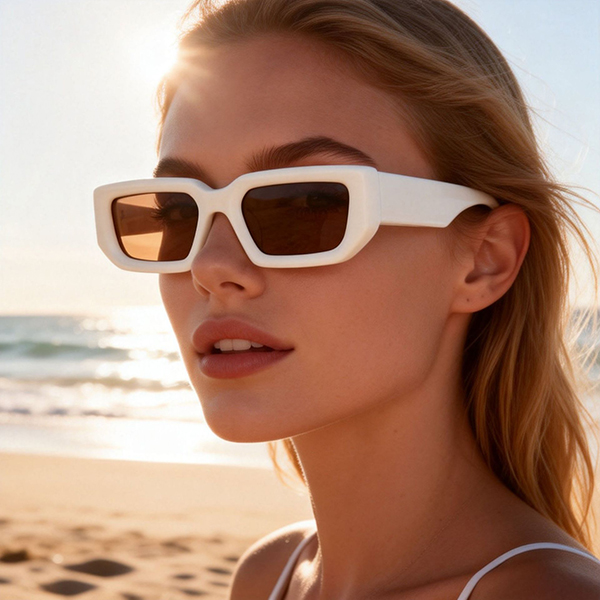
PC and TR90 Frames: The Injection Molding Factor
PC (polycarbonate) and TR90 are both thermoplastic materials. They start as small pellets that are heated and injected into steel molds under high pressure. This injection molding process is efficient at scale — but punishing at small quantities.
Here is why:
- Material waste at low volumes. The injection machine needs a minimum amount of melted plastic to operate.[^2] If you order only 50 pieces, the material lost in the runner system, startup purges, and color changes can represent a huge percentage of the total raw material used. At 5,000 pieces, that same waste is negligible.
- Machine setup cost. Every time a factory swaps a mold, the machine must be heated to the correct temperature, calibrated, and test-run before production begins. I have seen this changeover take 30 minutes to over an hour depending on the mold complexity.[^3] That downtime costs money regardless of whether the order is 100 pieces or 10,000.
- Worker compensation structure. In most eyewear factories I work with, line workers are paid on a piece-rate basis[^4]. When a mold change happens, they earn nothing during the setup period. Naturally, workers prefer long, uninterrupted runs of a single style. Frequent mold changes for tiny orders lower their daily output and income. Factory managers know this — so they set MOQs that keep their workforce productive and motivated.
Rule of thumb: For PC and TR90 sunglasses frames, expect a minimum order quantity of at least 300–500 pieces per style per color from most factories. Some larger factories push this to 1,000.
Metal Frames: The Component Matching Challenge
Metal eyewear frames are assembled from many small parts — bridges, temples, hinges, nose pads, and end tips. Each component often requires its own die or tooling.[^5]
- Small orders mean the factory must source or produce tiny batches of each component.
- If a component mold is not already available, the tooling cost is spread over fewer units, making per-piece cost unreasonably high.
- Assembly is largely manual, so scheduling a short run disrupts the production line for other orders.
Metal frame MOQs typically start around 300–500 pieces per style, though this varies widely depending on whether the factory already has compatible tooling.
Acetate Frames: Upstream Supplier Constraints
Acetate is a premium material prized for its rich color depth and hypoallergenic properties. Unlike PC and TR90, acetate frames are cut from flat sheets rather than injection molded.
Here is the critical detail many buyers miss: the acetate sheet supplier — not the frame factory — often sets the color MOQ.[^6] Each color and pattern of acetate sheet must be produced in a batch at the material factory. Their minimum batch size typically translates to roughly 300 frames per color at the eyewear factory level.
| Frame Material | Typical MOQ (per style/color) | Key Constraint |
|---|---|---|
| PC | 300–500+ pieces | Injection molding waste and setup |
| TR90 | 300–500+ pieces | Same injection molding constraints as PC |
| Metal | 300–500+ pieces | Component tooling and assembly scheduling |
| Acetate (standard color) | ~300 pieces | Acetate sheet supplier minimums |
| Acetate (custom color) | 500+ pieces | Non-stock color requires dedicated material run |
If a customer requests a custom or uncommon acetate color, the material supplier's batch size increases. That pushes the eyewear factory's MOQ higher — sometimes to 500 or even 1,000 pieces per color. Sticking to the factory's frequently produced colors keeps the minimum order quantity at its lowest level.
How Do Lens Requirements Change the Minimum Order Quantity?
Frame material is only half the equation. The lens sitting inside that frame can double or triple the MOQ if it requires customization.
Standard lens colors — such as gray, brown, and other commonly stocked tints — are produced in bulk and kept in inventory by lens suppliers. When your order uses these stock lenses, they add no additional MOQ burden. But the moment you specify a non-standard lens attribute, you enter custom lens territory, and the minimum order quantity rises significantly.
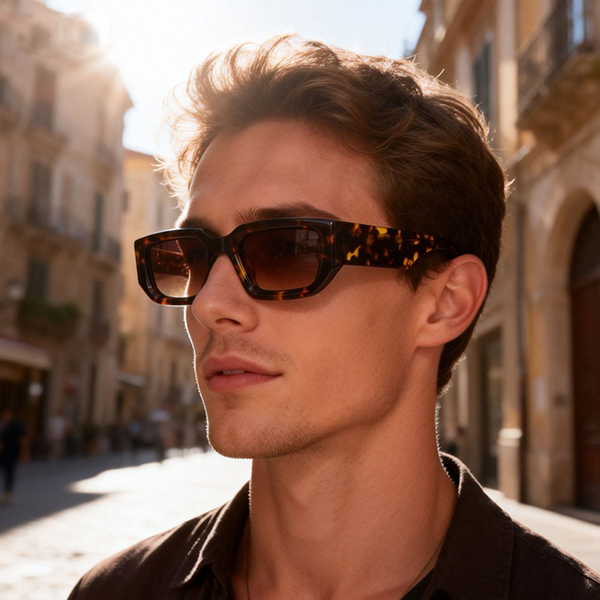
Stock Lenses vs. Custom Lenses
Understanding this distinction can save you thousands of dollars and weeks of lead time.
Stock lenses include:
- Standard gray tint (Category 3)
- Standard brown tint
- G15 green
- Common gradient colors the factory regularly uses
These lenses sit on warehouse shelves ready to be cut and fitted. They have no additional MOQ impact beyond what the frame already requires.
Custom lenses include:
- Polarized lenses — These require a polarizing film laminated between lens layers. Polarized lens suppliers have their own production minimums, often 500–1,000 pairs per specification.
- Mirror-coated (REVO) lenses — The vacuum coating process is run in batches.[^7] Running the coating machine for a small number of lenses is economically impractical.
- Hydrophobic (water-repellent) coated lenses — Another batch coating process with its own minimum.
- Photochromic lenses — Specialty chemistry with higher raw material thresholds.
- Custom tint colors — If the exact color you want is not in stock, the dye batch requires a minimum volume.
| Lens Type | Typical Added MOQ Impact | Notes |
|---|---|---|
| Stock gray/brown | None | Ready from inventory |
| Polarized | +500–1,000 pairs | Supplier batch minimums |
| Mirror / REVO coating | +500–1,000 pairs | Vacuum coating batch run |
| Hydrophobic coating | +300–500 pairs | Coating batch run |
| Custom tint color | +300–500 pairs | Dye batch minimum |
Pro tip: If you want polarized lenses in a unique mirror color, those two requirements may stack. The polarized film supplier has a minimum, and the mirror coating facility has another. Always ask your supplier to break down lens-related MOQs separately from frame MOQs.
Combining Frame and Lens MOQs
In practice, your effective MOQ is the higher of the two constraints. If your TR90 frame requires 300 pieces minimum but your polarized mirror lens requires 1,000 pieces minimum, your real MOQ is 1,000 pieces.
I always advise buyers to finalize lens specifications early in the sourcing process. Many procurement headaches I have witnessed stem from buyers who lock in a frame style at 300 pieces, then discover their desired lens pushes the order to 1,000.
What Other Factors Influence Eyewear MOQ?
Beyond frame material and lens type, several secondary factors can nudge the minimum order quantity up or down.
Logo application method, packaging customization, and regulatory testing requirements all add layers to the MOQ calculation. Each customization step involves a setup cost that factories need to amortize across enough units to remain profitable.
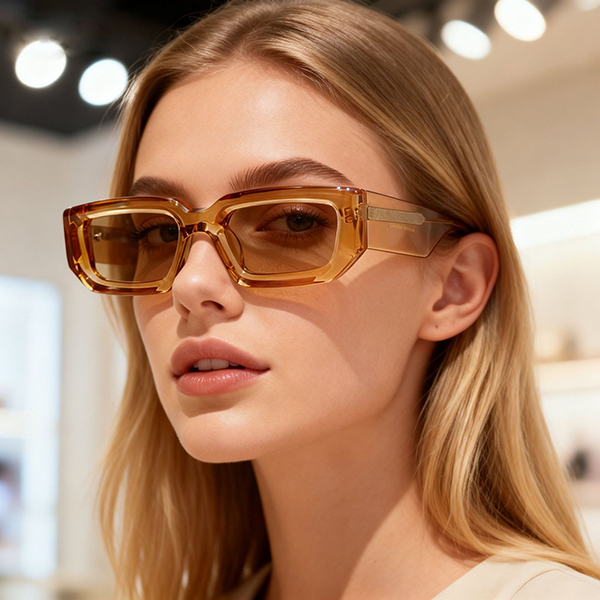
Logo Application Methods
How you brand the frame matters:
- Laser engraving — Relatively low setup cost. Some factories accept quantities as low as 50–100 pieces for laser logos if the frames are already in stock.
- Pad printing — Requires a printing pad and ink matching. Setup is moderate; expect MOQs of 200–300 pieces.
- Metal logo plates / badges — Require a custom mold. The mold cost is fixed, so spreading it over more units reduces per-piece cost. Typical MOQ: 500+ pieces.
- Embossing / debossing on acetate — Needs a heated stamping die. MOQ usually 300+ pieces.
Packaging and Accessories
Custom boxes, microfiber pouches, and branded cases all have their own supplier minimums. A custom rigid box might require 500 units minimum from the packaging factory. Branded microfiber cloths often start at 1,000 pieces. These may or may not align with your frame and lens MOQs.
Certifications and Testing
If you need CE, FDA, or AS/NZS 1067 compliance documentation, the testing itself does not change the MOQ. However, if test results require a lens formula adjustment, you may need to re-order lenses at the lens supplier's minimum batch size.
How Can Buyers Lower or Work Around High MOQs?
High minimum order quantities can feel like a barrier, especially for emerging brands testing new markets. But there are practical strategies to reduce or navigate MOQ constraints.
Buyers can lower their effective MOQ by choosing stock materials and lenses, mixing styles within a single frame material category, and working with suppliers who maintain ready inventory. Partnering with a factory that offers flexible stock programs is often the most efficient path.

Strategy 1: Use Stock Frames and Stock Lenses
Many factories — including ours — maintain a catalog of ready-made frame styles in popular colors. These frames are already produced and sitting in inventory. When you order from stock, you bypass the injection molding and acetate sheet constraints entirely.
- MOQ can drop to as low as 12–50 pieces per style when ordering from stock.
- You can mix and match dozens of styles and colors freely.
- Small-quantity logo customization (laser engraving, for example) remains available.
This is the single most effective way to test a market without committing to thousands of units.
Strategy 2: Consolidate Frame Materials
If you need custom production, group your styles by material. Ordering five different TR90 styles in one purchase order means the factory runs the injection machine continuously for your combined volume. Each individual style may fall below the normal MOQ, but the aggregate order justifies the machine setup.
Strategy 3: Stick to Standard Colors and Lens Options
Every custom choice adds a minimum threshold. By selecting from the factory's standard acetate color palette and using stock gray or brown lenses, you keep MOQs at their base level.
Strategy 4: Phase Your Order
If you ultimately need 2,000 units but can only commit to 500 now, discuss a phased production plan with your supplier. Some factories will produce the full lens or material batch upfront and ship in installments. This satisfies the material supplier's MOQ while easing your cash flow.
| Strategy | Best For | MOQ Reduction Potential |
|---|---|---|
| Stock frames + stock lenses | Market testing, small brands | Dramatic (down to 12–50 pcs) |
| Consolidate by material | Multi-style custom orders | Moderate |
| Standard colors and lenses | Budget-conscious buyers | Moderate |
| Phased ordering | Growing brands scaling up | Variable |
Frequently Asked Questions
What is the typical MOQ for custom sunglasses?
For fully custom sunglasses — custom frame, custom color, custom lenses — expect a minimum order quantity of 300–1,000 pieces per style per color depending on frame material and lens type. PC and TR90 frames generally start at 300–500 pieces. Adding polarized or mirror lenses can push the MOQ to 1,000.
Can I order just 50 or 100 pairs of sunglasses from a factory?
Yes, if you order from a factory's existing stock catalog. Stock frames with standard lenses can often be purchased in quantities as low as 12–50 pieces per style. Fully custom production at 50 pieces is rarely feasible due to setup and material waste costs.
Why is the MOQ for acetate frames tied to color?
Acetate sheets are produced in batches by upstream material suppliers. Each color and pattern requires a dedicated production run. The material supplier's batch minimum — usually enough for about 300 frames per color — sets the floor. Uncommon or custom colors require larger batches.
Do logo customizations increase the MOQ?
It depends on the method. Laser engraving has minimal impact and can be done on small quantities. Metal logo plates require a custom mold, which raises the effective MOQ to 500+ pieces to justify the tooling cost. Always ask your supplier about logo-related minimums separately.
How does choosing polarized lenses affect MOQ?
Polarized lenses are manufactured in batches by specialized lens suppliers. Their minimum production run is typically 500–1,000 pairs. This becomes your effective MOQ even if the frame itself only requires 300 pieces. Combining polarized with mirror coating can push the number higher.
Conclusion
Minimum order quantity in eyewear is not an arbitrary figure — it is a direct consequence of frame material production constraints, lens customization requirements, and secondary factors like logo methods. PC and TR90 frames carry injection molding minimums. Acetate MOQs depend on upstream color availability. Specialized lenses like polarized or mirrored add their own batch thresholds. The smartest way to manage MOQ is to understand which choices drive it up — and which keep it manageable.
If you are a brand or wholesaler looking for flexible ordering, our factory maintains a deep stock catalog of sunglasses and optical frames in PC, TR90, acetate, and metal. You can mix styles and colors freely with low minimums, add small-quantity logo customization, and scale to full custom production when you are ready. Reach out today to discuss your next order — we will help you find the right balance between MOQ and your business goals.
[^1]: "Cost-Benefit Assessment of Additive Manufacturing for ...", https://docs.nlr.gov/docs/fy26osti/93799.pdf. Manufacturing research on injection molding identifies fixed setup costs, purge and runner scrap, and machine utilization as factors that raise per-unit costs at low volumes, supporting the general mechanism behind higher MOQs for PC and TR90 frames; the specific eyewear MOQ thresholds are industry estimates rather than experimental constants. Evidence role: mechanism; source type: research. Supports: Injection molding process economics make small production runs relatively more costly than large runs.. Scope note: The source would support the mechanism, not the exact MOQ figures used in the article.
[^2]: "A Simpler Way to Calculate Shot Size vs. Barrel Capacity", https://www.ptonline.com/articles/a-simpler-way-to-calculate-shot-size-vs-barrel-capacity. Technical education materials on injection molding explain that machines require minimum shot capacities and stable melt conditions, which produce startup purge and runner waste; this supports the process-level claim, though it does not quantify waste for sunglasses frames. Evidence role: mechanism; source type: education. Supports: Injection molding machines have minimum shot capacities and generate startup waste.. Scope note: Minimum shot requirements vary by machine and mold.
[^3]: "Improvement of changeover times via Taguchi empowered ...", https://www.academia.edu/112338380/Improvement_of_changeover_times_via_Taguchi_empowered_SMED_case_study_on_injection_molding_production. Industrial engineering studies on mold changeover report setup times varying from tens of minutes to several hours depending on tooling and machine complexity, contextualizing the anecdotal 30–60 minute range; the statement remains an experience-based observation rather than a representative sample. Evidence role: statistic; source type: research. Supports: Mold changeover times in injection molding can range from tens of minutes to hours.. Scope note: Reported changeover times are highly dependent on factory, press, and mold design.
[^4]: "Piece work", https://en.wikipedia.org/wiki/Piece_work. Labor economics and manufacturing studies document piece-rate systems in labor-intensive production, where earnings depend on completed units and setup downtime reduces output; this supports the general compensation mechanism, but not its prevalence in all eyewear factories. Evidence role: mechanism; source type: research. Supports: Piece-rate compensation links worker earnings to completed units, making setup downtime costly for workers.. Scope note: The literature does not establish that most eyewear factories use piece-rate pay.
[^5]: "Stamping Dies", https://toolingsystemsgroup.com/services/stamping-dies/. Manufacturing descriptions of metal eyeglass frames identify stamped, cast, or machined components such as bridges, temples, hinges, and nose pads that require dedicated tooling, supporting the component-tooling claim; the number and cost of dies depend on frame design. Evidence role: mechanism; source type: research. Supports: Metal eyeglass frame components are produced or assembled with dedicated tooling.. Scope note: Specific tooling requirements vary by frame design and production method.
[^6]: "Cellulose acetate", https://en.wikipedia.org/wiki/Cellulose_acetate. Materials and trade sources on cellulose acetate sheet production describe color batches and minimum run sizes at the sheet-manufacturing stage, supporting the claim that upstream sheet suppliers can determine color-level MOQs; not all supply chains are organized this way. Evidence role: mechanism; source type: other. Supports: Cellulose acetate sheet production involves color batches and minimum run sizes upstream of frame manufacturing.. Scope note: Vertical integration or stock colors can shift MOQ control to the frame factory.
[^7]: "Physical vapor deposition - Wikipedia", https://en.wikipedia.org/wiki/Physical_vapor_deposition. Vacuum deposition literature describes physical vapor deposition and related coating methods as batch or chamber-based processes, supporting the claim that mirror coating runs are scheduled in batches; economics depend on chamber size and utilization. Evidence role: mechanism; source type: research. Supports: Vacuum deposition coating for optical lenses is a chamber-based batch process.. Scope note: Batch size and cost are equipment-dependent.
Share:


Post time: Oct-06-2026