Plastic Frame Manufacturing: Precision Engineering for Comfort
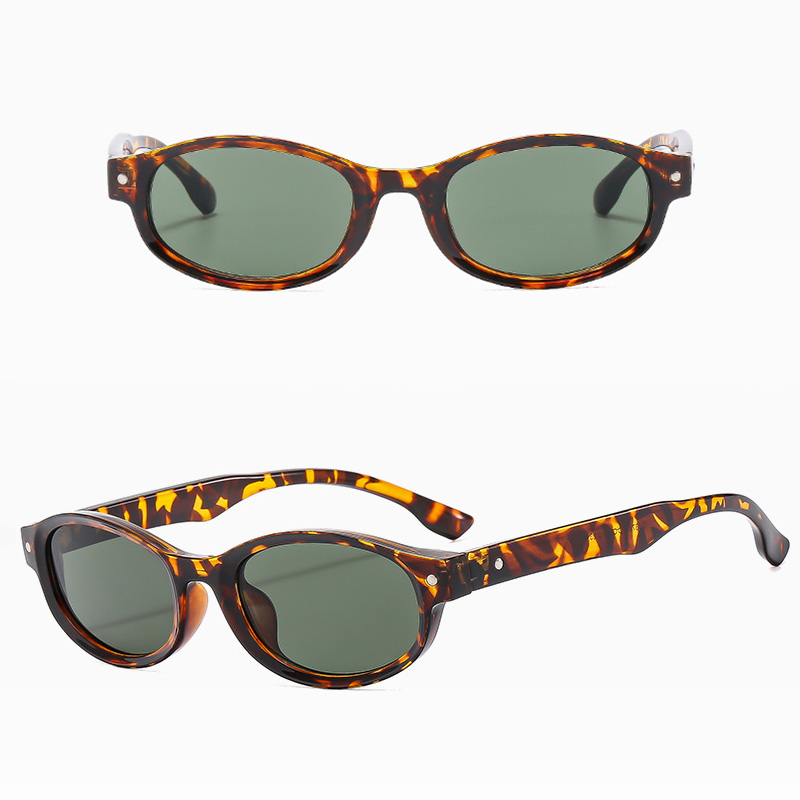
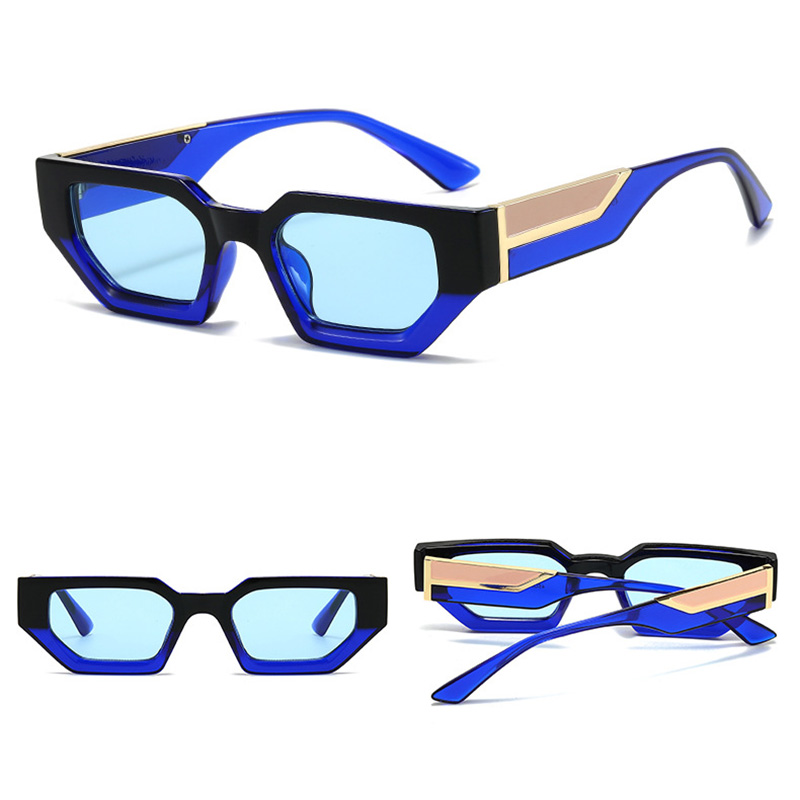
Plastic frames dominate 68% of the global eyewear market. Specialized machines transform raw materials into comfortable, durable frames through exacting production processes.
Modern plastic frame manufacturing combines CNC precision with advanced polymer science to create lightweight, hypoallergenic frames that can withstand daily wear while maintaining structural integrity. The process involves four critical phases with specialized machinery at each stage.
Material Preparation: From Pellets to Precision Components
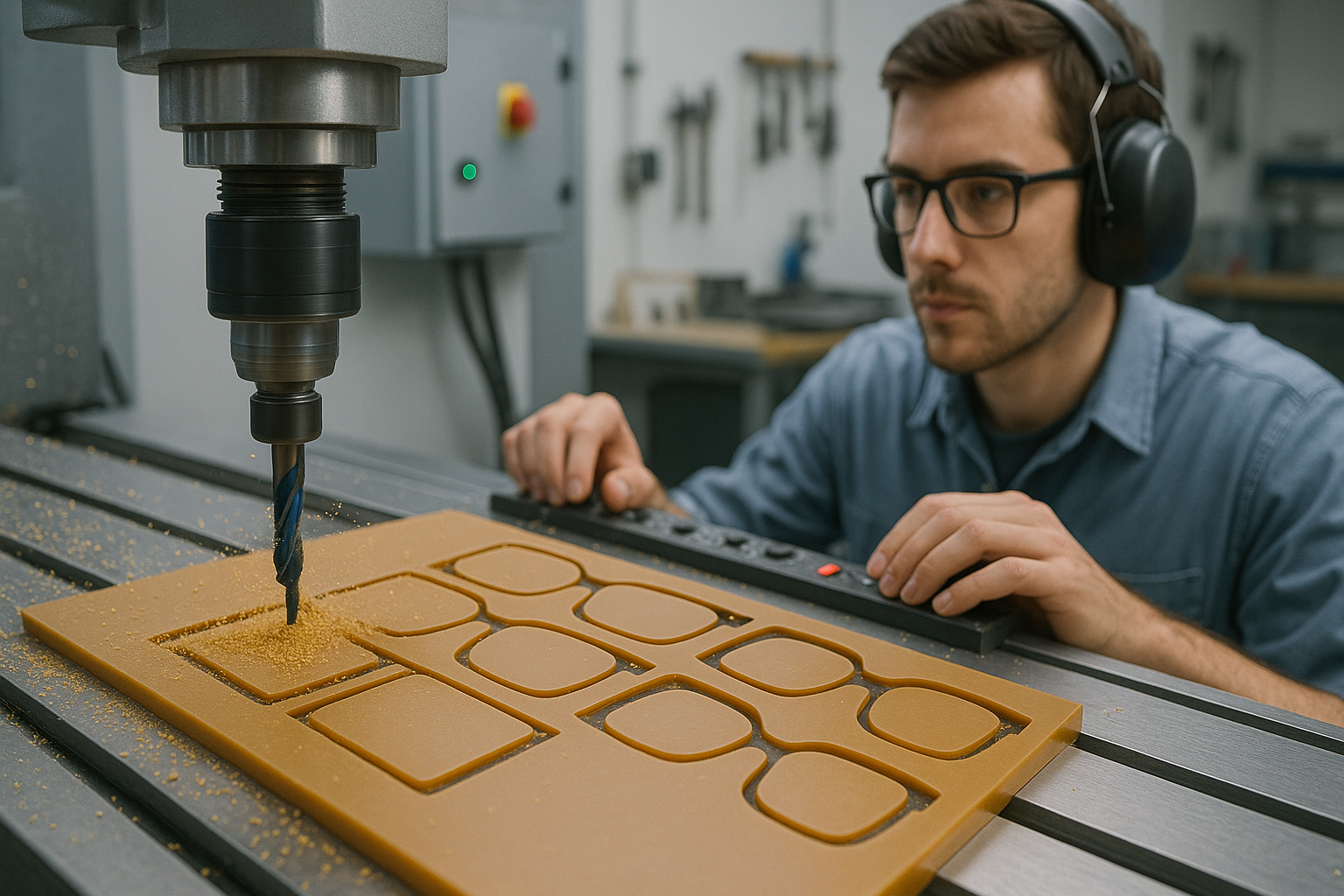
CNC Plastic Cutting Machines
- Tolerance: ±0.02mm cutting precision
- Blade types: Diamond-coated for acetate, carbide for polycarbonate
- Output: 120-150 frames/hour for mid-range machines
Pelletizing and Mixing Systems
- Capacity: 50-200kg batch processing
- Color mixing: Computer-controlled pigment dosing
- Drying: 4-8 hour dehumidification at 80°C
Frame Shaping: The Art of Molecular Alignment
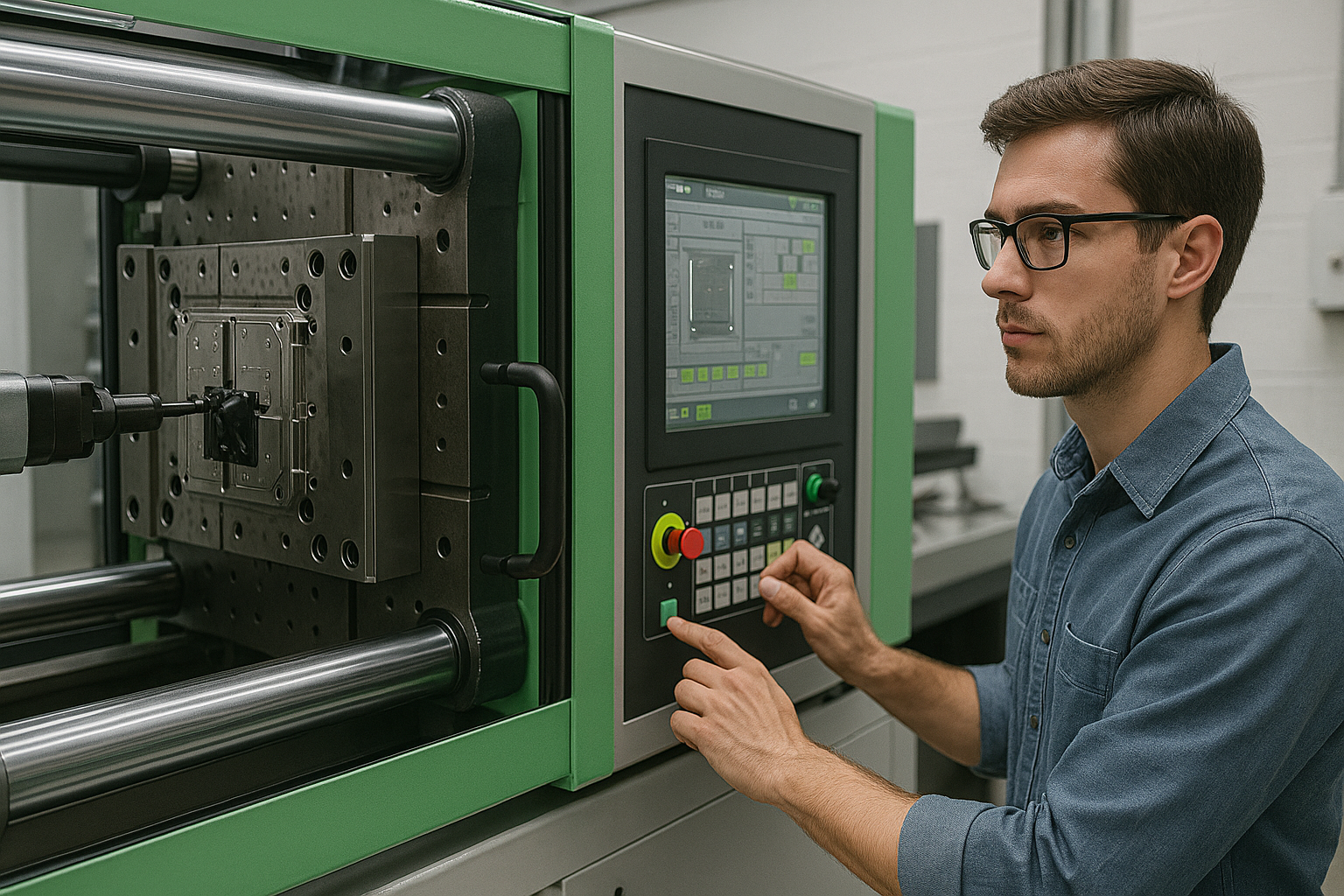
Injection Molding Parameters
| Parameter | Acetate | Polycarbonate | Nylon |
|---|---|---|---|
| Melt Temp | 230°C | 300°C | 280°C |
| Mold Temp | 60°C | 90°C | 80°C |
| Cycle Time | 45s | 30s | 40s |
Thermoforming Advancements
- 3D forming: Multi-axis pressure forming
- Memory plastics: Shape-setting at precise Tg points
- Cycle time: 90 seconds including cooling
Surface Finishing: Where Science Meets Aesthetics
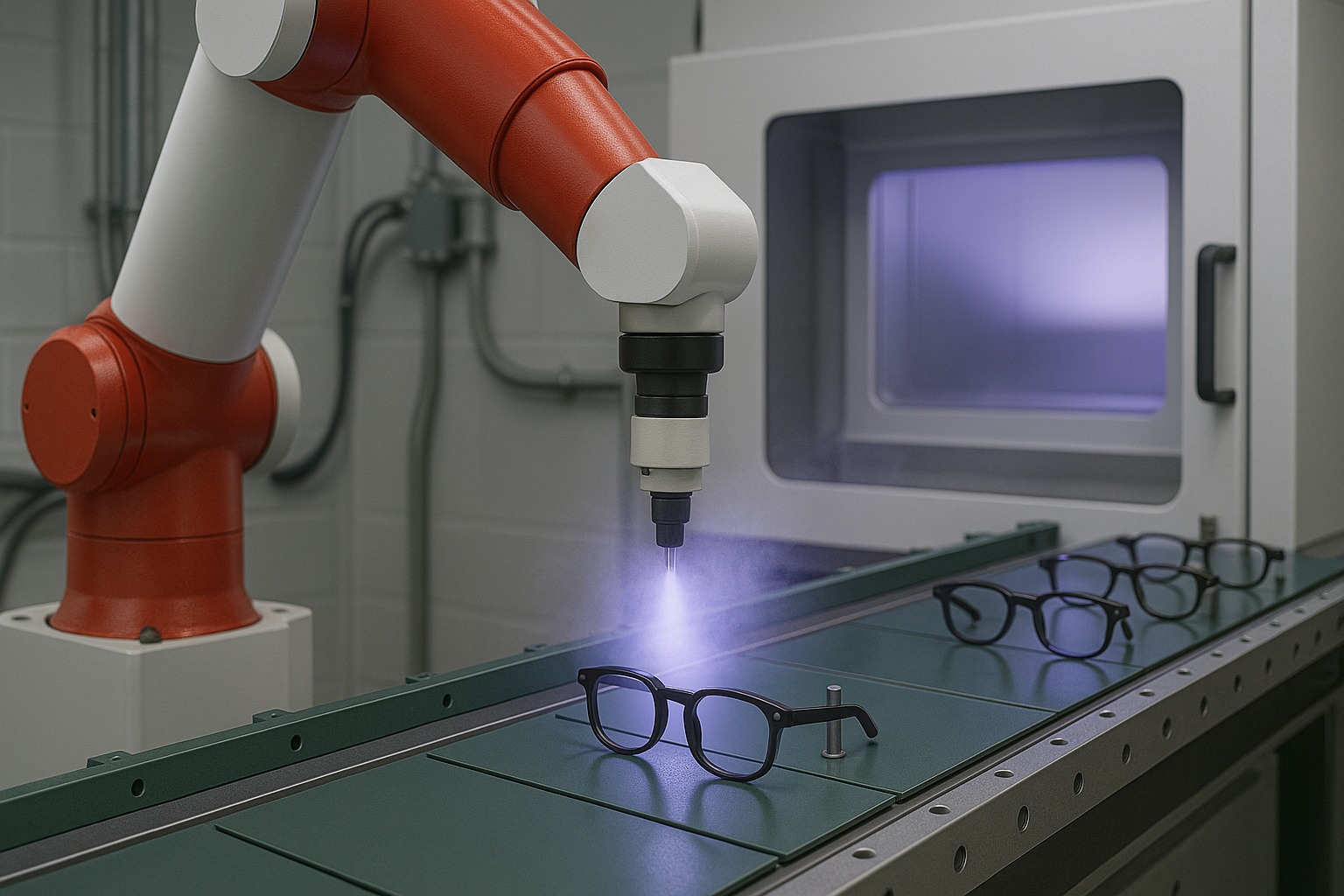
UV Coating Technology
- Cure time: 2-5 seconds under 1000W/cm² UV
- Thickness: 15-25μm monolayer
- Hardness: 4H pencil hardness standard
Precision Polishing
- Abrasive sequence: 400 → 800 → 1500 → 3000 grit
- Buffing RPM: 2500-3500 for mirror finish
- Coolant systems: Reduce thermal distortion
Assembly: Microscale Joining Technologies
Ultrasonic Welding Specifications
- Frequency: 20-40kHz
- Amplitude: 30-60μm
- Hold pressure: 2-3 bar
Metal Frame Production: Engineering Meets Jewelry Craft
Material Processing: Aerospace-Grade Precision
CNC Machining Centers
- Spindle speed: 20,000-50,000 RPM
- Tool life: 400 frame equivalents
- Coolant filtration: 5μm absolute rating
Forming Technologies: Beyond Basic Bending
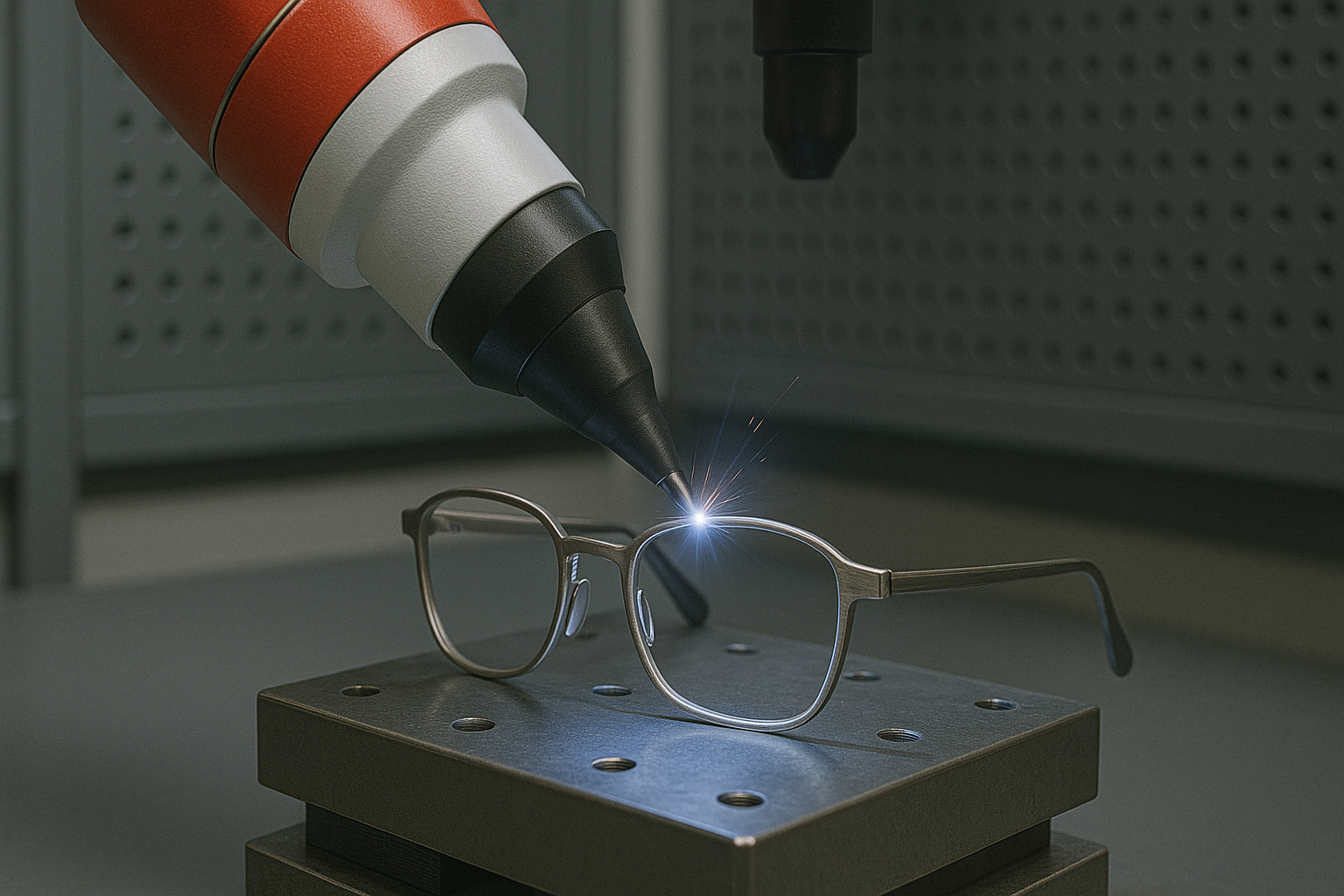
Laser Welding Advantages
| Technique | Spot Size | Depth | Material Suitability |
|---|---|---|---|
| Pulsed | 0.2mm | 1mm | Titanium, Steel |
| Continuous | 0.5mm | 3mm | Aluminum, Monel |
Progressive Stamping Dies
- Tonnage: 25-80 tons
- Strokes/minute: 30-60
- Tool life: 500,000 impressions
Surface Treatments: Durability Meets Design
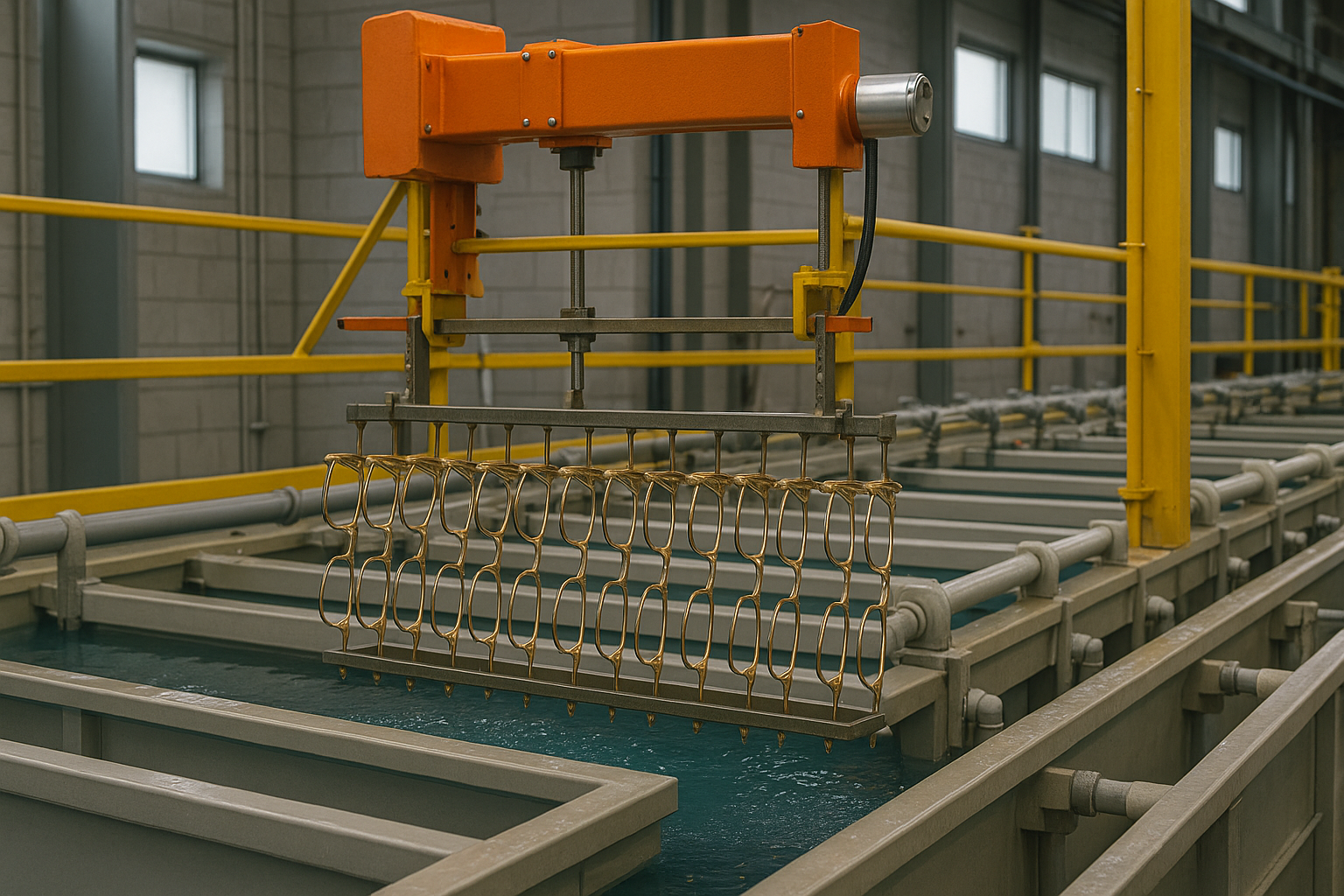
Electroplating Process Flow
- Alkaline cleaning (pH 11, 60°C)
- Acid activation (10% H2SO4)
- Nickel strike (1-2μm)
- Decorative plating (0.5-1μm Au/Rh)
Hybrid Frame Manufacturing: Solving Material Compatibility
Multi-Material Molding Challenges
- Coefficient differences: CTE matching within 15%
- Bond strength: >20MPa interface requirement
- Process window: ±3°C critical for adhesion
Combination Welding Techniques
- Laser transmission: For plastic-metal joints
- Induction heating: Localized metal heating
- Adhesive curing: UV+thermal dual cure systems
Quality Control: Beyond Dimensional Checks
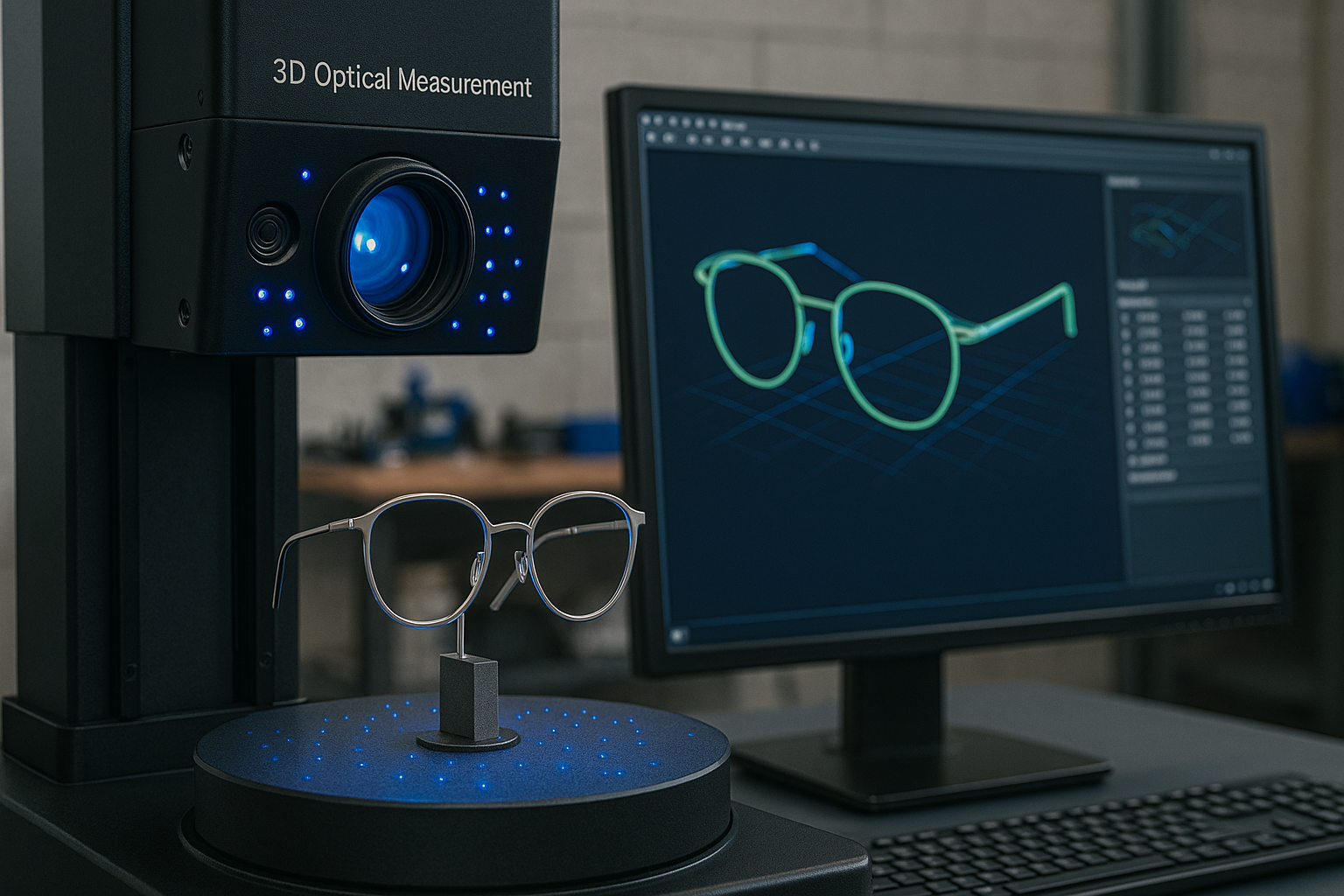
Advanced Testing Protocols
- Cyclic fatigue: 10,000 open/close cycles
- Salt spray: 500 hours neutral salt fog
- Spectrophotometry: ΔE<1 color tolerance
Optical Performance Validation
- Vertex power: ±0.03D measurement
- Panto angle: ±0.1° accuracy
- Frame warp: <0.5mm distortion limit
Conclusion: The Future of Frame Manufacturing
Emerging technologies like AI-driven adaptive machining and nanoparticle coatings are revolutionizing eyewear production. However, the fundamentals remain - understanding material behaviors, precise process control, and rigorous quality standards continue to define excellence in frame manufacturing across all material types.
Share:


Post time: May-28-2025