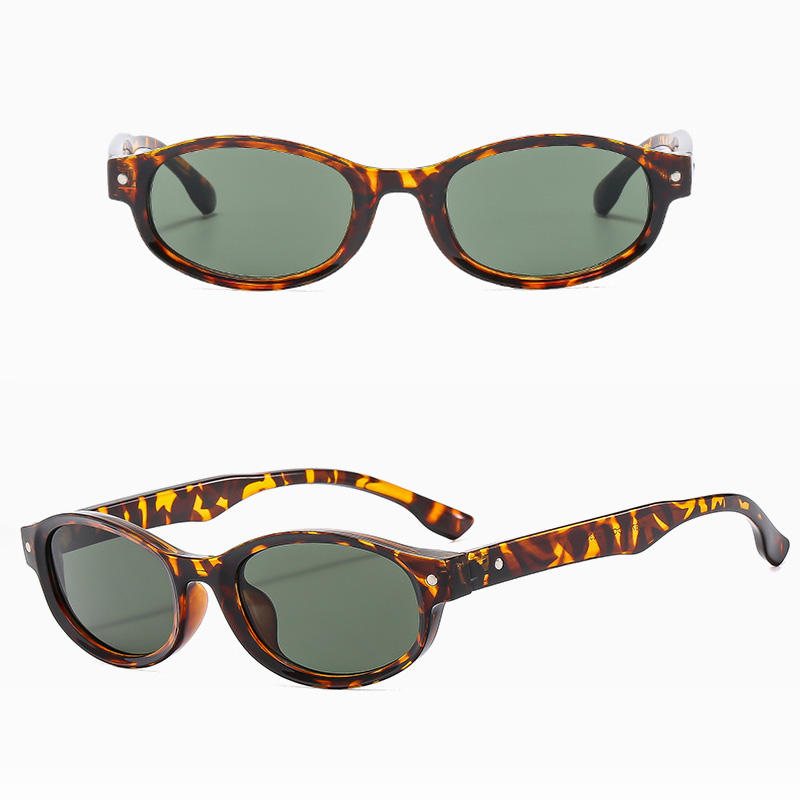
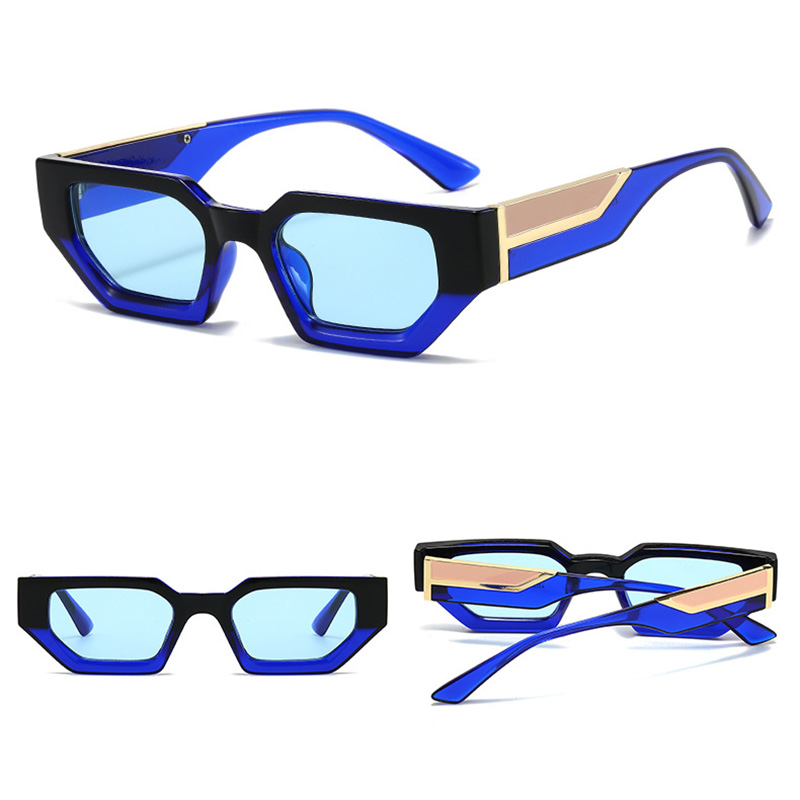
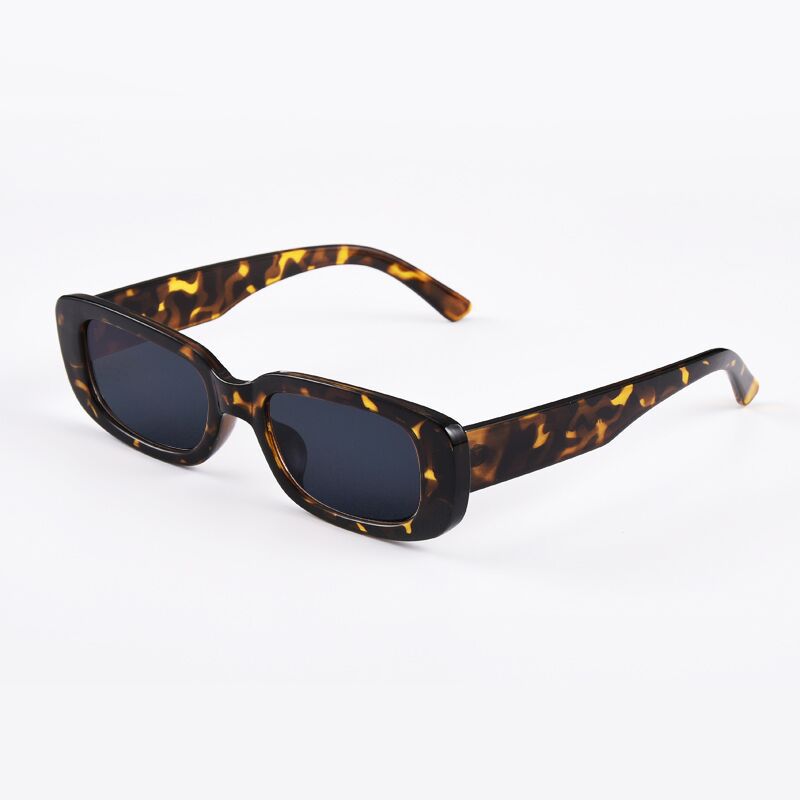
Wholesale Acetate Sunglasses Distributor: How Do You Choose the Right One?
Finding a reliable wholesale acetate sunglasses distributor feels straightforward until you realize that price sheets alone tell you almost nothing. You compare quotes, the numbers look similar, yet the frames that arrive vary wildly in color richness, polish quality, and long-term wearability. The difference usually traces back to decisions made long before pricing—sheet grade, MOQ structure, and how honestly a distributor communicates production realities.
The right wholesale acetate sunglasses distributor is not the cheapest option on a spreadsheet. It is the partner whose supply-chain structure—sheet sourcing, flexible MOQ paths (custom-color runs starting around 300 pieces and low-quantity stock-based logo programs), realistic lead times, and honest material guidance—matches your brand's current stage and growth trajectory.

That answer has layers. Below, I break down the specific factors that separate a distributor who actually adds value from one who simply passes along factory quotes. Whether you are an indie brand testing acetate for the first time or a wholesaler upgrading from injection-molded frames, the criteria below will help you ask the right questions before placing an order.
Why Does Acetate Sheet Grade Matter More Than You Think?
Most buyers compare acetate sunglasses on shape and price. Few ask about the raw sheet feeding the production line. That oversight costs them later—when colors fade, surfaces yellow, or polish dulls within a season.
Acetate sheet grade is the single largest variable determining color depth, surface finish, and long-term durability in wholesale acetate sunglasses.[^1] Premium sheets (such as Italian Mazzucchelli or Japanese Daicel) offer richer layered color patterns and hold a high-gloss polish far longer than lower-grade domestic alternatives.[^2]

How Sheet Origin Affects the Final Frame
From our sourcing experience, not all acetate is created equal—even though every supplier uses the word "acetate" on their product pages. The raw cellulose acetate sheet is where frame quality begins, and here is what I have seen across hundreds of orders:
| Factor | Premium Sheet (e.g., Mazzucchelli, Daicel) | Standard Domestic Sheet |
|---|---|---|
| Color depth | Multi-layer, translucent depth effects | Flatter, more uniform color |
| Polish retention | Holds gloss 12–18+ months with normal wear[^3] | May dull or show micro-scratches sooner |
| Pattern variety | Tortoiseshell, marble, gradient laminations | Simpler patterns; limited lamination options |
| Hypoallergenic properties | Plant-derived cellulose; generally skin-friendly | Same base chemistry, but filler quality varies |
| Cost to distributor | Higher per-sheet cost | Lower per-sheet cost |
A distributor who cannot tell you what sheet brand or grade they source is a red flag, not a bargain. I always encourage buyers to ask this question early. When a supplier deflects with "we use high-quality acetate," that vagueness usually signals they either don't know or don't want you to compare.
What Should You Verify?
- Ask for sheet origin documentation. A credible distributor will name the sheet supplier or at minimum describe the grade tier.
- Request an unpolished sample alongside a finished one. This reveals the raw color quality before surface finishing flatters the look.
- Compare UV exposure results. If you are selling into markets like Australia or the US Southwest, color stability under sunlight matters. Premium sheets generally resist yellowing longer, though I recommend having an independent lab verify UV performance for your specific application.
Important note: I am a distributor, not a materials scientist. The observations above come from pattern recognition across many orders and client feedback—not from lab-bench research. For application-specific durability claims, I always recommend buyers engage a qualified testing facility.
What Are the Two MOQ Paths—and Why Do Most Buyers Only Know About One?
Volume commitment is the number-one hesitation I hear from new brands exploring wholesale acetate sunglasses. They assume acetate means committing to thousands of pieces. That assumption is outdated—but only if your distributor offers both ordering paths.
Two distinct MOQ structures exist for wholesale acetate sunglasses: custom single-color production (typically starting around 300 pieces per style) and stock-based mix-and-match programs where a distributor with deep inventory lets you pick multiple styles and colors at much smaller quantities, with custom logo added. Most buyers only discover the second path after being turned away by the first.

Path 1: Custom Color Production (~300 pcs MOQ)
When a brand wants a specific acetate colorway—say, a unique honey tortoiseshell that matches their seasonal palette—the factory needs to cut from a dedicated sheet run. This means:
- ~300 pieces per style/color is typically the minimum to make a custom-color acetate run viable.
- No injection-mold tooling cost. Unlike PC or TR90 frames, acetate frames are CNC-milled from sheet, so you avoid the upfront mold investment entirely.[^4]
- Lead time is longer than injection-molded frames (more on that below).
- You get exclusive colorways that competitors cannot easily replicate.
For brands with proven best-sellers ready to differentiate on color, this path offers excellent unit economics and brand exclusivity.
Path 2: Stock-Based Low-Quantity Logo Program
Here is the path most emerging brands don't know about—and it is the real entry ramp for testing acetate without heavy commitment.
When a new brand approaches us unsure about committing to 300 pieces of one color, we typically suggest starting with our in-stock range—pick 5 styles, mix colors, and we add your logo. That way they test sell-through before locking in a custom colorway.
This works because we maintain a deep inventory of ready-made acetate frames across dozens of styles and colors. The brand gets:
- Much smaller quantities per style/color (the exact minimum depends on the logo process, but it is dramatically lower than 300).
- Mix-and-match freedom—choose different shapes, different colors, all in one order.
- Custom logo applied via laser engraving on the temple or pad printing, depending on aesthetic preference.
- Faster delivery since the frames already exist; only logo application and QC add time.
| Criteria | Custom Color Path | Stock-Based Logo Path |
|---|---|---|
| Best for | Established brands scaling proven styles | New brands testing acetate sell-through |
| MOQ per style/color | ~300 pcs | Significantly lower (mix-and-match) |
| Color exclusivity | Yes—unique colorway | No—from existing stock palette |
| Mold/tooling cost | None (acetate is CNC-cut) | None |
| Lead time | 25–45 days (production + polishing) | Much shorter (logo application + shipping) |
| Risk level | Moderate (volume commitment) | Low (test multiple styles cheaply) |
Why This Matters for Your Decision
The two-tier structure means acetate is accessible at multiple commitment levels. A wholesale acetate sunglasses distributor who only offers Path 1 is leaving emerging brands stranded. A distributor who offers both paths—and honestly advises which one fits your stage—is the partner worth evaluating further.
I have seen this play out repeatedly: a UK indie brand came to us wanting to test 5 acetate styles at 30 pieces each. We fulfilled the order from stock, added their temple logo, and shipped within two weeks. Three months later, after confirming which two styles sold best, they moved to a custom-color order at 300 pieces per style. That progression—low-risk trial to committed production—is exactly how the two paths work together.
Why Is Acetate Lead Time Longer Than Injection-Molded Frames?
Buyers accustomed to TR90 or PC frame timelines often feel frustrated when acetate orders take weeks longer. That frustration usually stems from a distributor who failed to explain why the timeline differs—and what happens if you try to compress it.
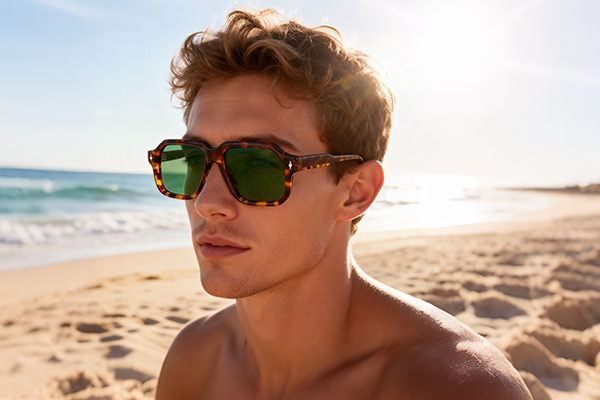
Acetate sunglasses require hand-polishing as a mandatory production step, not a marketing add-on. Each frame is tumbled, then individually polished by skilled workers to achieve the glossy, transparent depth that defines premium acetate. This step alone adds days to production and directly explains why acetate lead times run 25–45 days for custom orders—compared to 15–25 days for injection-molded frames.
The Production Steps That Add Time
Here is a simplified view of the acetate frame production sequence, based on what our factory partners walk us through:
- Sheet selection and cutting — CNC machines mill the frame shape from acetate sheet.
- Rough assembly — Hinges are inserted; temples and fronts are joined.
- Tumble polishing — Frames are placed in rotating barrels with polishing media to smooth rough edges.
- Hand polishing — Individual workers buff each frame to final gloss. This is where the "premium feel" comes from, and it cannot be fully automated without quality loss.
- Quality inspection — Color matching, hinge tension, surface defect checks.
- Logo application (if custom) — Laser engraving or pad printing.
- Final QC and packing.
Steps 3 and 4 are unique to acetate. Injection-molded frames (TR90, PC) come out of the mold already smooth and skip directly to assembly and QC.[^5]
What Happens When Lead Time Is Rushed?
Across the orders we have handled, the most common quality complaint about acetate frames traces back to under-polished surfaces. When factories are pressured to cut lead time, hand-polishing is the step that gets shortened. The result:
- Dull spots on temple tips or nose bridge areas.
- Visible tool marks along the frame rim.
- Inconsistent gloss between frames in the same batch.
A trustworthy wholesale acetate sunglasses distributor sets realistic timelines upfront rather than promising fast delivery and quietly sacrificing finish quality. When clients ask me for faster turnaround on custom acetate orders, I explain the trade-off honestly. Sometimes, the stock-based path (Path 2 above) is the better answer for their timeline.
Pro tip: If you need acetate frames within two weeks, ask your distributor about their in-stock program first. Forcing a custom production run into a two-week window almost always compromises polish quality.
When Does Acetate Actually Make Business Sense Over TR90 or PC?
Not every product line needs acetate. I know that sounds counterproductive coming from someone who distributes acetate sunglasses, but recommending the wrong material erodes trust faster than any margin it generates.
Acetate sunglasses make business sense when your retail price point supports the cost premium, your target customer values visible craftsmanship, and your brand story benefits from material differentiation. For high-volume value lines sold below $15 retail, TR90 or PC frames often deliver better margins without sacrificing adequate quality.

A Practical Decision Framework
I use a simple framework when clients ask me whether acetate is the right fit for a particular line:
| Factor | Acetate Best Fit | TR90 / PC Best Fit |
|---|---|---|
| Retail price | $25+ (supports cost premium) | Under $15 (margin-sensitive) |
| Brand positioning | Premium, fashion-forward, artisan | Sporty, value, mass-market |
| Target customer | Style-conscious; appreciates material quality | Price-driven; prioritizes function |
| Color/pattern needs | Rich layered tortoiseshell, translucent effects | Solid colors, matte finishes |
| Order volume | Can start small (stock path) or scale (custom path) | High volume; tooling cost amortizes well |
| Durability priority | Fashion durability (gentle daily use) | Impact resistance (sport, kids, outdoor) |
Why Honest Material Guidance Builds Long-Term Partnerships
A few months ago, an Australian wholesaler approached us wanting to convert their entire range to acetate after seeing competitors market "premium acetate." After reviewing their catalog, I suggested keeping their sport-wrap styles in TR90 (better flex memory, lighter weight for active use) and moving only their fashion cat-eye and oversized styles into acetate. The reason was simple: their sport customers care about fit and durability under impact, not material prestige.
That kind of scene-matching is where a good wholesale acetate sunglasses distributor earns long-term business. Pushing acetate on every SKU would have generated a larger first order—and a smaller reorder when sport frames underperformed expectations.
The Cost Premium in Context
Yes, acetate frames cost more per unit than PC or TR90. But consider the full economics:
- No mold cost. TR90 and PC frames require injection molds ($800–$3,000+ per style). Acetate frames are CNC-cut from sheet—no tooling investment.
- Higher perceived retail value. Acetate's weight, color depth, and gloss signal premium to consumers. Brands typically command $10–$30 more per unit at retail compared to plastic alternatives.
- Lower style-change risk. Want to test a new shape? With acetate, your factory partner adjusts a CNC program. With injection molding, you commission a new mold.
For brands operating in the $25–$80 retail range, acetate's cost premium at wholesale is more than recovered through retail margin expansion and brand positioning.
What Should You Look for When Evaluating a Wholesale Acetate Sunglasses Distributor?
Knowing the material is only half the equation. The distributor you choose determines whether that material knowledge translates into consistent product in your hands.
When evaluating a wholesale acetate sunglasses distributor, prioritize five factors: sheet grade transparency, dual MOQ paths (custom and stock-based), realistic lead-time communication, export compliance documentation, and willingness to advise against acetate when another material fits better. Any distributor who checks all five is worth a sample order.
The Five-Point Evaluation Checklist
1. Sheet Grade Transparency
Ask what acetate sheet they source. Expect a clear answer—brand name, grade tier, or origin country at minimum. Vague responses like "imported material" should prompt follow-up questions.
2. Dual MOQ Structure
Confirm they offer both custom-color production (typically ~300 pcs) and a stock-based low-quantity program with logo customization. If they only offer one path, they may not serve your needs as you grow—or as you start.
3. Lead-Time Honesty
A distributor who promises 10-day delivery on custom acetate orders is either lying or cutting corners on polishing. Realistic custom-order lead times run 25–45 days. Stock-based orders with logo are significantly faster.
4. Export Compliance Readiness
If you import into the US, EU, or Australia, your distributor should be experienced with:
- CE marking documentation (EU)
- FDA establishment registration awareness (US—sunglasses are classified as medical devices for import purposes)
- Proper HS code classification
- UV400 or equivalent lens test reports
- Packaging and labeling requirements by destination market
Note: Certifications and compliance documents should always be verified independently by the buyer or a qualified compliance consultant. A good distributor provides documentation; a responsible buyer confirms it.
5. Material-Honest Advising
Does the distributor ever suggest TR90 or PC instead of acetate? If the answer is never, they are optimizing their margin, not your product line.
Red Flags to Watch For
- "We produce everything in our own factory" — from a company that also offers metal, TR90, PC, and acetate across hundreds of styles. Very few single factories handle all material types at scale. Honest distributors say "we source from specialized factory partners."
- No samples available — Acetate quality varies so much that ordering without physical samples is a significant risk.
- Identical pricing across all sheet grades — If premium Italian sheet and standard domestic sheet cost the same, either the "premium" claim is false or the pricing is opaque.
Frequently Asked Questions
Are acetate sunglasses worth the higher cost compared to TR90 or PC?
For brands retailing above $25, yes. Acetate offers richer color depth, a premium hand-feel, and no mold tooling cost—allowing higher retail margins and easier style changes. For value-oriented lines below $15, TR90 or PC typically makes more economic sense. The decision should match your price positioning and target customer.
What is the minimum order quantity for wholesale acetate sunglasses?
It depends on the ordering path. Custom single-color acetate styles typically start around 300 pieces per style. However, distributors with deep stock inventory offer a mix-and-match path at much lower quantities—you select from existing styles and colors, and a custom logo is applied. This second path is ideal for emerging brands testing the market.
How long does it take to receive a wholesale acetate sunglasses order?
Custom-color production orders typically take 25–45 days, primarily because hand-polishing is a required step that cannot be rushed without quality loss. Stock-based orders with logo application ship much faster—often within one to two weeks—since the frames already exist in inventory.
How can I verify the quality of acetate sunglasses before committing to a large order?
Always request physical samples before placing a production order. Examine color depth, surface gloss, hinge tension, and overall finish consistency. Ask your distributor about the sheet grade used. For lens-related claims like UV400 protection, request third-party test reports and consider independent verification through a qualified testing lab.
Do acetate sunglasses require any special certifications for US or EU import?
Yes. In the US, sunglasses fall under FDA jurisdiction as a medical device category, requiring proper establishment registration and product listing. The EU requires CE marking and compliance with relevant directives. Australia has its own standards. A reliable wholesale acetate sunglasses distributor will have experience preparing the necessary documentation, but buyers should always verify compliance independently or through a trade compliance consultant.
Conclusion
Choosing a wholesale acetate sunglasses distributor comes down to supply-chain fit, not just unit price. The right partner offers transparent sheet-grade sourcing, flexible ordering through both custom-color production and low-quantity stock-based logo programs, honest lead-time expectations that respect the hand-polishing process, and the integrity to recommend a different material when acetate is not the best business decision. These factors separate a transactional vendor from a long-term growth partner.
If you are exploring acetate sunglasses for the first time—or reconsidering a current supplier who has not delivered on quality or communication—I invite you to reach out. We can start with our in-stock range so you test sell-through risk-free, then scale to custom colorways when you are ready. That is the path most of our successful brand partners have taken, and I am happy to walk you through it.
[^1]: "Controlling the Porous Structure of Cellulose Acetate Derived ...", https://pmc.ncbi.nlm.nih.gov/articles/PMC12750191/. Polymer and materials research on cellulose acetate indicates that grade, plasticizer content, and sheet lamination influence optical clarity, surface finish, and weathering behavior; however, direct comparisons among eyewear sheet grades under real wear conditions are limited. Evidence role: mechanism; source type: research. Supports: The role of cellulose acetate grade and formulation in optical and surface properties.. Scope note: The cited research supports the general mechanism but does not rank commercial sheet brands or prove that sheet grade is the single largest variable.
[^2]: "Researching and Preserving Objects of Cellulose Acetate - PMC", https://pmc.ncbi.nlm.nih.gov/articles/PMC10346856/. Technical literature from acetate sheet manufacturers and independent materials references describes differences in lamination, color depth, and surface finish among cellulose acetate sheets, but publicly available head-to-head durability testing of Mazzucchelli, Daicel, and domestic sheets is scarce. Evidence role: general_support; source type: research. Supports: Material properties of branded acetate sheets and general differences in sheet quality.. Scope note: Manufacturer technical data and general polymer literature do not independently establish a universal ranking or wear-life advantage.
[^3]: "An Overview of Cellulose Derivatives-Based Dressings for ...", https://pmc.ncbi.nlm.nih.gov/articles/PMC8706040/. Accelerated weathering and abrasion studies on cellulose acetate show that gloss and color can change with UV exposure and mechanical wear, but the rate depends on formulation, plasticizers, and user care; the 12–18 month figure is therefore indicative rather than a fixed performance standard. Evidence role: statistic; source type: research. Supports: Durability of acetate surface gloss under wear or accelerated aging.. Scope note: No standardized wear test supports a universal 12–18 month gloss-retention period.
[^4]: "Jacob Hamman -- How to Make (almost) Anything", https://fab.cba.mit.edu/classes/863.15/section.Harvard/people/Hamman/week7.html. Eyewear manufacturing references describe cellulose acetate frames as cut, milled, and polished from solid sheet, while TR90 and polycarbonate frames are generally injection molded, which explains the different tooling requirements. Evidence role: mechanism; source type: research. Supports: Acetate eyewear frames are commonly cut and milled from sheet rather than injection molded.. Scope note: This supports the general process distinction but not any specific cost savings for a given order.
[^5]: "Jacob Hamman -- How to Make (almost) Anything", https://fab.cba.mit.edu/classes/863.15/section.Harvard/people/Hamman/week7.html. Injection molding references describe TR90 and polycarbonate frames as formed in polished molds to produce a finished surface, so they generally require less post-mold polishing than acetate frames; mold design and surface texture still affect the final appearance. Evidence role: mechanism; source type: research. Supports: Injection-molded TR90 and polycarbonate eyewear typically require less post-mold polishing than acetate frames.. Scope note: This does not mean all injection-molded frames require no finishing or quality checks.
Share:


Post time: Oct-16-2026