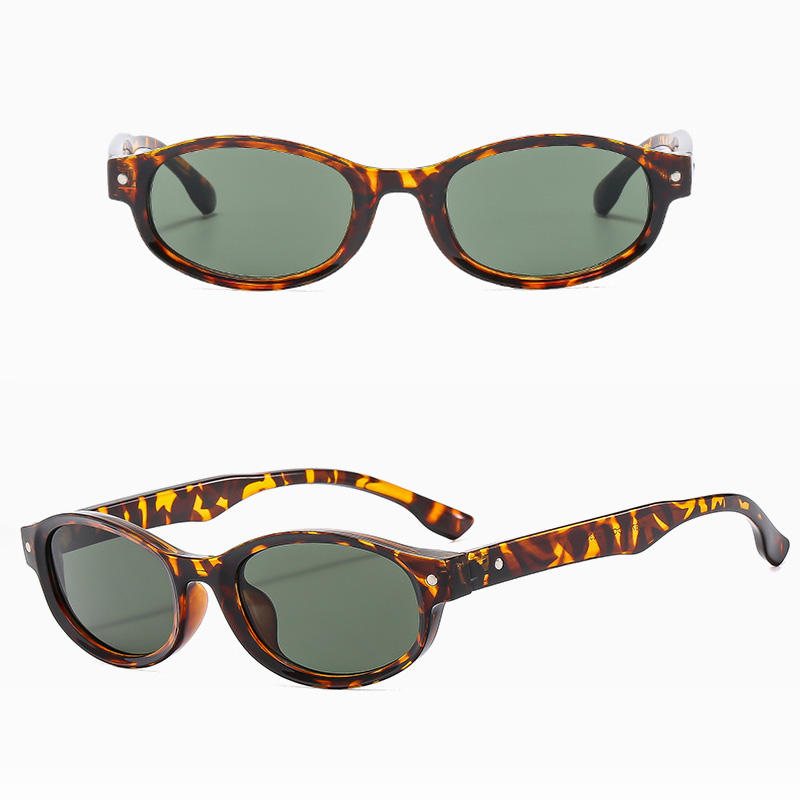
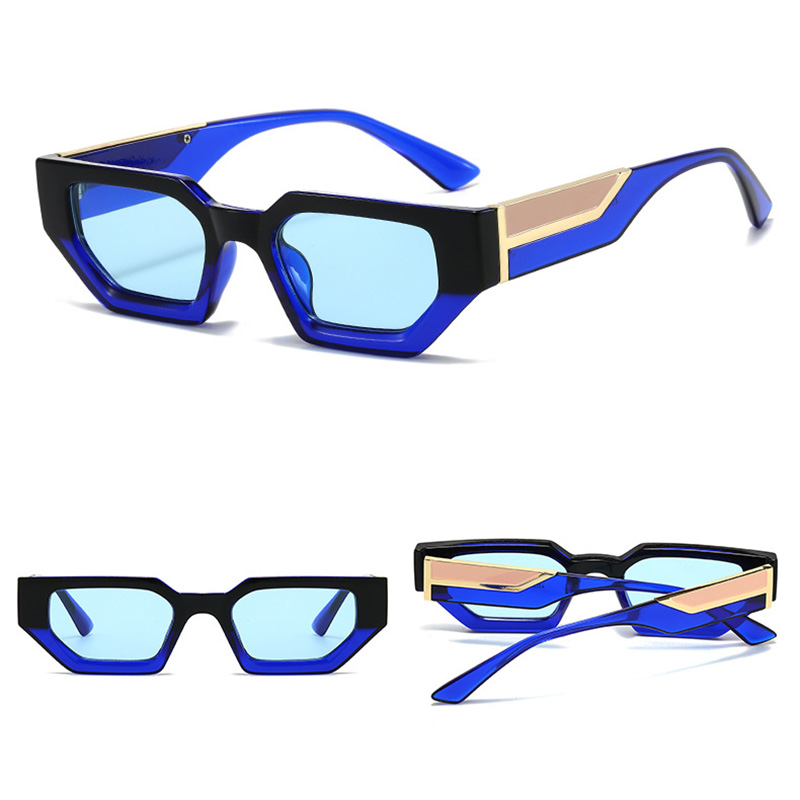
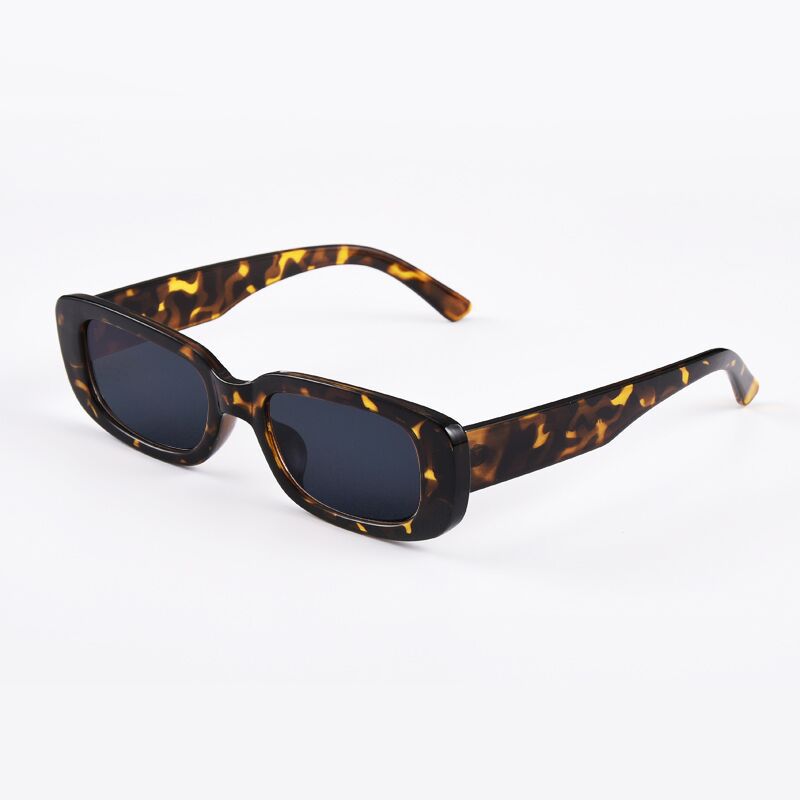
Wholesale Sunglasses China
Finding the right source for wholesale sunglasses China can feel overwhelming—thousands of suppliers, confusing MOQ rules, and nagging doubts about quality and compliance. The real risk isn't overpaying by a few cents per unit. It's choosing a supply model that doesn't fit how your business actually sells. The solution starts with understanding what's available beyond traditional custom production.
For most wholesalers, distributors, and retail buyers, the fastest and lowest-risk way to source wholesale sunglasses from China is the ready-stock logo-printing model[^1]. Instead of placing a custom production order with high minimums and long lead times, you select styles and colors from a supplier's live catalog, have your logo printed on existing inventory, and ship in days rather than weeks. This model delivers broad SKU variety at manageable quantities—ideal for businesses that need shelf diversity, not a single hero product.

Most first-time buyers assume that sourcing from China means committing to a full production run. That assumption costs time and leads to mismatched expectations. Below, I'll walk you through how the ready-stock model works, which buyer type it fits best, how to navigate frame materials as business decisions, and how to verify the compliance documents that actually matter. Everything here comes from my daily experience handling orders for buyers across North America, Europe, and Oceania—and yes, I'm writing this as a supplier, not a neutral reviewer. I believe that transparency serves you better than pretending otherwise.
What Is the Ready-Stock Logo-Printing Model and Why Should You Care?
A common question we get from first-time wholesalers is: "What's your MOQ for a custom order?" They're surprised when we explain there's a faster, more flexible option they didn't know existed.
The ready-stock logo-printing model means a supplier maintains a continuously replenished catalog of finished sunglasses—hundreds of styles across multiple frame materials and colors—available for immediate order. Instead of designing from scratch, you pick the SKUs you want, choose your logo placement, and the supplier prints your branding onto existing inventory. There's no mold fee, no production cycle, and no 30–60 day wait.
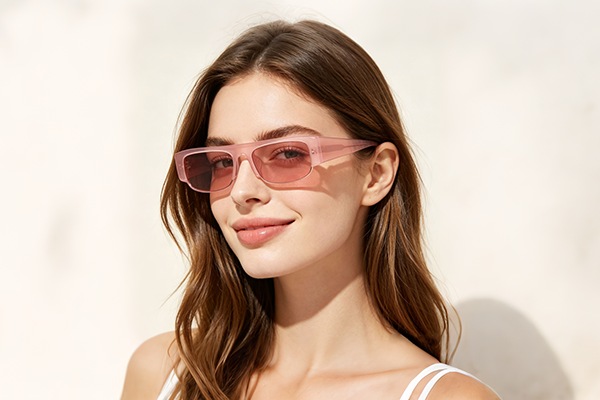
How Does the Process Actually Work?
Let me break down what happens from inquiry to shipment, based on how we handle this daily:
- Catalog selection. The buyer browses a live catalog—usually shared as a digital lookbook or spreadsheet with real-time stock status. Each SKU shows the frame material, available colors, and current inventory count.
- Style and color mixing. Unlike custom production, you don't commit to one style in bulk. You can pick 20 different styles, 3 colors each, in quantities as low as 12–50 pieces per color per style (depending on the supplier). This is what we call a stock-mix order.
- Logo confirmation. You send your logo file. The supplier confirms print method (pad printing, silk screening, or laser engraving depending on material and placement) and produces a digital mockup or physical sample.
- On-stock printing. Your logo is printed directly onto the frames already in inventory. This step typically takes 3–7 days—not weeks.
- Quality check and shipment. Standard pre-shipment inspection, packaging, and dispatch.
Key takeaway: The entire process from order confirmation to shipment can take as little as 7–14 days for stock-mix orders with logo printing. Compare that to 30–60 days for a custom production order.
Why Does This Model Exist?
It exists because most wholesale and retail buyers don't need exclusive, never-before-seen designs. They need variety on shelves, fast turnaround, and the ability to test styles before reordering winners. A store that displays 60 different sunglasses styles doesn't need to invent those styles—it needs reliable access to proven, in-demand designs under its own branding.
In our experience handling orders for North American and European buyers, roughly 70% of first-time inquiries shift from "custom production" to "stock-mix with logo" once buyers understand the model[^2]. The math simply works better for their business type.
What's the Catch?
There are legitimate limitations:
- You won't get exclusive designs. Other buyers can order the same base styles. Your differentiation comes from logo, packaging, and marketing—not frame exclusivity.
- Stock fluctuates. Best-sellers get replenished continuously, but slow-moving colors or styles may rotate out of the catalog. Always confirm current stock before finalizing your order plan.
- Logo placement options are limited by frame geometry. Not every temple or lens area accommodates every logo size. Your supplier should flag this during mockup review.
These aren't dealbreakers for most wholesalers and retailers—they're simply parameters to plan around.
Which Buyer Type Does This Model Actually Fit?
Not every buyer benefits from the same supply model. Choosing the wrong one wastes your time and your supplier's. Here's how to self-select.
The ready-stock logo-printing model is built for wholesalers, distributors, and retail store owners who need broad style variety at manageable quantities with fast delivery. It is not designed for brand owners who need exclusive, custom-designed frames from scratch. Understanding this distinction before you send your first inquiry saves everyone weeks of back-and-forth.

Buyer-to-Model Fit Matrix
| Buyer Type | Core Need | Best Supply Model | Typical MOQ Range | Lead Time |
|---|---|---|---|---|
| Wholesaler / Distributor | Broad SKU mix, fast restock, logo branding | Ready-stock + logo printing | 12–50 pcs/color/style | 7–14 days |
| Retail Store Owner | Display variety, seasonal refresh, own-brand labels | Ready-stock + logo printing | 12–50 pcs/color/style | 7–14 days |
| Brand Owner (curated line) | Exclusive designs, custom molds, brand IP protection | Custom OEM/ODM production | 300–1,000+ pcs/style | 30–60 days |
| Promotional Buyer | Single low-cost style in high volume for events/giveaways | Bulk stock order (minimal customization) | 500+ pcs | 7–21 days |
Why This Distinction Matters
I've seen brand owners request 5 exclusive SKUs with custom temple designs, proprietary colorways, and unique hinge mechanisms—then get frustrated when told those require custom molds, higher MOQs, and production lead times. That's not a ready-stock scenario. That's full OEM/ODM, and it's a fundamentally different project with different costs and timelines.
Conversely, I've seen wholesalers who want 80 different styles waste months getting quotes from factories that only do large-run custom production. They end up with 3 styles instead of 80 because the MOQs per style are too high to justify variety.
The question to ask yourself: Am I building a curated brand identity around a few exclusive designs, or am I filling shelves and catalogs with diverse, market-tested styles under my label?
If it's the latter, the ready-stock model from a China-based supplier with a deep catalog is almost certainly your most efficient path. In our daily work, we see this model work best for buyers in North America, the UK, Germany, and Australia who operate multi-brand or private-label sunglasses businesses.
How Do Frame Materials Affect Your Business Decisions?
Frame material isn't just an engineering spec—it determines your cost per unit, your target consumer, and your brand positioning. Buyers who treat material selection as a cosmetic afterthought end up with mismatched products and confused customers.
The four most common frame materials in wholesale sunglasses from China—PC, TR90, Acetate, and metal—each serve a specific market segment and price point. Choosing the right material mix means aligning your product with the customers you actually sell to, not simply picking whatever looks good in a catalog photo.

Material Decision Matrix
| Material | Cost Tier | Key Properties | Best For | Target Consumer |
|---|---|---|---|---|
| PC (Polycarbonate) | Budget | Lightweight, impact-resistant, cost-efficient[^3] | Promotions, impulse buys, entry-level retail | Price-conscious shoppers, event giveaways |
| TR90 | Mid-range | Ultra-flexible, lightweight, durable | Sport-positioned lines, active lifestyle branding | Fitness-oriented consumers, outdoor enthusiasts |
| Acetate | Premium | Rich color depth, polishable, hypoallergenic | Fashion-forward collections, premium retail | Style-conscious consumers willing to pay more |
| Metal | Mid-to-Premium | Classic aesthetic, adjustable nose pads, slim profiles | Aviator/classic styles, luxury positioning | Professional and mature demographics |
How to Think About This as a Buyer
If you're stocking a display wall at a beach resort gift shop, PC frames at the lowest cost per unit maximize your margin on impulse purchases. Durability matters less because these are fashion accessories, not daily-wear investments.
If you're supplying outdoor retail or sporting goods stores, TR90 is a natural fit. Its flexibility and lightweight feel give you a genuine talking point—customers can physically bend the frame and feel the difference. This material practically sells itself in the right context.
If your brand targets fashion-conscious consumers through boutiques or curated online stores, Acetate delivers the visual richness and perceived quality that justifies a higher retail price. The material takes color and pattern beautifully—think tortoiseshell, gradient tones, and crystal finishes that catch the eye.
If you're serving a classic or professional market, metal frames (stainless steel, titanium alloy, or aluminum) communicate tradition and refinement. They're essential for aviator and round-frame styles that never go out of trend.
A Practical Tip from Daily Orders
In our experience, the most successful wholesalers don't limit themselves to one material. They build assortments across 2–3 material types to cover multiple price points and consumer segments. A typical stock-mix order might include 40% PC for volume, 30% TR90 for sport positioning, and 30% Acetate for premium shelf placement. This approach maximizes sell-through across different retail environments.
The ready-stock model makes this kind of multi-material mixing practical. Because you're selecting from existing inventory rather than commissioning production runs per material, you can diversify without inflating your total order commitment.
How Do You Verify Compliance and Certifications Without Getting Burned?
Compliance fear is real—and completely rational. A single shipment of sunglasses that fails UV testing or gets flagged by customs can destroy a new wholesale business. But most buyers direct their anxiety at the wrong things. They worry about UV protection in general terms without knowing which specific documents to request, how to read them, or what they actually prove.
A credible wholesale sunglasses China supplier should provide UV400 test reports from an independent lab, CE declarations of conformity for European markets, and FDA registration documentation for U.S. distribution. These are minimum baseline documents. Buyers should request them proactively, verify the issuing lab's accreditation, and understand that certifications are evidence to verify—not guarantees to trust blindly.

What Documents Should You Request?
Here's a checklist I recommend to every new buyer, based on the compliance questions we handle daily:
-
UV400 test report. This confirms that lenses block 99–100% of UVA and UVB rays up to 400 nanometers[^4]. The report should come from a third-party lab (not the supplier's internal QC team). Look for the lab's accreditation number—typically ISO/IEC 17025 accredited.
-
CE Declaration of Conformity. Required for sunglasses sold in the EU and UK markets. This document declares that the product meets the requirements of the Personal Protective Equipment Regulation (EU) 2016/425 and the harmonized standard EN ISO 12312-1 for sunglasses and sunglass lenses[^5]. The declaration should reference specific product models, not be a blanket statement.
-
FDA registration. For the U.S. market, sunglasses are classified as medical devices (specifically, impact-resistant lenses fall under 21 CFR 801.410). Suppliers should be registered with the FDA and be able to provide their registration number. This doesn't mean the FDA has "approved" the sunglasses—it means the supplier has registered as required.
-
Drop ball test report (U.S. market). The FDA requires that sunglass lenses pass a drop ball impact resistance test.[^6] Your supplier should be able to provide documentation of this testing.
How to Actually Verify These Documents
Here's where most buyers stop short. They receive a PDF and file it away. Instead:
- Check the lab. Google the testing laboratory named on the report. Verify it exists and holds relevant accreditation. Reputable labs include SGS, Intertek, Bureau Veritas, and TÜV, among others.
- Match the product. Confirm the test report references the specific model numbers or product descriptions you're ordering—not a different product line.
- Check the date. Test reports older than 2 years may not reflect current production. Ask if the supplier conducts periodic retesting.
- Request originals. Some buyers accept scanned copies without verifying. If the order is significant, request the original or a verified digital copy directly from the lab.
A note on transparency: As a supplier, I prepare these documents regularly for our buyers. I'm not a testing lab, and I don't claim lab-testing authority. What I can tell you is what a credible supplier should provide and how you, as the buyer, can verify it independently. If a supplier refuses to share test reports or gets defensive when you ask questions, that's a red flag regardless of their pricing.
Common Compliance Mistakes
- Assuming "UV400" on the frame sticker means it's been tested. Any factory can print "UV400" on a sticker. The test report is what matters.
- Assuming CE marking equals European approval. CE marking is a self-declaration by the manufacturer. It means the supplier claims conformity—it doesn't mean a European authority has inspected and approved the product. This is why the underlying test report and Declaration of Conformity documents matter.
- Ignoring market-specific requirements. Australia (AS/NZS 1067), the EU (EN ISO 12312-1), and the U.S. (FDA 21 CFR) have different standards. Make sure your supplier provides documentation relevant to your specific target market.
How Do You Manage Reorders and Stock Availability?
You've found a winning style. It's selling faster than anything else in your store. You go to reorder—and it's out of stock. This is the reorder risk that nobody talks about until it bites them.
Best-selling wholesale sunglasses styles from China-based catalog suppliers are continuously restocked, but stock availability is never guaranteed indefinitely. Buyers should confirm replenishment cycles, ask about reorder lead times for specific SKUs, and build a backup style list before their initial order—not after a stockout surprises them.

How Catalog Replenishment Actually Works
In our factory, here's the typical cycle:
- Best-sellers (top 20–30% of the catalog by volume) are produced in rolling batches. When inventory drops below a threshold, production refills. These styles are almost always available, though specific colors may temporarily run low.
- Mid-performers are restocked less frequently. They remain in the catalog but may have 2–4 week gaps between production runs.
- Slow movers get rotated out. If a style hasn't sold well across multiple buyers over a season, it's replaced by new designs. This keeps the catalog fresh—but it means that niche style you liked might not be available next quarter.
Practical Reorder Tips
Here's what I advise buyers who plan to build ongoing relationships with a China-based sunglasses supplier:
-
Ask about replenishment policy upfront. Before your first order, ask: "Which styles in your catalog are continuously restocked? What's the typical reorder lead time for your top sellers?" This tells you immediately whether the supplier manages inventory proactively or just sells whatever happens to be in the warehouse.
-
Build a backup style list. For every hero SKU you plan to reorder, identify 2–3 alternatives in similar aesthetics. If your best-selling oversized cat-eye in black goes temporarily out of stock, having a pre-vetted alternative means you don't lose sales momentum.
-
Confirm stock before placing reorders. Even for styles you've ordered before, check current inventory before confirming quantities. A quick message to your supplier takes minutes and prevents order revisions later.
-
Consider seasonal timing. In our experience, stock levels are tightest in Q1 (January–March) when factories are ramping up after Chinese New Year and global buyers are placing spring/summer orders simultaneously[^7]. Place reorders early to avoid seasonal shortages.
-
Lock in commitments for critical SKUs. If a particular style drives a significant portion of your revenue, discuss reservation or pre-commitment arrangements with your supplier. Not every supplier offers this, but it's worth asking.
Why This Matters for Your Cash Flow
Reliable reorder capability directly affects your inventory carrying costs and cash flow. If you can reorder in small batches every 4–6 weeks rather than placing one massive order per season, you reduce the amount of capital tied up in unsold stock. The ready-stock model inherently supports this lean inventory approach—but only if you understand the replenishment rhythm and plan accordingly.
Frequently Asked Questions
What is the typical MOQ for wholesale sunglasses from China with logo printing?
For ready-stock orders with logo printing, typical minimums range from 12 to 50 pieces per color per style, depending on the supplier. This is significantly lower than custom production MOQs, which often start at 300–1,000 pieces per style. The stock-mix model allows you to spread your total order across many different styles rather than committing heavily to just one or two.
How long does it take to receive a wholesale sunglasses order from China?
Ready-stock orders with logo printing typically ship within 7–14 days of order confirmation. Custom production orders take 30–60 days. Transit time depends on your shipping method—air freight to North America or Europe adds 5–10 days, while sea freight adds 20–35 days. Factor in both production and transit when planning your inventory timeline.
Can I mix different sunglasses styles and materials in one order?
Yes, and this is one of the primary advantages of the ready-stock model. Most catalog-based suppliers allow you to mix styles, colors, and frame materials within a single order. This is specifically designed for wholesalers and retailers who need shelf variety. Confirm minimum quantities per style with your supplier before finalizing your assortment.
How do I know if a China sunglasses supplier is legitimate?
Request UV400 test reports from accredited third-party labs, CE declarations of conformity, and FDA registration documentation. Verify these documents independently. Ask for factory photos or a virtual tour. Check for a consistent trading history on platforms like Alibaba (look for verified supplier badges and transaction history). A legitimate supplier will welcome these questions—not avoid them.
Is ready-stock logo printing the same as OEM/ODM custom production?
No, and confusing them leads to mismatched expectations. Ready-stock logo printing means adding your branding to existing, finished products from a supplier's catalog. OEM/ODM means designing and producing frames from scratch, often requiring custom molds, exclusive colorways, and higher MOQs. The ready-stock model is faster and lower-risk; OEM/ODM is for brand owners who need exclusive designs and are willing to invest the time and capital.
Conclusion
Sourcing wholesale sunglasses China successfully isn't about finding the cheapest unit price—it's about choosing a supply model that matches how your business actually operates. For wholesalers, distributors, and retail buyers who need broad style variety, fast turnaround, and manageable order quantities, the ready-stock logo-printing model eliminates the biggest pain points of traditional custom production. Pair that with a clear understanding of frame materials as business decisions, proactive compliance verification, and a smart reorder strategy, and you've built a sourcing relationship that scales with your business.
If you're exploring wholesale sunglasses from China and want to see a live catalog with real-time stock availability, reach out to our team. We'll walk you through available styles, materials, logo options, and the compliance documents you need for your target market—no pressure, just clarity.
[^1]: "How Small Manufacturers Can Develop Risk Management ...", https://www.nist.gov/feature-stories/how-small-manufacturers-can-develop-risk-management-strategies-their-supply-chains. Comparative studies of global sourcing distinguish ready-stock or stock-mix models from custom production; the former can reduce lead-time uncertainty and initial capital commitment because buyers select from finished inventory, though 'lowest-risk' depends on supplier reliability, compliance, and demand fit. Evidence role: general_support; source type: research. Supports: Comparative sourcing literature on ready-stock or stock-mix models versus custom production, especially lead-time uncertainty and capital commitment.. Scope note: Comparative evidence is often sector-level and not specific to sunglasses.
[^2]: "Marketing Research: Conversion Rates", https://guides.smu.edu/business-marketing/conversions. Survey and case-study evidence on B2B sourcing suggests that buyers may change order strategies when informed about lower-MOQ or ready-stock options; the reported 70% figure is an internal supplier metric without an independent sampling frame. Evidence role: statistic; source type: research. Supports: Survey and case-study evidence on B2B sourcing behavior when buyers are presented with lower-MOQ or ready-stock options.. Scope note: No neutral source is likely to validate this exact percentage; external literature can only contextualize the behavior.
[^3]: "Shatter resistance of spectacle lenses", https://pubmed.ncbi.nlm.nih.gov/8990340/. Materials-science and eyewear references describe polycarbonate as a lightweight thermoplastic with high impact resistance, supporting its common use in budget-oriented eyewear; the property does not by itself establish cost-efficiency for every supplier or market. Evidence role: mechanism; source type: research. Supports: Materials-science and eyewear references describing polycarbonate's lightweight and impact-resistant properties.. Scope note: General material properties may not apply to every frame formulation or manufacturing process.
[^4]: "How to Tell If Your Sunglasses Are Really Protecting ...", https://healthcare.utah.edu/healthfeed/2023/06/how-tell-if-your-sunglasses-are-really-protecting-your-eyes. Eye-health and standards sources define UV400 protection as blocking ultraviolet radiation up to 400 nm and commonly describe it as blocking 99–100% of UVA and UVB; actual performance depends on lens material, labeling accuracy, and independent testing. Evidence role: definition; source type: institution. Supports: Eye-health and standards definitions of UV400 protection and the ultraviolet spectrum up to 400 nm.. Scope note: UV400 labeling does not itself prove compliance; test reports are needed.
[^5]: "Sunglasses, the European directive and ...", https://pubmed.ncbi.nlm.nih.gov/20444131/. EU legal and standards sources identify Regulation (EU) 2016/425 as the PPE framework and EN ISO 12312-1 as the harmonized standard for sunglasses and sunglass lenses, supporting the regulatory basis described; a declaration of conformity is a manufacturer's statement subject to verification. Evidence role: definition; source type: government. Supports: EU legal and standards sources identifying the PPE framework and harmonized standard for sunglasses.. Scope note: UK market rules may differ from EU rules after Brexit.
[^6]: "Sunglasses, Spectacle Frames, Spectacle Lens and ...", https://www.fda.gov/medical-devices/guidance-documents-medical-devices-and-radiation-emitting-products/sunglasses-spectacle-frames-spectacle-lens-and-magnifying-spectacles. FDA's impact-resistance regulation for eyeglass and sunglass lenses specifies a drop-ball test to reduce lens breakage hazards, supporting the statement that such testing is required for the U.S. market; compliance is documented through test records. Evidence role: definition; source type: government. Supports: FDA impact-resistance regulation and drop-ball testing requirement for eyeglass and sunglass lenses.. Scope note: The test applies to lenses, not necessarily complete frames.
[^7]: "Chinese New Year and its Impact on Global Supply Chain", https://ctl.mit.edu/news/chinese-new-year-and-its-impact-global-supply-chain. Research on Chinese manufacturing seasonality documents that the Lunar New Year holiday disrupts factory output and labor availability, often creating Q1 scheduling pressure; this supports the general timing mechanism, though inventory tightness varies by supplier and product category. Evidence role: mechanism; source type: research. Supports: Research and institutional analyses of Chinese manufacturing seasonality around the Lunar New Year.. Scope note: The claim is supplier-specific and may not apply to all catalogs or product categories.
Share:


Post time: Oct-21-2026