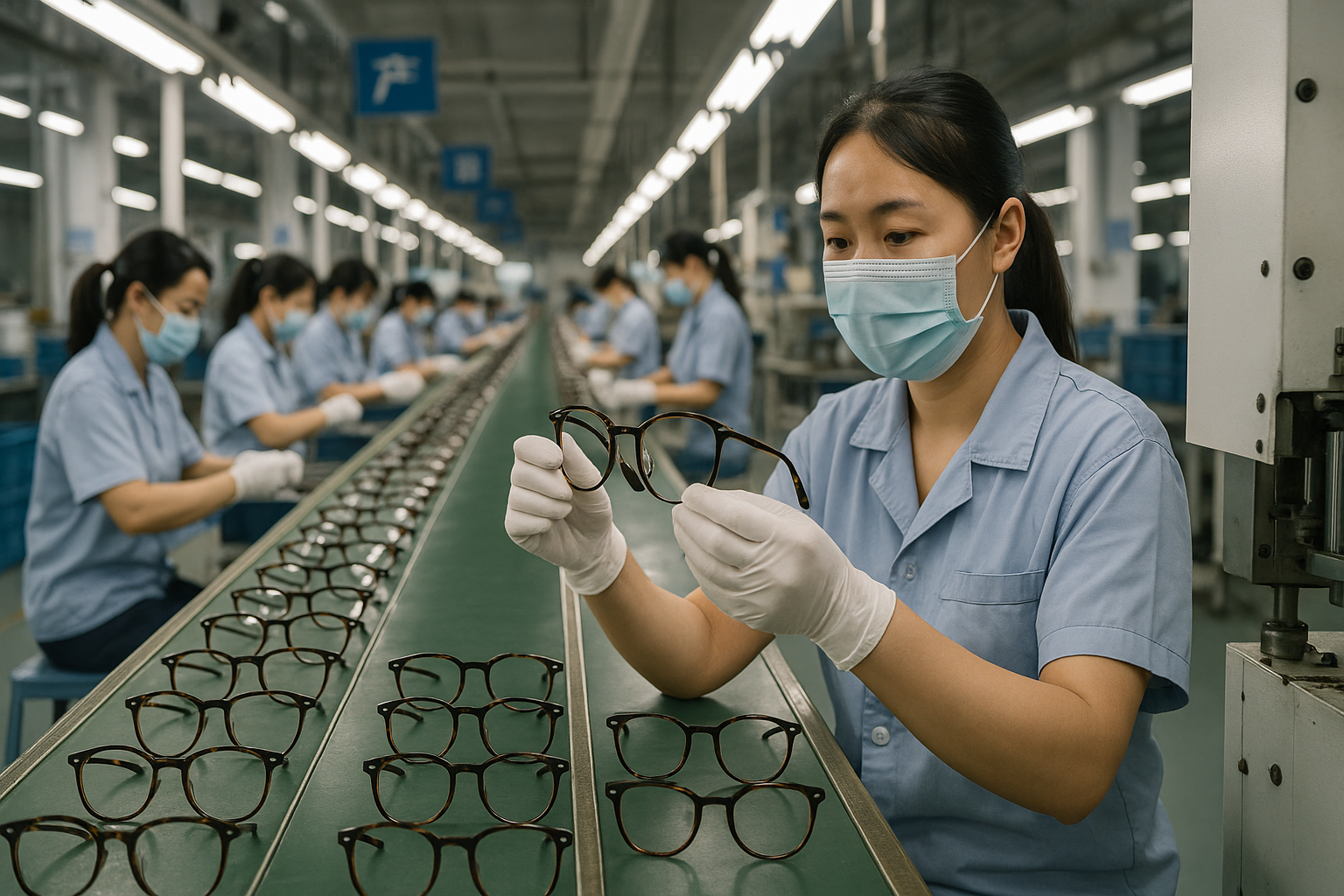
Manufacturing: The Backbone of Affordable Eyewear Production
China's manufacturing sector stands out for its efficiency and affordability, contributing significantly to the eyewear industry's ability to produce quality frames at lower costs.
The combination of advanced production technology and massive production volumes enables Chinese eyewear manufacturers to offer competitive pricing internationally.
How Cheap Labor and Advanced Technology Drive Costs Down
Cheap Labor Costs
China's workforce skilled in manufacturing enables lower operational costs:
- Wage Comparison: Chinese factory workers earn significantly less than their counterparts in the USA or Europe, averaging around $450/month.
- Productivity: Despite lower wages, highly trained workers maintain strong productivity levels, ensuring cost-effective production.
Advanced Production Technology
Technological investments enhance manufacturing efficiency:
- CNC Machinery: Precision machines minimize waste and maximize output.
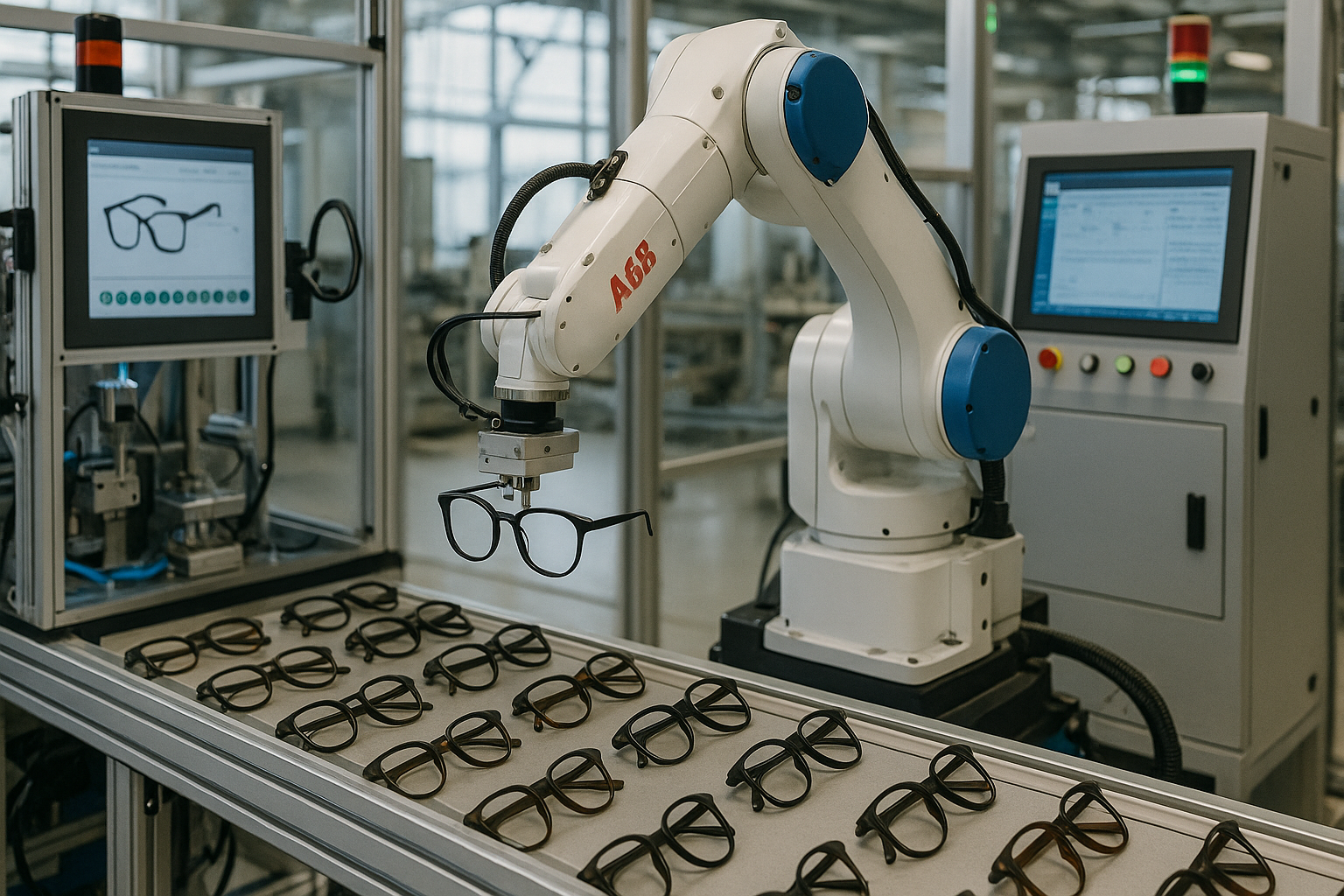
- Automated Lines: Automation reduces reliance on manual labor, increasing throughput and consistency.

Economies of Scale and High Production Volume
Economies of Scale
Chinese manufacturers benefit from operational economies by producing on a large scale:
- High Production Capacity: Factories can produce over 500,000 units monthly, drastically lowering per-unit costs.
- Supply Chain Dynamics: Efficient procurement and logistics reduce overall expenses, from raw materials to final product distribution.
High Production Volume
The staggering quantity of production enables affordable unit pricing:
- Bulk Manufacturing Benefits: High production levels maximize resource utilization, reducing material costs.
Material Sourcing: Leveraging Local Resources
The strategic utilization of locally available materials grants Chinese eyewear companies a significant cost edge.
Local sourcing minimizes shipping expenses and bulk purchasing of materials further decreases costs, allowing manufacturers to offer high-quality products at reduced prices.
Local Availability and Bulk Purchasing
Raw Material Availability
Proximity to essential raw materials used in eyewear production:
- Acetate and Metals: Easily sourced within China, aiding in reduced transportation costs.
- Bulk Processing: Large-scale purchasing agreements lower material acquisition costs.

Business Strategies: Keeping Prices Competitive
Chinese eyewear brands employ intelligent business strategies to remain price competitive while maintaining quality.
By streamlining marketing costs and focusing on consumer-friendly sales models, these companies effectively undercut international competitors on pricing without sacrificing craftsmanship.
Strategic Business Principles
Competitive Pricing Models
Deliberate pricing frameworks maintain affordability:
- Cost-Plus Pricing: Adds a small markup above production costs to stay competitive without losing profitability.
- Market Penetration Pricing: Allows companies to gain and maintain market share through lower initial pricing strategies.
Direct-to-Consumer Sales
By reducing intermediary costs, manufacturers increase consumer cost efficiency:
- E-commerce Focus: Online sales platforms cut out traditional retail distribution layers.
- Customer Loyalty Programs: Incentives encourage repeat purchases and build consumer trust.

Government Policies: Enabling Export at Scale
Chinese governmental support plays a crucial role in maintaining low manufacturing costs and facilitating international market access.
Export incentives and advantageous trade agreements position Chinese eyewear manufacturers strategically in global markets, fostering competitive pricing structures.
Government Support Mechanisms
Export Incentives
Policies designed to promote international distribution:
- Subsidies: Financial assistance for export-related costs such as certification.
- Logistical Supports: Simplified export procedures that streamline bureaucratic hurdles.
Trade Agreements
The strategic relationships benefit both importing and exporting countries:
- Reduced Tariffs: Lower import duties allow Chinese manufacturers to price competitively abroad.
- Extended Market Access: Bilateral agreements provide new opportunities in international markets.

Cultural Factors: Emphasis and Demand
Chinese cultural priorities focus on manufacturing and engineering excellence, fueling innovation and mass production capabilities.
The domestic market's size sustains high production demands, ensuring manufacturers can maintain cost-effective pricing en masse.
Cultural Influence on Manufacturing
Emphasis on Manufacturing and Engineering
A national focus contributes to cost-effective product development:
- Engineering Tradition: Long-standing expertise supports continuous improvement in production methods.
Major Market for Eyeglasses
Domestic demand accelerates production and innovation:
- Consumer Preferences: Favor a diverse range of affordable eyeglasses, driving manufacturers to refine processes and maintain high output levels.

International Relations: Navigating Global Market Dynamics
Chinese manufacturers excel in exporting goods while managing international trade dynamics.
By understanding tariffs and adapting strategies to align with global market dynamics, China continues to make its eyewear competitive on the international stage.
Interaction with Global Markets
Impact of Tariffs and Trade Wars
In-depth strategic adjustments:
- Adaptation Strategies: Leveraging diversified markets to mitigate tariff impacts.
- Negotiation Benefits: Flexible approaches to overcome trade barriers.
Global Perception
Efforts to enhance reputation abroad:
- Quality Assurance: Initiatives to address worldwide consumer concerns.
- Brand-Building Efforts: Focus on establishing reliability through consistent quality.

Technological Advancements: Innovating for Efficiency
Utilizing advanced technologies, like automation and online platforms, boosts output and ensures consistent production quality.
Investment in technological innovation helps Chinese firms maintain leadership in eyewear manufacturing while keeping costs competitive.
Technologies in Eyewear Production
Automation in Production
Automation fosters cost-effective high-volume production:
- Precision Robotics: Ensures detail accuracy and reduces human error.
- Real-Time Feedback: Continuously optimizes production processes.
Design Innovation
Companies prioritize innovative approaches and streamlined operations:
- Virtual Design Tools: Allow rapid prototyping and adaptive changes.
- Customer Collaboration Platforms: Connect designers directly with consumer feedback.
Comparison with Other Countries: A Global Perspective
China's eyewear manufacturing prowess illustrates distinctive cost-benefit alignments unlike other production hubs.
Analyzing these differences highlights China's unique capabilities in producing cost-effective eyewear globally.
Analyzing Cost Structures
| Region | Labor Cost | Material Cost | Production Cost |
|---|---|---|---|
| China | Low | Low | Low |
| USA | High | Medium | High |
| Europe | Medium | High | Medium |

Quality Differences and Import Dynamics
- Quality Compliance: Focus on maintaining high standards in production.
- Economic Dynamics: Favorable cost structures enhance China's competitiveness.
Cultural Perceptions of Value
Different market perceptions shape strategy:
- Consumer Expectation: Vary significantly across cultural contexts.
- Perceived Value: Priorities and appreciation differ based on regional norms.
Conclusion: China's success in delivering inexpensive yet high-quality eyewear is a testament to its exceptional manufacturing, strategic business frameworks, and robust government policies coupled with ongoing cultural emphasis and technological advancements, ensuring its prominent role in the global eyewear market.
Share:


Post time: May-29-2025